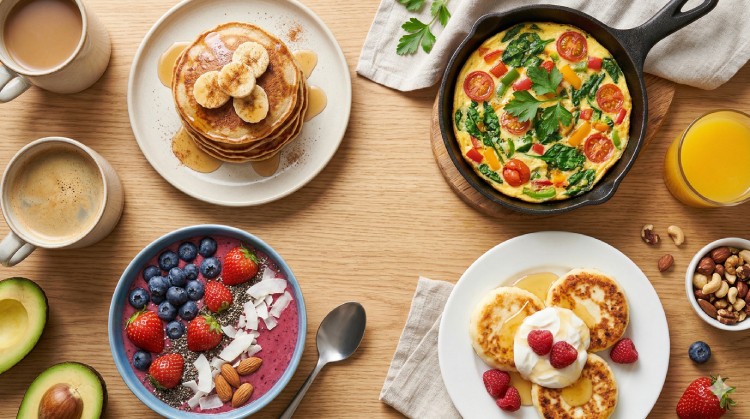
A quick breakfast is not one universal dish. Some mornings call for a three-minute bowl with no stove; others leave time for an omelet, and a weekend may suit a batch of syrnyky. Choosing by time, equipment, ingredients, and appetite is more useful than promising an “energy boost for the whole day.”
The seven options below use different textures and methods. They are not a medical meal plan: portion needs and the overall diet vary with age, activity, health, and everything else eaten that day.
Choose by time and equipment
- 3 minutes, no cooking: yogurt with fruit and nuts
- 5 minutes, kettle or microwave: quick oatmeal
- 7–10 minutes, toaster plus pan or saucepan: avocado egg toast
- 5 minutes, blender: thick berry smoothie bowl
- 8–10 minutes, skillet: vegetable omelet
- 10–12 minutes, skillet: banana pancakes
- 18–25 minutes, skillet: cottage-cheese pancakes / syrnyky
Every plate does not have to be “perfect”
The NHS Eatwell Guide describes balance across a day or even a week, not a standard that every individual meal must match. Fruit or vegetables, higher-fiber starches, protein foods, dairy or alternatives, and unsaturated fats can be distributed across the rest of the day.
1. Yogurt with fruit and nuts — 3 minutes

For one serving
- 3/4–1 cup (170–200 g) plain Greek yogurt
- 1 small banana or apple, or 2/3 cup (100 g) berries
- 1/2–3/4 oz (15–20 g) nuts or seeds
- 1 tsp honey, optional
Spoon the yogurt into a bowl and add the cut fruit and nuts. Taste before adding honey; a ripe banana or sweet apple may provide enough sweetness.
Night-before move: chop the nuts and wash and dry the berries, but store them separately from the yogurt so the textures stay distinct.
2. Quick oatmeal — 5 minutes

For one serving
- 1/2 cup (50 g) quick-cooking oats
- 2/3–3/4 cup (150–200 ml) water or milk; follow the package ratio
- pinch of salt
- 1/2 apple or a handful of berries
- 1 tbsp seeds or chopped nuts
Combine the oats and hot liquid, cover for the package-specified time, and stir. Add another tablespoon or two of liquid if it is too thick. Finish with fruit and nuts after cooking.
Old-fashioned rolled oats may need 7–10 minutes on the stove. Do not call them a five-minute breakfast when the package requires longer cooking.
3. Avocado egg toast — 7–10 minutes

For one serving
- 1–2 slices whole-grain or preferred bread
- 1/2 ripe avocado
- 1 large egg
- 1 tsp lemon juice
- salt, pepper, and chile flakes to taste
Toast the bread. Mash the avocado with lemon, salt, and pepper. At the same time, boil, poach, or fry the egg to your preferred safe doneness. Assemble just before eating so the bread stays crisp.
If avocados are expensive or unripe, replace the mash with 1/3–1/2 cup cottage cheese mixed with a spoonful of yogurt and herbs. It is a different dish but keeps the useful toast format.
4. Thick berry smoothie bowl — 5 minutes

For one serving
- 2/3 cup (100 g) frozen berries
- 1/2 frozen banana
- 1/2–2/3 cup (120–150 g) plain Greek yogurt
- 1–2 tbsp oats
- 1 tbsp seeds or nuts for serving
Pulse the berries, banana, yogurt, and oats until thick. Add extra liquid only 1 tablespoon at a time; the mixture should remain spoonable. Transfer to a bowl and add seeds or nuts.
This already contains banana and berries. Juice, syrup, and several sweet toppings at once are unnecessary if the goal is a breakfast rather than a dessert.
5. Vegetable omelet — 8–10 minutes

For one serving
- 2 large eggs
- 1 tbsp water or milk
- 3/4–1 cup (70–100 g) vegetables: bell pepper, spinach, scallion, or drained tomato
- 1 tsp olive or vegetable oil
- salt, pepper, and herbs
Chop the vegetables small. Heat the oil and cook pepper or onion for 2–3 minutes; add spinach or tomato for the final minute to release excess moisture. Whisk the eggs with water, salt, and pepper, pour over the vegetables, lower the heat, and cover until fully set.
Cream is not required for lift. A small amount of water creates steam, while gentle heat keeps the egg from becoming rubbery.
6. Banana pancakes — 10–12 minutes

For one serving
- 1 ripe banana, about 4 oz / 110–120 g peeled
- 1 large egg
- 1/4 cup plus 1 tbsp (35 g) all-purpose or oat flour
- 1/4 tsp baking powder, optional
- pinch each cinnamon and salt
- 1 tsp oil for the skillet
Mash the banana, whisk in the egg, then stir in the flour, salt, cinnamon, and optional baking powder. Rest for 2 minutes. Cook small 3-inch / 7–8 cm pancakes over medium-low heat for about 1 1/2–2 minutes on the first side and 1 minute on the second.
Large pancakes made from this moist batter are difficult to flip. Wait until the edges look matte and the bottom is golden. Do not taste raw batter.
7. Syrnyky / cottage-cheese pancakes — 18–25 minutes

For one or two servings
- 7 oz (200 g) farmer's cheese, tvorog, or well-drained full-fat cottage cheese
- 1 egg yolk or 1 small egg
- 3–4 tbsp (25–35 g) all-purpose or rice flour, plus more for shaping
- 1–2 tsp sugar or vanilla sugar, optional
- pinch of salt
- 1–2 tsp oil for cooking
Drain wet cheese in cheesecloth or a clean towel. Mash with the yolk, salt, sugar, and 3 tablespoons / 25 g flour. The mixture should hold a shape while remaining soft. Form five or six small patties, dust lightly with flour, and cook over medium-low heat for 3–4 minutes per side. Cover for 1–2 minutes if the centers need more time to heat through.
Do not fix very wet cheese with a large amount of flour; that makes syrnyky dense. Remove excess whey first.
A brief food-safety check
Egg dishes should be hot and fully cooked; 160°F / 71°C at the center is a precise target for mixed egg dishes. Raw flour is not ready to eat either, so do not sample pancake or syrnyky batter, and wash hands and surfaces after preparation.
What to prepare the night before
- portion oats, nuts, and seeds into dry containers;
- wash and dry berries or freeze banana pieces;
- chop omelet vegetables and refrigerate in a sealed container;
- drain cheese for syrnyky, but add egg just before cooking;
- hard-boil eggs for toast and refrigerate them.
Substitutions that preserve texture
How to use this guide: select a row or its arrow to expand the recommendation.
No dairy
Use water or an unsweetened plant drink for oats. A smoothie bowl needs a thick base, so choose plant-based yogurt rather than a thin beverage. The omelet works with water.
Gluten-free breakfast needed
Choose bread, oats, flour, and baking powder clearly labeled gluten-free. Rice flour works for syrnyky. For celiac disease, prevent cross-contact with crumbs and do not use a shared toaster without a suitable barrier or dedicated equipment.
I prefer savory breakfast
Choose the omelet or toast. Oatmeal can be made without fruit and finished with herbs and an egg; syrnyky can be left unsweetened and served with yogurt and herbs.
I need to take it with me
The easiest options are yogurt in a sealed jar with nuts packed separately, chilled oatmeal, or pancakes. Keep egg and dairy foods refrigerated rather than leaving them at room temperature for an extended commute.
The takeaway
The most useful weekday breakfast is one that fits the morning and is appealing enough to eat. Keep two no-fuss options for rushed days, one warm recipe for ordinary mornings, and pancakes or syrnyky for days with more time.
Sources and editorial note
This guide merges two overlapping The LINES breakfast lists. It removes categorical promises about energy, focus, cholesterol, and digestion, then adds realistic timing, more precise formulas, preparation choices, and food-safety notes.