Gluten-free pizza dough is not supposed to behave like wheat dough. You do not knead it into a springy ball or roll it with a pin. A properly hydrated batch stays thick and sticky, then spreads across the pan with wet fingers or an oiled spatula.
The ingredient list on the flour bag matters more than the brand. A useful blend contains more than one gluten-free flour or starch plus a binder. If xanthan gum or guar gum is already listed, do not add another full teaspoon.
Recipe at a glance
- Yield: one 11–12-inch / 28–30 cm pizza
- Active time: about 20 minutes
- Resting: 75 minutes total
- Baking: 18–25 minutes in two stages
- Oven: 425°F / 220°C
Read the flour-blend label first
Xanthan or guar gum is included: skip the extra teaspoon. Too much binder can produce a gummy, rubbery center.
No gum is included: add 1 teaspoon xanthan gum. Do not substitute the same weight of a single rice, corn, or buckwheat flour; each absorbs water differently and a single flour will not build the same structure.
Ingredients for one crust
- 1 1/2 cups (234 g) gluten-free all-purpose baking blend, without leavening
- 1 tsp xanthan gum, only if the blend does not contain xanthan or guar gum
- 2 tbsp (14 g) nonfat dry milk
- 1 tsp baking powder
- 3/4 tsp fine salt
- 1 1/2 tsp instant yeast
- 1 tbsp granulated sugar or honey
- 1 cup (227 g) warm water, about 95–100°F / 35–38°C
- 1/4 cup (50 g) olive or neutral oil, divided
- 1/2–2/3 cup thick tomato sauce and toppings of your choice
Allergen note: dry milk contains milk. It may be omitted for a dairy-free crust, though the edge will be slightly less tender and may brown less. Check the flour blend, yeast, sauce, and prepared toppings for your own allergens.
Mix the gluten-free dough
- Blend the dry base. Thoroughly whisk the flour blend, xanthan gum if needed, dry milk, baking powder, and salt in a large bowl. Even binder distribution matters more here than it does in ordinary dough.
- Build the yeast mixture. In a second bowl, stir together the water, sugar or honey, yeast, 2 tablespoons (25 g) oil, and about 1/2 cup (75–80 g) of the dry mixture. Rest for 25–30 minutes. It should show bubbles and smell distinctly yeasty.
- Beat rather than knead. Add the yeast mixture to the remaining dry ingredients. Beat with an electric mixer on medium-high for 4 minutes, scraping the bowl as needed. The result should look like very thick, sticky cake batter rather than a dough ball.
- Hydrate the blend. Cover and rest for 30 minutes. The starches and binder will absorb water and the mixture will become slightly firmer.
Shape it without a rolling pin
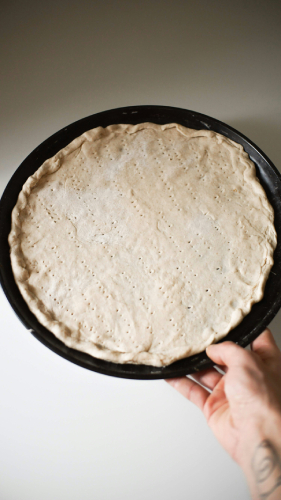
Heat the oven to 425°F / 220°C. Pour the remaining 2 tablespoons (25 g) oil onto a metal pizza pan or a parchment-lined sheet pan. Scrape the dough into the center and press it into an 11–12-inch / 28–30 cm circle with wet fingers. Keep the center about 1/4 inch / 5–7 mm thick and form a slightly higher rim.
If your pan is smaller, do not force the entire batch into a deep layer. Hold back some dough or use a second small pan. An overly thick center takes much longer to dry out.
Rest the shaped crust uncovered for 15 minutes. It may puff slightly, but it will not double.
Bake in two stages
- Set the crust. Bake without sauce or toppings for 8–10 minutes. The surface should turn matte, the rim should hold its shape, and the center should feel set when nudged with a spatula.
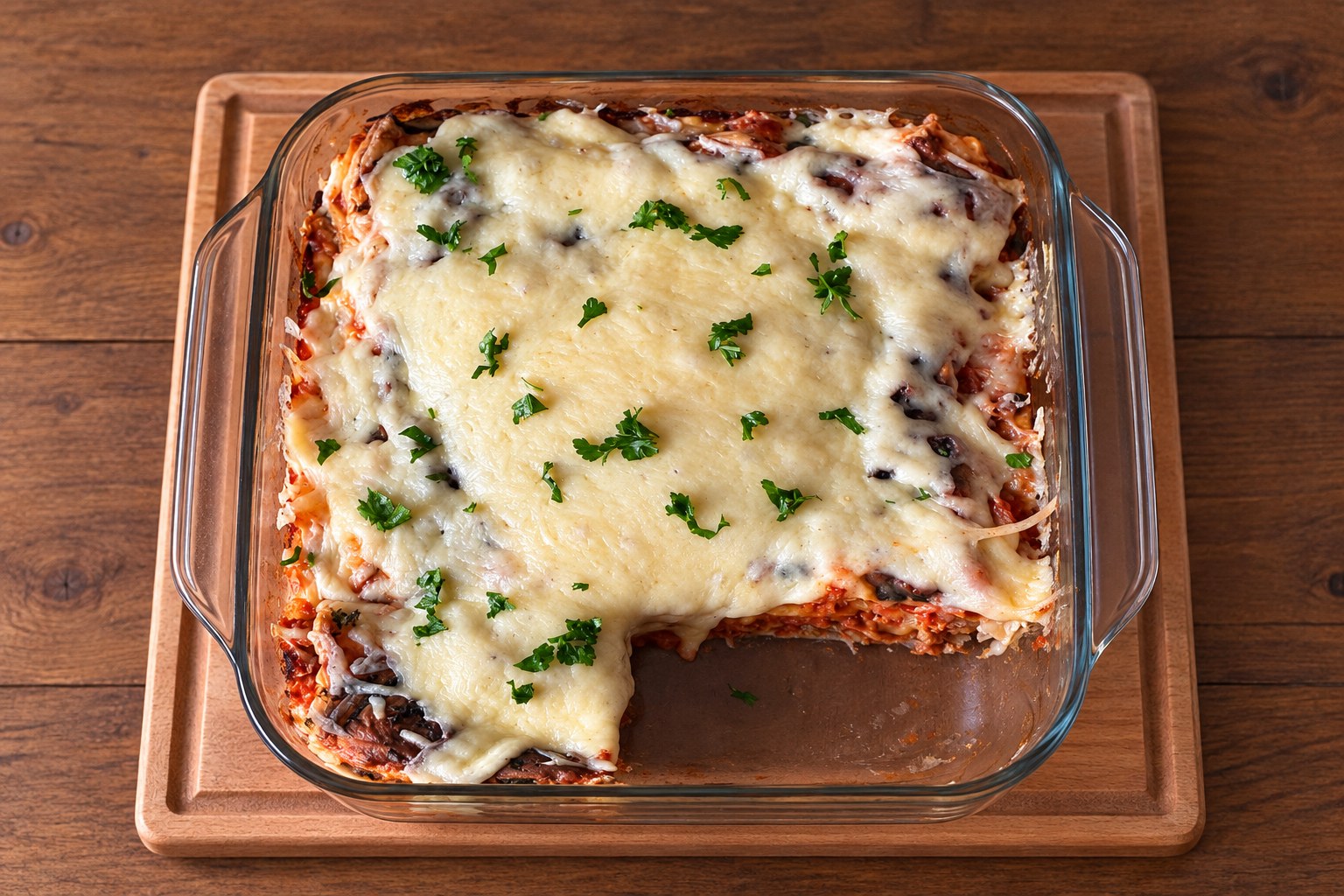
- Keep the topping load modest. Use thick sauce, well-drained mozzarella, and precooked mushrooms or watery vegetables. Excess liquid prevents the center from drying.
- Finish baking. Return the pizza to the oven for 10–15 minutes, until the edge is browned, the cheese is melted, and the base releases easily from the parchment or pan.
- Rest before slicing. Wait 5 minutes. Gluten-free crust is softer straight from the oven and firms as it cools slightly.
When cooking for someone with celiac disease
“Wheat-free” is not the same claim as “gluten-free.” Choose ingredients clearly labeled gluten-free. Wash hands and work surfaces, use clean bowls and utensils, and shape the crust on fresh parchment. Do not set it directly on a stone or pan that has just held wheat dough, and avoid shared sauce jars that may have been touched with a utensil used on regular pizza.
Gluten-free pizza troubleshooting
How to use this guide: select a row or its arrow to expand the recommendation.
The dough spreads like a thin batter
Give it the full 30-minute hydration rest first. If it still cannot hold a layer, beat in 1 tablespoon of the same flour blend and wait another 5 minutes. Do not add a large handful at once; blends thicken at different rates.
The dough crumbles and will not spread
It needs more water or a binder. Check the blend for xanthan or guar gum. Then beat in 1 tablespoon warm water and reassess after 3–5 minutes.
The center stays gummy
Possible causes include excess gum, a thick center, or watery toppings. Check the blend before adding xanthan, press the center thinner, and precook mushrooms, zucchini, or other high-moisture vegetables.
The bottom is pale and soft
Use a metal pan, preheat the oven fully, and bake in the lower third. The base should already hold together after the par-bake; if it does not, give it another 2–3 minutes before adding sauce.
The rim is hard instead of crisp
The dough was probably too dry or the edge was pressed too thin. Adjust water by the tablespoon and keep the rim slightly thicker than the center.
Storage and reheating
Refrigerate fully cooled pizza for up to 3 days. Reheat slices in a covered dry skillet or a 375°F / 190°C oven to restore a crisp base; a microwave will make the crust softer.
Sources and editorial note
The previous The LINES version closely followed King Arthur Baking but omitted the xanthan gum specified in the source. This update restores that conditional ingredient, explains how to read a flour-blend label, adds consistency corrections and topping-moisture controls, and includes a separate cross-contact protocol.