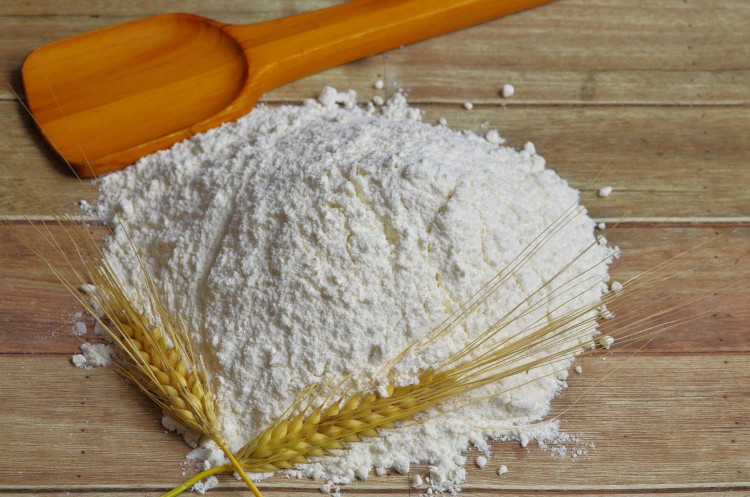
Bleached and unbleached are most useful on a US flour label. They describe post-milling treatment, but they do not fully tell you whether a bag is right for bread, cake, or cookies. Wheat type, protein content, and intended use can matter more to a home baker.
The terminology also changes by market. A process permitted and common in one country may be prohibited or absent in another, so “always buy unbleached” is not a complete answer for readers in the UK, Europe, or elsewhere.
Bleached vs. unbleached flour at a glance
Bleached flour
- Appearance: usually a brighter white.
- How it is made: after milling, it is treated with an agent permitted in that market to change color more quickly; in some flours, treatment also affects starch and proteins.
- How it bakes: ordinary bleached all-purpose flour often performs much like unbleached. US bleached cake flour is a notable exception because it can help produce a very fine, tender crumb.
- What to check: intended use, protein content, and ingredients — the word bleached is not enough on its own.
Unbleached flour
- Appearance: may have a slightly warmer, creamier cast.
- How it is made: it lightens and matures through exposure to air after milling, without a bleaching agent.
- How it bakes: unbleached all-purpose flour suits most everyday recipes; for bread, protein and gluten-forming strength matter more.
- What to check: unbleached does not automatically mean bread flour, organic, or unbromated.
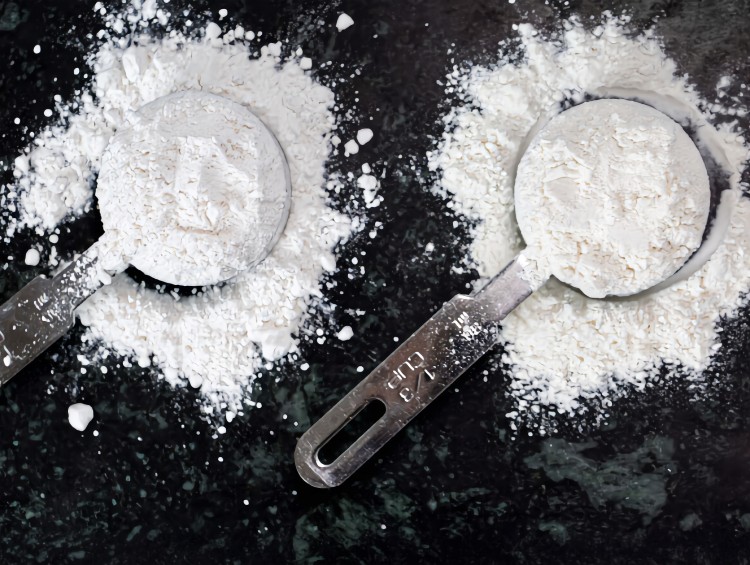
Shown here: bleached cake flour on the left and unbleached cake flour on the right. The color difference is visible, but appearance alone does not reveal protein content or baking suitability.
Can you substitute one for the other?
All-purpose flour: usually yes, 1:1 by weight in cookies, muffins, pancakes, and many everyday cakes and pies.
Cake flour: do not judge by bleaching alone. If a formula calls for cake flour, ordinary all-purpose flour may produce a firmer crumb.
Bread and pizza: compare protein and intended use first. The difference between strong and weak flour matters more here than color.
What happens after milling
Freshly milled white flour has a creamy cast. During storage, oxygen slowly affects natural pigments and the protein system, so the flour lightens and matures. In the US, refined flour that completes this process without a bleaching agent is called unbleached flour.
To shorten the waiting period, manufacturers in markets that allow it may use substances such as benzoyl peroxide or, for certain cake flours, chlorine. Those agents do not all do the same job: one may primarily affect color, while another can also change pH, starch behavior, liquid absorption, and baking performance.
Bleaching does not make raw flour ready to eat
Flour remains a raw agricultural product. Bleaching is not a reliable pathogen kill step, so do not taste raw batter or dough. Wash hands, utensils, and work surfaces after handling flour and raw eggs.
Why the country on the bag matters
United Kingdom
Current UK government guidance says flour bleaching agents are not allowed in the preparation of flour or bread. It also says the term unbleached flour should not be used in labeling because all flour is unbleached there, and presenting it as a special characteristic could mislead shoppers.
United States
On a US label, bleached and unbleached mark a real production difference. Certain bleaching and treatment agents remain permitted under specified conditions. Read the ingredient list and look for the separate terms bleached, unbleached, bromated, or unbromated rather than guessing from color.
Imported flour
When buying an imported bag, check the country of origin, ingredient list, protein per 100 g, and intended use. A recipe written for US all-purpose flour may behave differently with a softer plain flour even when both are unbleached.
When the difference really shows in baking
For ordinary all-purpose flour, the difference is often modest. Cookies, pancakes, muffins, and many home cakes generally tolerate a weight-for-weight swap. Small changes in color, absorption, or structure can still occur, but brand specifications contribute too.
US bleached cake flour is a distinct case. It is usually milled from soft wheat, has low protein, and may be treated to support a very fine crumb in high-sugar cakes. Its performance should not be credited to the word bleached alone: wheat type, milling, protein, and treatment work together.
For baguettes, pizza, and other yeast doughs, choose for protein content and gluten-forming strength. Unbleached does not guarantee that flour is strong enough, and bleached does not guarantee failure.
Potassium bromate is a separate question
Potassium bromate is an oxidizing dough improver. It is not the same as benzoyl peroxide used for bleaching. IARC places potassium bromate in Group 2B, “possibly carcinogenic to humans.” That classification identifies a potential hazard; it does not calculate the risk from a particular serving of bread.
Regulation differs by market. UK rules removed potassium bromate from permitted flour and bread additives in 1990. The FDA still lists it as a permitted US flour treatment agent under specified conditions and continues to review available information. So both “it is banned everywhere” and “it is in most American flour” are misleading claims.
A practical label check
If you prefer flour without potassium bromate, look for unbromated or check the ingredient list for potassium bromate. Do not rely on unbleached alone; bleaching and bromation describe different treatments.
Choose flour for the recipe
How to use this guide: select a row or its arrow to expand the recommendation.
Bread, baguettes, or pizza
Start with protein and intended use. Roughly 11–13% protein suits many yeast doughs, though the exact need depends on hydration and desired chew. In the US, unbleached, unbromated bread flour is a clear label when that is your preference.
A cake with a very fine, tender crumb
Use cake flour when the formula calls for it. Regular all-purpose flour — bleached or not — may contain more protein and build a firmer structure. A reliable substitution requires its own formula, not merely a different label on the bag.
Cookies, muffins, pancakes, or pie
Bleached and unbleached all-purpose flour usually work 1:1 by weight. If the batter is noticeably thicker or thinner, adjust liquid in small increments rather than redesigning the recipe.
A US recipe made with UK plain flour
US all-purpose flour often has more protein than a soft UK plain flour, though brands vary. Check the nutrition panel. For bread, a strong white flour is a more predictable match; for tender baking, plain flour may be entirely suitable.
The bag does not print a protein percentage
Look at protein grams per 100 g on the nutrition panel; the number is approximately the percentage. It is not a perfect laboratory measure of gluten strength, but it is more useful than judging flour by white or cream color.
The takeaway
Bleached flour is not automatically “toxic,” and unbleached flour does not guarantee better bread. Begin with the market, ingredient list, wheat type, protein content, and recipe. The difference is minor in much everyday baking; exact flour type matters more in cake flour and strong yeast doughs.