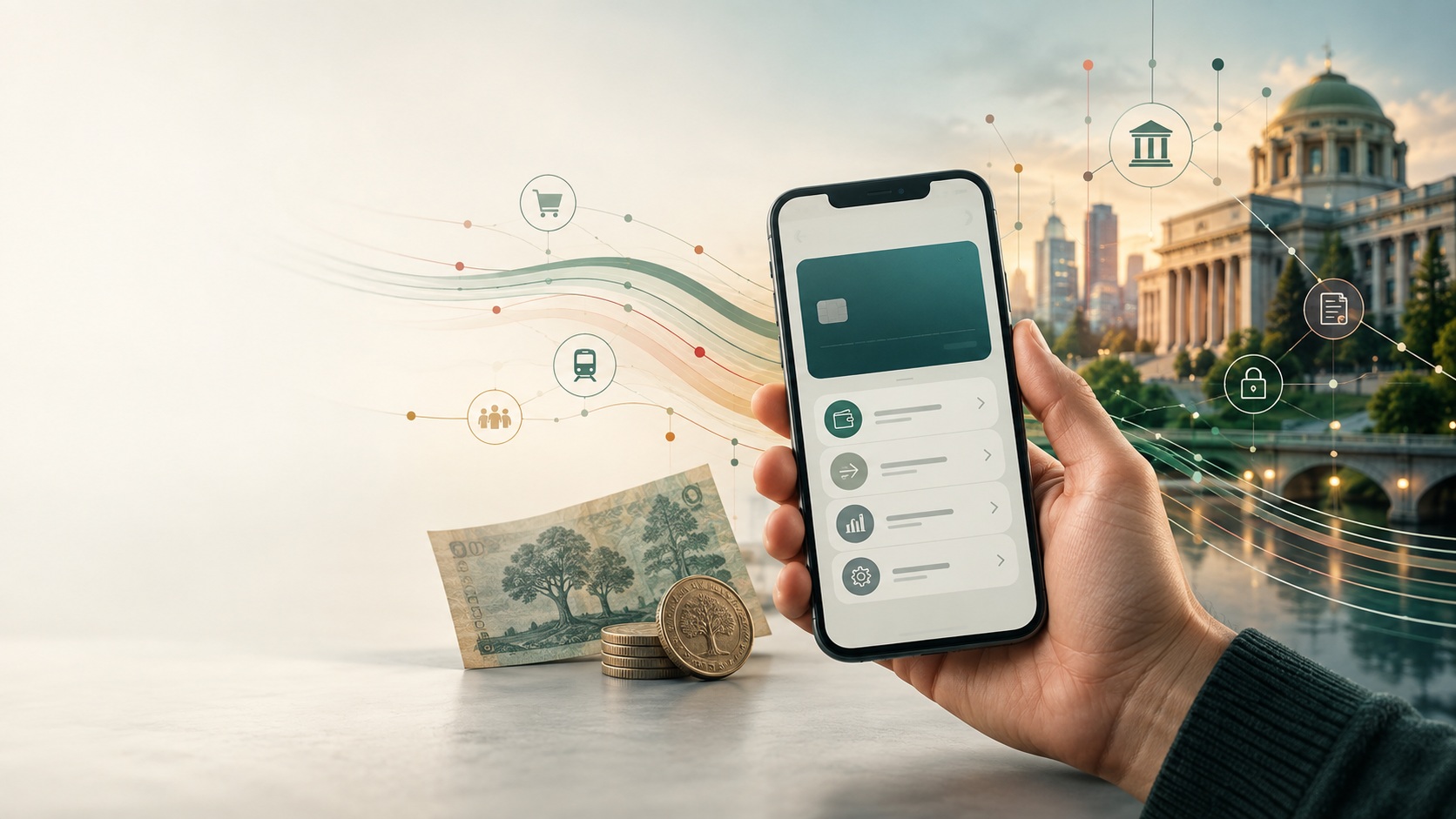
You may never post about your income, health, political views or future purchases. Yet digital systems can make assumptions about all of them using much less obvious signals.
Which pages do you open? Where do you go during the day? Which videos do you watch to the end? What do you place in a shopping cart but never buy?
Together, these actions form a digital profile — an approximate model of your interests, habits, circumstances and likely future behavior.
The short answer
A digital profile is a collection of information and assumptions about a person, created from online activity and the use of connected devices.
It may include an age group, approximate home and workplace, interests, purchase history, device type, social connections, estimated income range and reactions to different kinds of content.
There is usually no single master file containing everything. Platforms, stores, advertising networks, banks and data brokers build their own pieces of the profile and may sometimes combine information from several sources.
Where does the data come from?
People provide some information directly, systems observe some of it, and algorithms attempt to infer the rest.
- Volunteered data Your name, date of birth, phone number, email address, photographs, delivery address, forms and comments.
- Behavioral data Opened pages, searches, clicks, viewing time, abandoned shopping carts and responses to advertising.
- Technical data Device, browser, language, screen size, IP address, time zone, operating system and approximate location.
- Inferred data Estimates of purchasing power, likely purchases, a possible move, major life events and personal interests.
Behavioral signals reveal not only what a person did but what held their attention. Technical characteristics can also be combined into a browser fingerprint that may help distinguish one device from another.
Algorithmic inferences can be accurate, but they can also be wrong. An algorithm does not truly “know” a person; it looks for similarities with the behavior of other users.

How are different activities linked to one person?
A name or passport number is not always necessary. If someone signs in to the same account on a phone and computer, the platform can easily connect those devices.
Other links may include:
- cookies;
- a phone’s advertising identifier;
- an IP address;
- an email address or phone number;
- payment details and loyalty programs;
- analytics modules embedded in apps;
- device characteristics;
- regular journeys between home and work.
Even when a company uses a string of numbers instead of a name, that identifier may be connected to a detailed behavioral history.
“Anonymous” therefore does not always mean impossible to identify. A regular overnight location, workplace and daily route may sometimes reveal a device’s owner without a recorded name.
What are data brokers?
Data brokers are companies that collect, combine, analyze or sell information about consumers. It may come from apps, advertising networks, loyalty programs, public records, purchase histories, commercial partners and other brokers.
A person may never have heard of a particular broker or visited its website. Information about their device or behavior may nevertheless enter the broker’s systems.
The US Federal Trade Commission reported a case in which one broker allegedly collected more than 500 million unique advertising identifiers paired with precise location data. According to the regulator, the information could reveal visits to health clinics, places of worship and other sensitive locations.
This does not mean every app sells a complete movement history. It does show how detailed information can become when collected at scale.
The invisible auction that takes milliseconds
An advertisement on a website is not always selected in advance. As a page loads, an automated auction may take place: advertising systems receive an opportunity to show an ad and decide how much they are willing to bid.
The selection may use approximate location, device type, time of day, page topic, previous interests, audience categories and the estimated likelihood of a click or purchase.
The entire process can finish before the page fully opens. The user sees only the advertisement, while the exchange of data between intermediaries remains invisible.

Is your phone constantly listening?
Many people have experienced this: you talk about a product and soon see an advertisement for it. The simplest explanation is that the phone heard the conversation. Secret audio recording is not necessarily required, however.
Someone you often spend time with may have searched for the product; you may have visited a relevant store, interacted with related content or entered an audience whose members share similar interests. Sometimes an advertising campaign simply becomes widespread, and the earlier conversation makes you notice it.
Microphone permissions should still be controlled. But advertising systems often have enough other data without continuously listening to conversations.
How is a digital profile used?
Advertising
A profile helps predict which advertisement is most likely to attract your attention.
Recommendations
News feeds, videos, music, products and search rankings can adapt to past behavior. This may make services more convenient, but it can also create an information bubble in which people repeatedly encounter ideas they already accept or content that provokes an emotional reaction.
Predicting future behavior
A company may care less about who you are than about what you are likely to do: buy a product, cancel a subscription, repay a loan, respond to a discount or switch to a competitor.
Mini test: how easy is it to build your digital profile?
Give yourself one point for every “yes”:
- You keep location services enabled all the time.
- You use the same account on several devices.
- You give apps access to contacts when it is not necessary.
- You rarely review camera and microphone permissions.
- You use loyalty programs for most purchases.
- You sign in to third-party sites through a large platform’s account.
- You accept all cookies.
- You never review advertising-personalization settings.
- You install apps without checking the developer.
- You have never asked what data an online service holds about you.
This is not a test of complete anonymity. It shows how many small permissions can combine into a much larger picture.
How to reduce unnecessary data collection
Disappearing completely from the digital world is almost impossible. A more realistic goal is to limit collection that serves no useful purpose for you.
- Review app permissions. A calculator does not need your contacts, and a simple game does not need permanent location access.
- Limit location access. If an app needs location only while in use, do not allow background tracking.
- Review ad personalization. Turning it off will not remove advertising, but it may limit how your interests are used.
- Restrict third-party cookies. Modern browsers offer protection against cross-site tracking.
- Do not use one sign-in method everywhere. A shared account makes activity easier to connect across services.
- Delete unused accounts. Old profiles continue to hold data and may become a source of leaks.
- Review activity history. Searches, locations, voice commands and viewing histories often have separate automatic-deletion settings.
- Use your access and deletion rights. Where the law provides them, you can ask a company what personal data it holds.
- Do not treat a VPN as a magic button. It can hide your IP address, but it does not make you invisible after you sign in or use other identifiers.

Can you completely delete your digital profile?
Not always.
You can delete accounts, clear histories, withdraw permissions and submit requests to companies. Some information may still be retained for legal compliance, backups, financial records or fraud prevention.
Deleting data from one company also does not automatically erase copies previously obtained by other organizations. Effective protection therefore begins with reducing the amount of information shared unnecessarily.
Conclusion
A digital profile is not an exact copy of a personality or necessarily one secret master dossier. It is a collection of facts, identifiers and algorithmic assumptions distributed among different platforms and companies.
It can make services more convenient, but it can also reduce privacy, influence the content people see and contribute to mistaken decisions. Every permission, shared login and tracking agreement becomes part of our digital version.
It may know a great deal about our habits. That does not mean it always knows the truth.