Modern household appliances are a significant and vital investment in your daily comfort. However, most owners only remember them when they suddenly break down and stop working. Studies show that regular and proper home maintenance can extend the lifespan of appliances by 40-50%, while simultaneously preventing 85% of the most common critical failures.
Without proper care, your electricity bills can quietly increase by 20-30% due to a loss of energy efficiency, and the cost of an unexpected emergency repair call often reaches half the price of a brand-new appliance. This comprehensive guide covers the basic preventative tasks that require no special skills and can easily be performed by any homeowner.
📋 Your Basic Monthly Checklist:
Perform these simple steps at least once a month to avoid sudden breakdowns and expensive repairs.
1. Refrigerator: Keeping It Fresh and Saving Energy
Your refrigerator runs 24/7, so its efficiency directly impacts your electricity bills.
- Cleaning the condenser coils: Carefully pull the fridge out and remove dust and cobwebs from the coils (usually located at the back or behind a bottom kick-panel) using a vacuum or a brush. A dust-clogged heat exchanger forces the compressor to work overtime, increasing energy consumption by up to 25%.
- Checking the gaskets: Inspect the rubber door seals. Close a regular sheet of paper in the door. If the paper pulls out easily when the door is closed, the gasket is worn, letting warm air inside, and needs replacing.
- Temperature control: The ideal temperature for storing food is +3°C to +4°C (37-39°F) for the fridge and -18°C (0°F) for the freezer. Overcooling simply wastes energy.
2. Dishwasher: Perfect, Odor-Free Operation
If your dishwasher starts leaving plates dirty, the problem is almost always a lack of maintenance, not a broken pump.
- Cleaning the filter (monthly): Remove the cylindrical mesh filter at the bottom of the tub and rinse it under hot water with soap and an old toothbrush. A filter clogged with grease and food debris is the main cause of bad odors and cloudy glassware.
- Checking the spray arms: Inspect the plastic spinning arms. If the small holes are clogged with limescale, lemon seeds, or fruit pits, carefully clear them out with a toothpick.
- Airing it out: Always leave the door slightly ajar after a wash cycle finishes so the tub dries out completely and mold doesn't multiply inside.

A clogged dishwasher filter sharply reduces water pressure in the system and degrades the final wash quality.
3. Washing Machine: Preventing Mold and Dangerous Vibrations
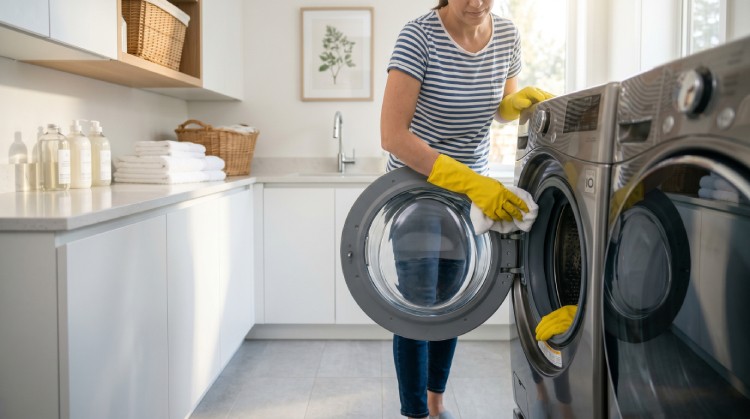
- Caring for the door boot (front-loaders): Water that constantly stagnates in the folds of the rubber door gasket is the perfect breeding ground for black mold. Wipe it dry with a microfiber cloth and always leave the door slightly open after washing.
- Cleaning the dispenser: Remove the plastic detergent drawer and rinse it under the tap to remove leftover detergent and fabric softener, which can calcify over time and block the water flow.
- Leveling: If your machine "jumps" heavily or rattles during the spin cycle, check its leveling with a carpenter's level. Severe vibration destroys the drum bearings and spider arm catastrophically fast.
4. Clothes Dryer: A Matter of Fire Safety
⚠️ Warning: Fire Hazard!
The accumulation of dry lint in clothes dryers causes thousands of house fires worldwide every year. Clean the lint trap (the screen inside the door) strictly after every single drying cycle. Once a year, hire a professional or use a vacuum to clean out the main exhaust vent duct and the internal channels of the machine.
5. Kitchen Stoves and Ovens
Regular deep cleaning of your stove is not just about visual aesthetics. Burned-on grease and food remnants continuously baking in the oven ruin the taste of new dishes and emit harmful carcinogens.
6. Microwave Oven
- Steam cleaning: Place a glass bowl of water with a few lemon slices (or a spoonful of vinegar) inside. Turn the microwave on full power for 3-5 minutes. The hot steam will soften the dried-on grease, and you can easily wipe it away with a damp cloth without scrubbing.
- The golden safety rule: Never run an empty microwave! Without food (which absorbs the microwaves), the energy reflects off the walls back into the magnetron, practically guaranteeing it will burn out quickly.

Heated water with lemon or vinegar is the best, cheapest, and safest way to clean microwave walls without using harsh chemicals.
When to Call a Professional vs. DIY
You can and should wash filters, replace worn door gaskets, and clear drain hoses yourself. However, unplug the appliance immediately and call in the experts if you notice:
- The smell of gas near the stove or a distinct smell of burning plastic wiring.
- Constant sparking during operation (this is especially dangerous in microwaves or under a washing machine).
- Complex Error Codes appearing on the display that do not disappear after a standard reboot (unplugging the appliance for 15 minutes).
- Atypical loud metallic banging, screeching, or vibrations that weren't there before.
Is Preventative Maintenance Really Worth It?
The math of regular maintenance is very simple, and it is always on the side of the diligent owner:
- 💰 Energy Savings: Up to 15-25% saved on monthly electricity bills.
- 📉 Cost of Maintenance: $0 (just 1-2 hours of your free time per month).
- 🛠️ Average Repair Price: From $150 to $400 (if an electronic board burns out or a compressor breaks).
- 🔄 ROI: Extending the life of major appliances saves you the massive expense of buying brand-new ones.
Frequently Asked Questions (FAQ)
Question: Can I use regular table vinegar to clean all my household appliances?
Answer: Vinegar is perfectly safe and very effective for removing limescale from internal plastic and metal surfaces. However, strictly avoid its frequent contact with rubber gaskets (hoses, door boots), as the constant exposure to acid can make the rubber stiff, brittle, and prone to leaking over time.
Question: Why does my washing machine have a musty, swampy smell?
Answer: This happens due to regularly washing exclusively at low temperatures (30-40°C / 86-104°F) and the habit of keeping the door closed. Once a month, be sure to run a special "Tub Clean" cycle (or a normal wash at 90°C / 194°F) with a completely empty drum, adding a commercial descaler or washing soda.
Read the original English article on the EasyFix website here.