Although numerous global studies have long proven that using a modern dishwasher is significantly more environmentally friendly and economical than traditional hand washing, water and expensive electricity consumption can be reduced even further.
Proper household habits when operating your kitchen appliances can significantly lower the amounts on your utility bills and extend the lifespan of the device itself by years. Follow these five absolutely simple tips from appliance experts to make your automatic dishwashing as effective and rational as possible.
Eco-Habits for Your Kitchen:
Check the items you are ready to implement in your life today.
1. Energy Efficiency Class as the Foundation of Savings
If you are just planning to buy your first dishwasher or replace an old appliance, always pay close attention to the energy efficiency label. Modern appliances with a high energy-saving class (according to the new European labeling from A to C) cost a bit more at the initial purchase stage. However, they fully pay for themselves over a few years of active daily use by consuming an absolute minimum of water and kilowatt-hours.
2. Run the Appliance Only with a Full Load
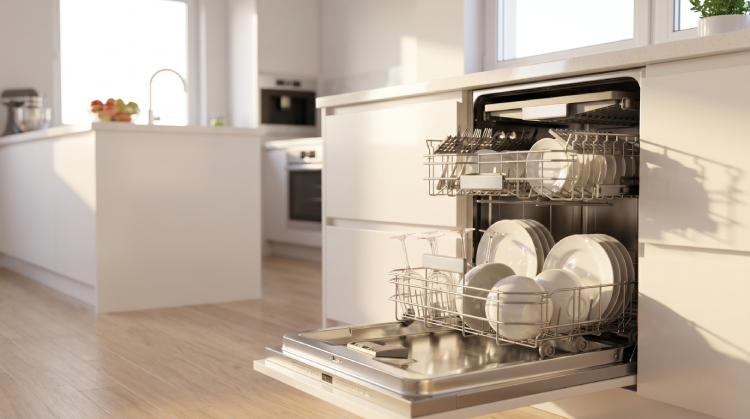
You must remember an important rule: a half-empty dishwasher uses the exact same amount of water and electricity on standard programs as one filled to the brim. Therefore, accumulate dirty dishes throughout the day. If you are worried about potential unpleasant odors developing inside the chamber, use the quick cold rinse function (it lasts only a few minutes and uses minimal water) to simply freshen the plates before the main evening wash.
⚠️ Important: Be sure to avoid the other extreme. Excessive, tight overloading of the appliance (when plates are stacked tightly against each other) will physically prevent the water jets from reaching all surfaces, and you will have to re-wash the dirty dishes by hand after the cycle finishes.
3. The Big Myth About Pre-Rinsing Under the Tap
Many people have a very bad habit of almost completely scrubbing plates free of grease under running water before placing them in the machine's basket. This is a terrible, double waste of clean water. Modern dishwashers equipped with powerful pumps, and high-quality enzymatic detergent tablets easily tackle tough soil without any human assistance. All that is required of you is simply to scrape large, solid food scraps into the trash using a regular paper napkin or fork so as not to clog the drain filter.
4. Smart Program Selection: The Magic of "Eco Mode"
Modern kitchen appliances are equipped with various temperature modes. Learn to use them consciously and correctly:
- Auto Mode: Thanks to built-in optical water purity sensors (aqua-sensors), the machine analyzes the level of dirtiness itself and optimally adjusts the temperature and cycle time. This is the perfect balance.
- Intensive / Chef Mode: Uses water at extremely high temperatures (up to 70-75°C / 158-167°F). It is absolutely indispensable for burnt, greasy frying pans and baking sheets, but it consumes maximum electricity for heating. Do not turn it on for washing ordinary cups or lightly soiled plates.
- Eco Mode: This program seems very long (often over 3 hours), but due to a significant reduction in water temperature (usually to 50°C / 122°F) and prolonged soaking, it reduces electricity consumption by 25–30%. Use it as your primary, basic program for daily washing.
5. Take Advantage of Night-Time Electricity Tariffs
In many countries and regions, owners of dual-zone (multi-tariff) smart meters pay significantly less—often half as much—for electricity consumed during the night (typically from 11:00 PM to 7:00 AM). A quiet dishwasher is the perfect appliance for profitable nighttime work.
Take advantage of the very convenient Delay Start (timer) function, which is available in almost every modern electronic device. Load the machine after dinner and set it to start at 1:00 or 2:00 AM. You will sleep peacefully while your smart appliance saves you real money.

Setting the delayed start timer for nighttime is guaranteed to significantly reduce your financial costs for water heating.
Systematically implementing these five simple steps will not require any physical effort from you, but will easily help transform your household kitchen routine into a highly conscious, eco-friendly contribution toward saving your family budget and protecting our environment.
Read the original article in English on the Beko website via this link.