If you live in a typical modern house or apartment, you probably only think about your actual electricity costs when you receive your monthly utility bill. It's very easy to ignore the quiet background hum of the refrigerator or the familiar sound of the washing machine, but these powerful everyday appliances are the main "energy vampires" driving up your utility costs.
Most people fully realize that leaving lights on in an empty room is a waste. However, the real, tangible costs are generated by large home appliances operating silently and continuously in the background. Understanding how to properly set up and manage these devices will help you significantly save your family budget every month without any loss of living comfort.
📋 Energy-Saving Habits (Your Checklist):
Check the items you are already successfully using in your home.
Understanding Energy Efficiency Ratings
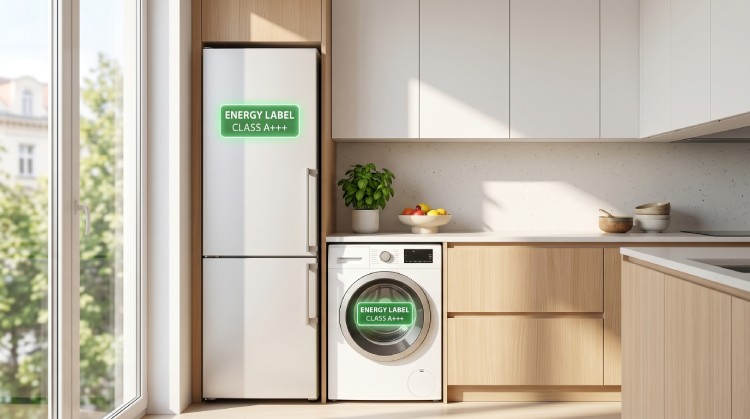
Every electrical appliance in your home has its own "appetite." Systems that constantly heat or cool spaces (refrigerators, water heaters, electric ovens, air conditioners) typically consume the most. When buying new appliances, always pay attention to the energy efficiency label (the colored sticker on the body with classes from A to G).
Top-tier appliances (A, B, and C under the newer, stricter European scale) may cost slightly more in the store, but in the long run, they are guaranteed to pay for themselves through extremely low kilowatt consumption.
The Refrigerator: The Main Consumer in Your Kitchen
The refrigerator is the absolute champion of electricity consumption simply because it is never unplugged from the wall. To keep it running as efficiently as possible and avoid wasting power, keep a close eye on its technical condition:
- The Paper Test: Make sure the rubber door gaskets seal tightly against the body. Close a regular sheet of paper between the door and the fridge. If the paper pulls out easily, the gasket has weakened or dried out—your fridge is constantly losing cold air, forcing the compressor to run non-stop.
- Clean the Coils: Keep the condenser coils (usually located on the back wall or underneath) clean. An accumulation of a thick layer of dust and pet hair forces the heat exchanger and compressor to work twice as hard.
💡 A Tip Regarding Old Appliances:
If you still have an old, decades-old refrigerator running "just in case" (for drinks or preserves) in your garage, basement, or on the balcony, seriously consider recycling it. Such appliances are catastrophically worn out, lack modern insulation, and consume a colossal amount of energy.
Strategy for Economical Washing and Drying
Doing laundry is another key area where small daily changes yield incredibly significant financial results. Did you know that almost 90% of the energy used by a washing machine goes exclusively toward heating the water with its internal element?
Rules for Efficient Dishwasher Use
Many people (especially the older generation) still sincerely believe that washing dishes by hand saves resources. In reality, a modern dishwasher uses 3 to 4 times less water than a person washing the same amount of dirty dishes under a running tap.

ECO mode takes longer, but it uses significantly less water and a much lower heating temperature, saving up to 30% of electricity.
To maximize savings while washing dishes:
- Run the wash cycle only when both baskets are fully loaded with dirty dishes.
- Use the "ECO" mode. It lasts longer but significantly saves energy specifically on heating the water (usually heating to 50°C / 122°F instead of 65-70°C / 149-158°F).
- Turn off heated dry. The best lifehack is to simply disable the hot thermal drying function in the settings or slightly open the dishwasher door immediately after the wash is complete, so the dishes dry naturally from the evaporation of their own steam.
A Smart Choice for the Future
The transition to modern energy-efficient technologies absolutely does not have to happen in a single day—that is too expensive. As your old household appliances inevitably break down, simply replace them with well-designed models featuring the highest energy-saving class. By combining the latest equipment with the simple daily habits we described above, you will take full control of your utility costs and create a much more eco-friendly living space.
Based on materials from the Drimmers USA blog.