Quartz countertops are a truly luxurious centerpiece of any modern kitchen. When it comes to the perfect combination of exquisite aesthetics and practical functionality, this material has practically no equals. However, despite its claimed strength and durability, quartz requires proper and very careful handling.
Quartz surfaces are non-porous (unlike natural granite or marble), so they do not require periodic sealing. But to ensure the stone does not lose its glossy shine over the years and doesn't get covered in dull spots or micro-scratches, it is important to know the basic care rules. In this guide, we will detail how to safely remove daily dirt, old kitchen grease, and even sticky residue from labels.
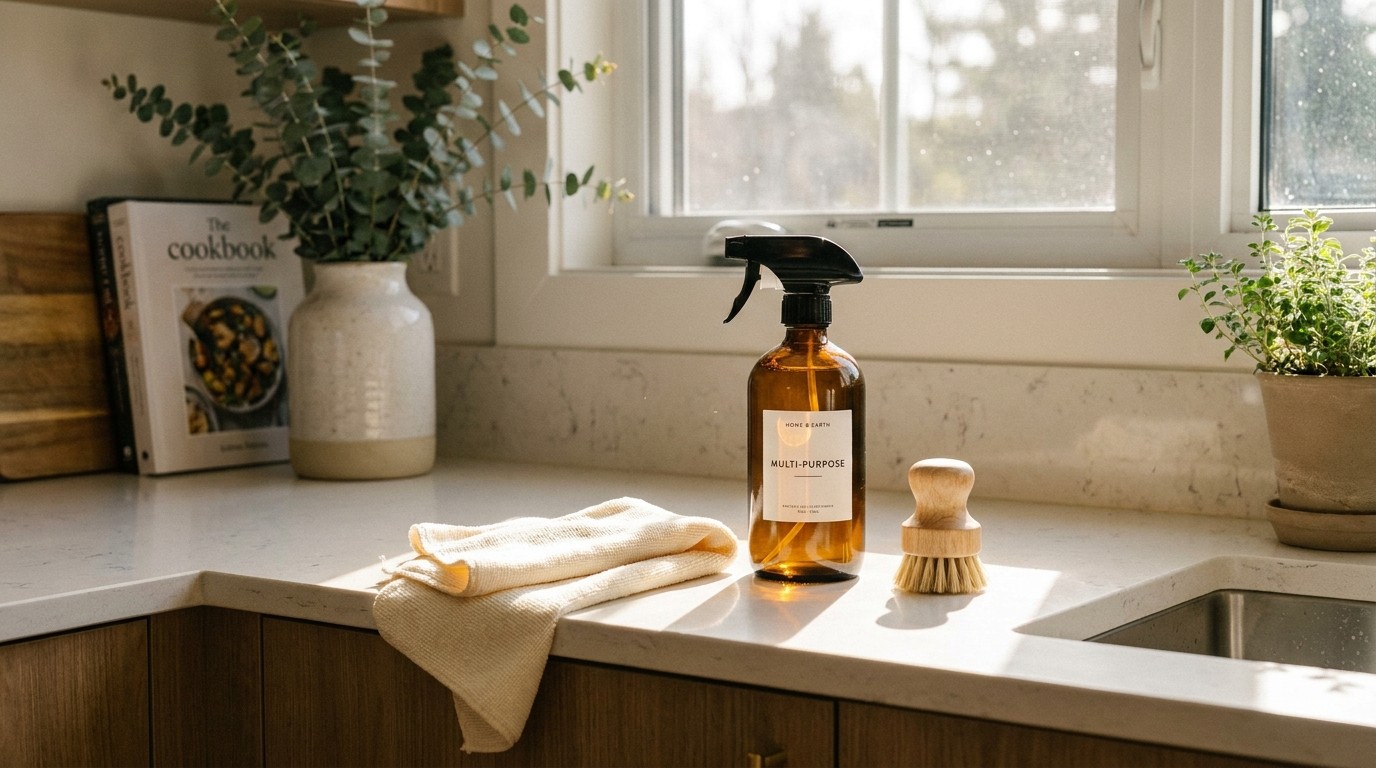
🧽 Arsenal for Safe Quartz Care:
Prepare these safe tools and cleaning agents before getting to work.
Daily Care: A Simple Soap Solution
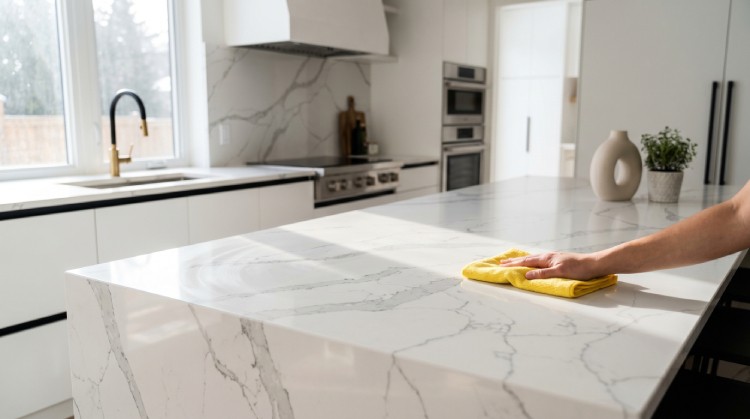
For regular, daily maintenance of perfectly clean quartz countertops, you absolutely do not need expensive or harsh chemicals. Quartz's best friend is warm water, a high-quality microfiber cloth, and a mild detergent.
- Preparation: In the sink or a small bowl, mix 2-3 cups of warm water with a few drops of regular mild liquid dish soap.
- Dip a microfiber cloth into the solution and wring it out well (it should not be soaking wet).
- Carefully and smoothly wipe the countertop surface.
- The secret for stains: For areas with dried dirt (e.g., from coffee or jam), simply leave a thick soapy foam on the surface for about 5 minutes to gently soften the stain.
- Wipe the countertop with a clean, damp cloth, and then be sure to wipe it dry so that no ugly soap streaks remain.
Removing Dried Dirt and Dough
Sometimes, a simple damp wipe is not enough for hard, hardened food residue, caramel, or dough. In this case, never use metal kitchen sponges or knives—you will need a standard plastic culinary spatula or a special plastic scraper.
- Apply warm soapy water directly to the affected area and leave for 5-10 minutes to soften.
- Carefully, holding the plastic scraper at a slight angle (about 45 degrees), scrape off the dirt.
- Wipe the cleared area with a damp microfiber cloth.

Use only plastic tools for stubborn stains to guarantee you won't scratch the polished quartz layer.
Fighting Stubborn Kitchen Grease
In the kitchen, regular dish soap sometimes cannot cope with the thick, sticky grease buildup that forms near the stovetop. In this case, a safe and powerful homemade degreaser will help you perfectly.
- Recipe: In a spray bottle, thoroughly mix: 2 cups of clean water, ¼ cup of rubbing (isopropyl) alcohol, and 1 tablespoon of liquid castile (or mild household) soap.
- Generously spray the sticky, greasy area.
- Let the solution work and break down the lipids for 2-3 minutes.
- Wipe the area with clean microfiber and make sure to rinse with clean water.
How to Safely Remove Stubborn and Sticky Stains
Usually, undiluted vinegar, bleach, or aggressive hydrogen peroxide are used for stubborn household stains. But for quartz, they are too aggressive! They can "burn" the color or destroy the resins within the stone. Instead, try the following methods:
Sticky substances (gum, glue, label residue)
Special citrus oil-based products (like Goo Gone) are excellent for removing tape or glue residue. They are absolutely safe for polished quartz countertops. Apply a little product directly to the stain, leave for 5-10 minutes, and then gently wipe with a soft cloth and a warm soapy solution.
Stubborn colored stains (permanent marker, ink, wine)
Take rubbing (isopropyl) alcohol. Generously moisten a soft cloth (or a cotton pad) with it and gently rub the stain. As the ink transfers to the cloth, constantly turn it to a clean side, re-moisten, and continue until the stain disappears completely.
What a Quartz Countertop Fears Most: Major TABOOS
Quartz countertops consist of 90-95% natural crushed quartz, while the remaining 5-10% are polymer resins and pigments that bind the stone. To avoid damaging the structure of these resins or destroying the glossy polished layer, manufacturers emphasize strict limitations:
✨ How to Restore Perfect Shine to the Countertop?
Clean quartz already looks beautifully glossy. But if you want to achieve that perfect "showroom" mirror effect, use special commercial spray polishes designed specifically for quartz stone. Strictly follow the instructions on the packaging. And for easy daily glossing, simply buff the dry, clean surface with a dry microfiber cloth.
Beautiful and expensive quartz countertops actually only need gentle, regular, and careful maintenance. Always use cutting boards for chopping food (to avoid dulling knives and leaving micro-scratches), avoid aggressive acidic cleaners and hot pots, and this flawless surface will serve your family for decades!