A trap on the windowsill will not solve much if a forgotten onion is leaking in the pantry or fermented residue remains at the bottom of the trash can. Getting rid of fruit flies requires two jobs at once: remove the place where larvae develop and catch the adults already flying around the kitchen.
Start with a quick inspection rather than the vinegar bottle. Tiny flies around produce, drains, and houseplants are not always the same insect, and one trap does not address all three problems.
The short version
Source removal does the essential work. A trap reduces the adult population, but it does not reach eggs or larvae in food residue, drain buildup, or damp potting mix. If the source remains, new flies will continue to emerge.
First, make sure they are fruit flies
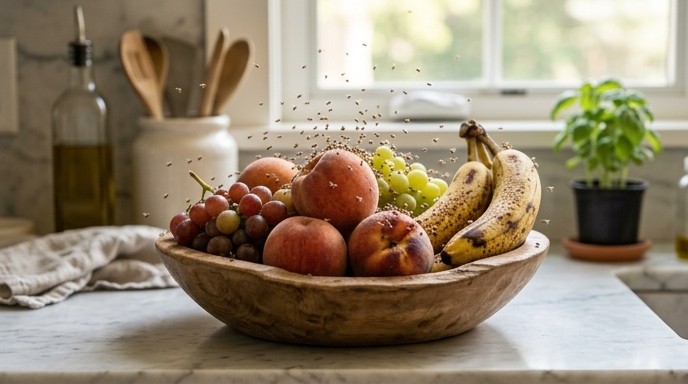
Common fruit flies, also called vinegar flies, are about 1/8 inch long. They are usually tan to brown, often with reddish eyes, and gather where fermentation is underway: overripe produce, juice, wine, beer, garbage, or unrinsed containers.
- Fruit flies
Gather around produce, drinks, garbage, and sticky food residue. - Drain flies
Fuzzy and moth-like; often rest on walls close to a drain. - Fungus gnats
Dark, slender, and long-legged; fly close to damp houseplant soil.
Where do you see the flies most often?
Select a situation to open a quick suggestion.
Around produce, juice, wine, or garbage
Fruit flies are the likely suspect. Inspect all food and sticky residue, then use a vinegar trap to catch adults after the source is removed.
Almost exclusively around a drain
If the flies are fuzzy and hold their wings like a small roof when resting, they may be drain flies. They develop in moist organic buildup, so a trap beside the fruit bowl will not remove the source.
Around houseplants or after watering
Fungus gnats are more likely. They develop in damp potting mix. Allow the top layer to dry between waterings when that is appropriate for the plant; vinegar bait is not the main control.
Remove the breeding source
Fruit flies are drawn not to a tidy bowl of sound apples itself but to yeast and other microorganisms in produce that is overripe, damaged, or beginning to ferment. Sometimes the source is obvious. Sometimes it is a few berries under a bag, a bottle with a film of juice, or an onion deteriorating at the back of the pantry.
- Produce
Check bananas, peaches, berries, potatoes, onions, and anything stored outside the refrigerator. - Trash, compost, and recycling
Empty the containers, wash the bins, and rinse bottles, cans, and jars. - Sticky spills
Wipe shelves, the floor near the bin, the fruit bowl area, and surfaces around a juicer or blender. - Damp areas
Inspect sponges, towels, mops, refrigerator drip pans, drains, garbage disposals, and spaces under appliances.
Seal spoiled produce in a bag before discarding it. Refrigerate very ripe fruit that you intend to eat when refrigeration suits that produce. Then wash the place where it was stored; even a small, overlooked spill can remain attractive.
Choose a trap for the adult flies
Set a trap after cleanup or while you are completing it. Its purpose is to intercept adult fruit flies already in the room. It is not a substitute for finding the source.
Apple cider vinegar and a drop of dish soap
Pour 1/4 to 1/2 cup of apple cider vinegar into a small glass and add one or two drops of unscented liquid dish soap. The fermented aroma attracts fruit flies, while the soap reduces the liquid’s surface tension.
- Place the glass near the former source where children or pets will not knock it over.
- Do not whip the mixture into foam; a gentle swirl is enough.
- Check it daily. Discard the liquid, wash the glass, and refresh the bait as needed.
Adult numbers decline, and fewer new flies appear once the breeding material is gone.
The same number returns each day. A source remains hidden, or the insect has been misidentified.
A jar with plastic wrap
Place a small piece of overripe fruit or a little apple cider vinegar in a jar. Cover it with plastic wrap, secure the wrap with a rubber band, and make several small holes.

Check the jar daily. Do not let fruit bait sit indefinitely: close the used trap, discard the contents, and wash the jar so the bait itself does not become another breeding site.
A paper funnel with wine or juice
Pour a small amount of wine, beer, or fruit juice into a narrow jar and add a paper funnel without letting its tip touch the liquid. This is a practical way to use what is already on hand. It is more reliable than leaving an open bottle on the counter because the funnel makes it harder for flies to leave.
What about commercial traps?
A ready-made trap may look neater and require less setup. Choose a product labeled for fruit flies and follow its directions. Like homemade bait, it catches adults but does not remove spoiled food or moist organic residue.
What if the flies gather around the sink?
Flies near a sink are not proof that they are breeding in the pipe; water or food residue around the fixture may simply attract them. Start by cleaning the strainer, overflow opening, stopper, garbage disposal splash guard, and other reachable surfaces.
If organic film is present inside the drain, clean reachable surfaces with a dedicated long-handled drain brush and detergent while avoiding splashes. Do not use a brush that touches dishes, and wash the sink after the job.
If needed, apply an enzyme or other drain product exactly as the manufacturer directs. Never combine drain products or add bleach, vinegar, or another household cleaner. Baking soda and vinegar make visible foam, but that reaction is not a reliable way to remove all organic film and larvae.
How to prevent fruit flies from returning
- Do not leave damaged or overripe produce exposed. Eat it, refrigerate it, or discard it.
- Empty food waste frequently. Wash the trash or compost bin, lid, and the floor beneath it.
- Rinse recycling. Pay particular attention to juice, wine, beer, and sweet-drink containers.
- Let sponges and towels dry. Do not leave them sitting in food-contaminated water.
- Inspect pantry produce regularly. One deteriorating potato or onion can remain unnoticed longer than a fruit bowl.
If the flies are not going away
A few adults may still appear after the source is removed, but their numbers should trend downward. If they do not, inspect food waste, recycling, hidden produce, areas under appliances, the garbage disposal, and the drain again. Then revisit the identification: drain flies and fungus gnats require different source control.
If large numbers repeatedly emerge from one drain, you notice a sewage odor or leak, or the organic buildup is inaccessible, contact a plumber or pest-management professional.
The bottom line
The most effective fruit fly trap begins with cleanup. Find the food or moist residue where larvae can develop, remove it, and then use vinegar or another fermented bait for the adults. If the pattern does not point to produce, recycling, or food waste, confirm that the insects are fruit flies before repeating the same trap.