Mold on a curtain, shirt, or upholstered chair is more than a stain and musty smell. It means the material stayed damp long enough for growth to begin. Cleanup therefore has two jobs: decide whether the item can be restored safely and correct the moisture problem so mold does not return.
The right method depends on construction, not the color of the spot. A shirt can be washed and dried all the way through. Mold in a couch cushion may extend into the foam. Plastic blinds are hard surfaces, while a coated roller shade may be damaged by a homemade cleaning solution.
- Clothes and bedding
Follow the care label, use detergent, and dry completely. - Removable curtains
Wash only when the manufacturer permits it. - Upholstery
Determine whether growth is on the surface or inside the padding. - Hard blinds
Plastic and metal can usually be cleaned with detergent and water.
Correct the moisture source first
Laundry will not provide a lasting solution if a curtain touches a wet windowsill, condensation forms behind the couch, or slightly damp clothes are stored in a closed closet. Check for leaks, window condensation, bathroom ventilation, furniture pressed against a cold wall, and persistently high indoor humidity.
The CDC recommends drying wet materials within 24 to 48 hours when possible and keeping indoor relative humidity no higher than about 50%. A dehumidifier can support that work, but it does not replace repairing a leak or correcting condensation.
Treat the stain as a clue
Mold along the bottom of a curtain often points to condensation or contact with a wet surface. Growth on the back of a couch suggests a cold damp wall and limited airflow. Mold in a closet may begin with damp clothing or hidden moisture behind furniture.
Is this item worth trying to save?
Select the closest situation to open a recommendation.
A small spot on a washable item
The item is often a reasonable candidate for cleanup. Isolate it from clean textiles, check the care label, wash with detergent, and dry it completely.
Mold on a couch, mattress, or padded cushion
Porous padding is difficult to clean and dry all the way through. Seek restoration advice or consider disposal when growth is extensive, the item stayed wet, or odor comes from inside.
An expensive, delicate, or sentimental item
Do not experiment with vinegar, bleach, or a homemade paste. Contact a textile cleaner or conservator and explain both the mold and the source of water damage.
An item exposed to sewage or floodwater
Mold is not the only concern; the water may contain other contaminants. Do not use the ordinary home-laundry method for the item. Professional assessment is appropriate, and some porous materials will need to be discarded.
Protect yourself before cleaning
Test every product on an inconspicuous area and read the care label first. Ventilate the work area. For visible mold cleanup, the CDC recommends protecting skin and eyes and avoiding inhalation of dust and spores: wear gloves, fully enclosed goggles, and at least a well-fitting NIOSH-approved N95 respirator.
People with asthma, COPD, mold allergy, another chronic lung condition, or a weakened immune system should not participate in mold cleanup. Children should not handle moldy belongings either.
The area is small, the item can be washed or wiped completely, it dries quickly, and the moisture problem has been corrected.
Growth covers a large area, odor comes from the padding, the item remained wet, or mold returns soon after cleaning.
Clothes and bed linens
Keep the affected item away from clean laundry and do not shake it indoors. If loose, dry surface growth is present and you can work safely, take the item outside while wearing protective equipment and gently remove only material that releases easily. Do not use an ordinary vacuum without a HEPA filter.
- Read the care label. Do not soak an item labeled dry-clean only.
- Wash it separately. Use regular laundry detergent and the warmest water permitted for that fabric.
- Add another product only when allowed. Use chlorine or oxygen bleach only if both the textile label and product directions permit it.
- Inspect after washing. If odor remains or new surface growth appears, do not return the item to storage or cover the smell with fragrance.
- Dry completely. Follow the care label. Sunlight may assist drying, but it does not replace laundering and may fade some textiles.
Where vinegar and baking soda fit
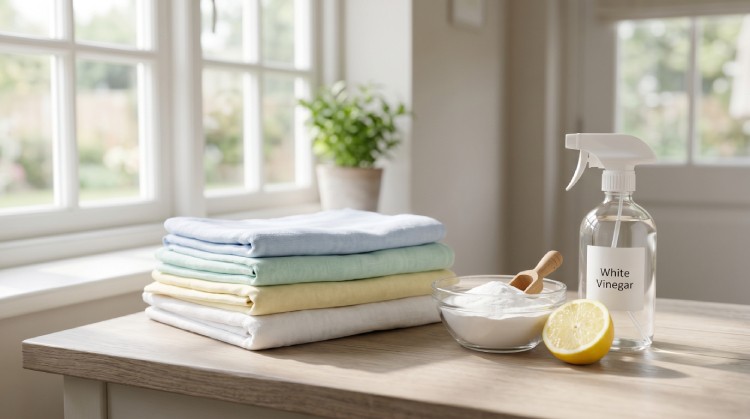
Vinegar is sometimes used as an odor aid, but it is not a guaranteed disinfectant for every mold species. Baking soda does not replace laundering either. Do not combine household ingredients with one another or with bleach. A safer baseline is detergent plus only one additional product approved for that textile.
Curtains, fabric shades, and blinds
Removable fabric curtains
Check the label or manufacturer instructions. If machine washing is allowed, follow the clothing process: a separate load, suitable temperature, approved product, and complete drying before rehanging. Address window condensation and ventilation at the same time.
Roller and Roman shades
Do not apply a lemon-and-salt paste without manufacturer approval. Acid can alter color, salt can abrade a coating, and excess water can distort the backing. Use only the specified cleaning method for a small surface spot. Send widespread or recurring growth to a specialist textile cleaner.
Plastic, metal, and wooden blinds
Plastic and painted metal can usually be wiped with water and a small amount of detergent, followed by a clean damp cloth and thorough drying. For wood, bamboo, and specialty finishes, follow the manufacturer’s limits on products and moisture.
Upholstered furniture
Upholstery is more complicated than a shirt because padding beneath the fabric can remain wet after the surface feels dry. The EPA notes that mold can enter the pores and crevices of absorbent material, making complete removal difficult or sometimes impossible.
If the spot is small and superficial, the moisture source is fixed, and the manufacturer permits wet cleaning, test the method first. Use as little liquid as possible, do not saturate the foam, and arrange rapid, complete drying.

When furniture stayed wet, growth covers a substantial area, odor comes from the padding, or the piece is valuable, contact a water-damage restoration professional. Heavily affected porous material may need to be discarded.
Bleach: follow the label, not a universal recipe
Chlorine bleach is not a universal fabric treatment. It can remove color, weaken fibers, or be prohibited by the textile manufacturer. Oxygen bleach is not automatically safe for every colored material either.
If both labels permit a product, follow its exact dilution, contact time, rinsing directions, and ventilation requirements. Do not reuse a ratio from another brand; product concentrations differ.
Never mix cleaning products
Do not combine chlorine bleach with ammonia, vinegar, acidic products, or another cleaner. The CDC warns that mixing household products can create dangerous fumes. Use one product at a time and bring fresh air into the room.
How to prevent mold from returning
- Repair leaks and correct condensation. Cleaning the stain alone is not enough.
- Dry wet textiles quickly. The CDC benchmark is within 24 to 48 hours when possible.
- Ventilate bathrooms and kitchens. Run exhaust ventilation during and after moisture-producing activities.
- Monitor humidity. Use a dehumidifier and hygrometer in persistently damp rooms; aim for no more than about 50% relative humidity.
- Never store slightly damp laundry. Leave enough space for air to move through closets.
- Move upholstered furniture away from a cold damp wall. Inspect the back and baseboard periodically.
The bottom line
A small spot on a washable item can often be handled with the correct cycle, an approved product, and complete drying. The threshold for DIY cleanup is lower with upholstery, mattresses, and layered shades: once moisture and mold enter the interior, the surface does not reveal the whole problem. In every case, lasting control begins with fixing the moisture source.