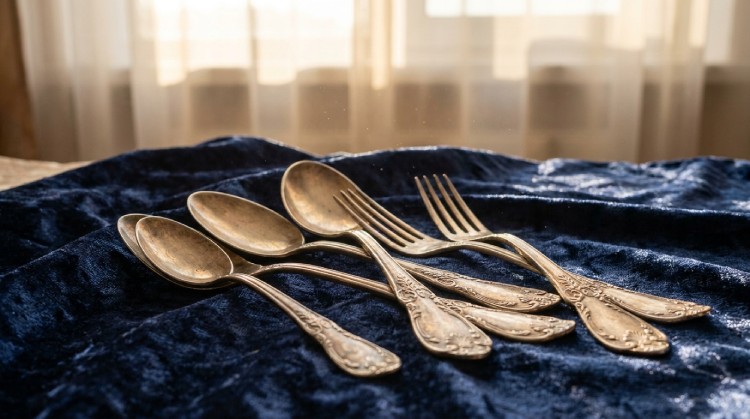
Silver can tarnish inside a closed drawer, because the problem is not simply “exposure to air.” Sulfur-containing gases, dust, food residue, and unsuitable storage materials all matter. Effective storage therefore needs to limit pollutants, prevent contact with reactive materials, and stop pieces from rubbing against one another.
The plan below works for ordinary flatware, hollowware, silver-plated objects, and many household heirlooms. Antiques, coins, jewelry with stones, and objects containing wood, ivory, enamel, or adhesives need a more cautious, object-specific approach.
- a clean, soft cloth for careful drying;
- acid-free, unbuffered archival tissue;
- a separate polyethylene bag or container for each object;
- an appropriate tarnish-inhibiting cloth or strip when needed;
- a dry cabinet with a stable temperature, away from cooking steam and bathrooms.
Why silver tarnishes
The dark layer found on silver is primarily silver sulfide. It forms when the metal reacts with sulfur-containing gases in the air, especially hydrogen sulfide. Possible sources include polluted air, certain foods, rubber, latex, wool, felt, some paints, and some wood-based storage materials.
Tarnish does not automatically mean that an object is ruined. However, mechanical polishing removes a small amount of metal each time. This is especially important for silver plate, where repeated aggressive polishing can wear through the thin silver layer and expose the base metal.
Identify the object before choosing a storage method
Ordinary sterling-silver flatware and hollowware
Pieces made entirely from silver or a standard silver alloy can usually follow the basic system: clean and dry the object, wrap it individually, and place it in a closed bag or container.
Silver-plated objects
Avoid frequent or aggressive polishing. If the plating already shows wear, patches, or areas of a different color, seek advice from a qualified conservator or experienced jeweler.
Jewelry and mixed-material objects
Pearls, coral, amber, enamel, wood, ivory, adhesives, and some gemstones may react badly to moisture, polishing compounds, or an overly dry enclosure. Follow the maker’s care instructions rather than applying flatware advice to every object.
Antiques, collectible coins, and important heirlooms
Patina may be part of an object’s history, and amateur cleaning can reduce its collectible value. Have valuable or unidentified objects assessed before polishing or sealing them in long-term storage.
How to prepare silver for storage in 6 steps
1. Remove surface dirt and dry the object completely
Do not store silver with food particles, salt, grease, fingerprints, or water droplets on it. Cleaning depends on how the object is made, so follow the manufacturer’s instructions for modern tableware. Do not soak or machine-wash antique, plated, weighted, or composite objects unless their care guidance specifically allows it.
2. Wrap every piece separately
For long-term storage, use sulfur-free, acid-free, unbuffered tissue sold for archival or conservation use. It protects the surface from scratches and creates a barrier between the silver and questionable surrounding materials.
Do not assume that baking parchment, kraft paper, paper towels, or ordinary gift tissue are equivalent. Their composition and long-term stability may be unknown.
3. Choose the right plastic bag
After wrapping, place the object in a clean polyethylene bag. Look for material identified as PE, LDPE, or HDPE. Gently press out excess air and close the bag.
This does not create a vacuum or “stop oxidation forever.” A closed polyethylene bag simply slows the entry of additional tarnishing gases. Avoid unidentified soft plastics and PVC for long-term silver storage.
4. Add tarnish control when needed
A purpose-made tarnish-inhibiting cloth, anti-tarnish strip, or small container of activated charcoal can capture or react with sulfur-containing gases. These materials work best inside a closed bag, box, or display case. Follow the product instructions and replace them on schedule.
Silica gel manages humidity but is not a substitute for removing tarnishing gases. Use it in a closed sachet, inside a sealed enclosure, and keep loose granules away from the silver surface.
5. Separate pieces and support fragile shapes
Do not stack flatware in a tight, unprotected bundle. Give each object its own compartment or bag. Support large teapots, vases, and trays so that handles, spouts, feet, and thin edges do not carry the weight of neighboring objects.
6. Choose a stable location
A dry interior cabinet in a living area is usually better than a bathroom, damp basement, unconditioned attic, or a cupboard next to a stove, radiator, or heating vent. Stability matters more than finding an unusually cold location.
Are wooden silver chests and display cabinets safe?
Individual slots can protect flatware from scratches, but wood alone does not make a chest conservation-safe. Wood, plywood, adhesives, finishes, and some fabrics may release organic acids or sulfur-containing compounds. Old velvet or felt linings are not automatically suitable either.
If you already own a wooden silver chest, avoid direct contact between the silver and the chest materials. Use individual archival wrapping or a tested tarnish-inhibiting fabric. A glass-fronted cabinet reduces dust but does not become airtight simply because the doors close.
Five common storage mistakes
- Putting chalk in the drawer. Chalk is not a controlled conservation material. It can crumble, create dust, and scratch silver.
- Using newspaper or ordinary cardboard. They may contain acids, sulfur compounds, and unstable inks.
- Using rubber bands, latex, wool, or felt. These materials may release sulfur compounds that accelerate tarnishing.
- Wrapping silver tightly in household cling film. Its exact composition may be unclear, it can trap moisture, and it offers little physical protection.
- Polishing to a bright shine before every storage period. With antiques and silver plate, repeated cleaning may be more damaging than the tarnish.
How to monitor stored silver
Inspect the enclosure every few months for condensation, tears, brittle plastic, new discoloration, or abrasion. If silver tarnishes quickly inside a closed bag, do not simply polish it again. Check the seal, remove nearby rubber, cardboard, or wool, and replace exhausted tarnish-control material.
Good storage cannot guarantee that silver will never change color. Its realistic purpose is to reduce cleaning, prevent scratches, and preserve thin silver plating for longer.