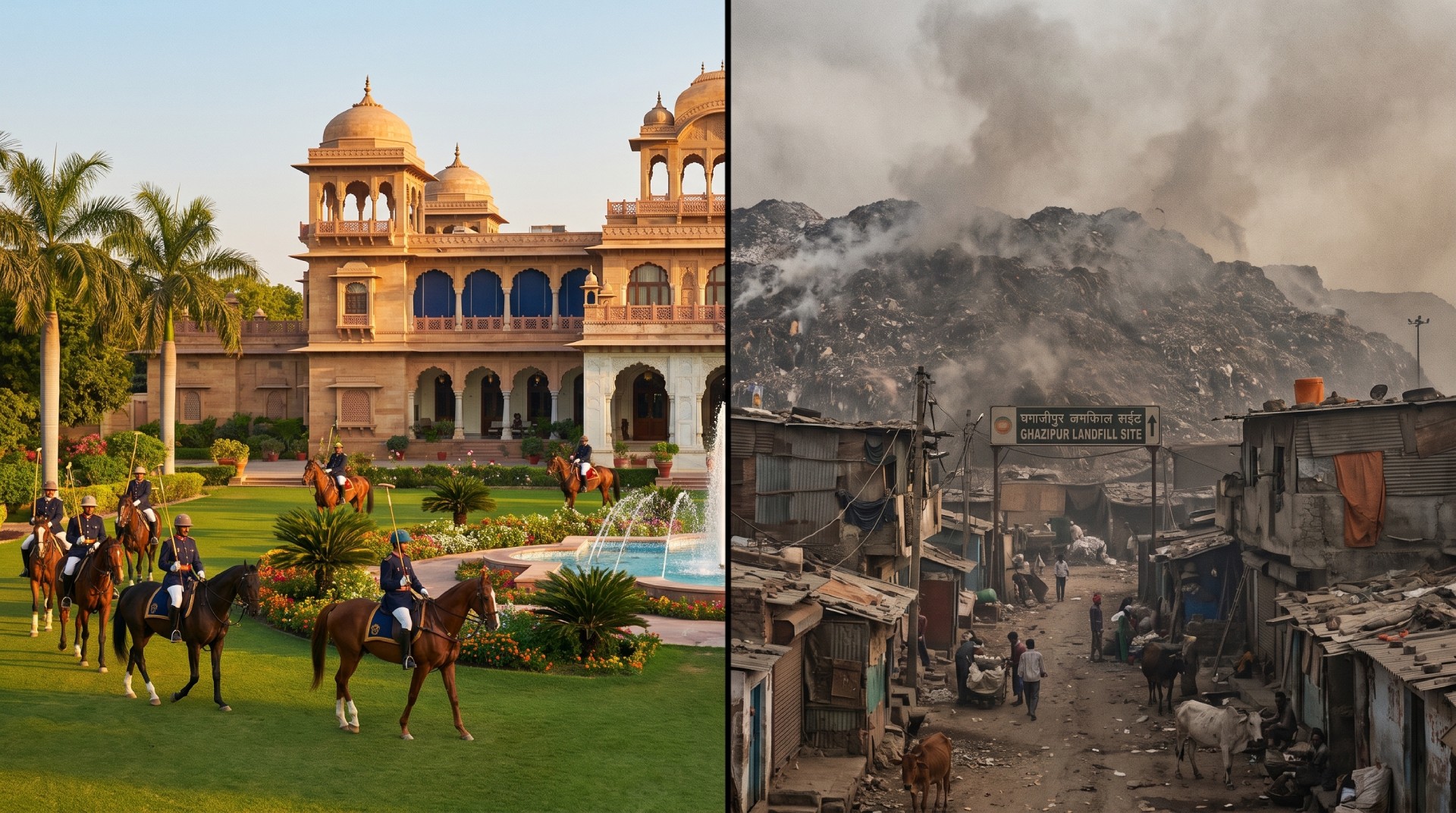
Statistically, the highest chance of starting your life falls on India. One in six people on the planet is born there. But imagine you are so lucky that, being born Indian, you end up in the exclusive 1% of the wealthiest people who own 40% of the country's national wealth.
The Rich and the Poor (Birth Lottery)
Sunjay Kapur didn't have to imagine this, as his father owned a massive company and sent his son to study in London. Sunjay was married three times, including to one of Bollywood's most popular actresses, and by 2022 had a net worth of $1.2 billion. He was also a close friend of Britain's Prince William.
A Fatal Freak Accident
But the unthinkable happened. Last year, during a polo match in England, a bee flew right into Sunjay's mouth and stung him. The billionaire developed a severe allergic reaction and tragically passed away.
But what if you weren't lucky enough to be born into a wealthy family? Then you might end up in New Delhi or Kolkata—cities holding world records for air pollution—or in Varanasi, India's "capital of death." There, by the sacred Ganges River, up to 400 bodies are cremated daily, and corpses are often simply thrown directly into the water.
Without money for decent food, you would have to eat at local street food stalls (assuming, of course, the preparation methods don't ruin your appetite). You would also not only observe but personally participate in creating an enormous amount of garbage, as it is not considered shameful there.
There is an internet joke: if you click a random spot on the map of India and open Street View, you will find garbage every single time. And this is not an exaggeration — try it yourself on Google Earth.

Dirty Records and a 70-Meter Trash Everest
To truly be shocked, you only need to look at an Indian landmark aptly dubbed the "Trash Everest." This is the Ghazipur domestic waste landfill, located in the suburbs of the Indian capital. Over its 40 years of existence, it has grown to a size comparable to a dozen football fields.
When the mountain of waste grew to 70 meters (which is almost equal to the height of the Taj Mahal), authorities realized that helicopters and planes could crash into it. But instead of clearing the Everest, they simply installed warning lights for safety. The landfill constantly emits toxic gases and poisons the groundwater. Every few years, massive fires break out here due to the methane trapped inside the waste.
Thousands of people, including children, work among these mountains of trash every day. They manually sort through the waste, separating plastic and aluminum. At the end of the workday, they sell their findings to dealers, earning an average of about $10 a shift.
The Toxic Air of Delhi and Vizag
New Delhi is just one of eleven districts in the massive Delhi metropolis, home to 27 million people (five times the population of Finland). Air pollution here exceeds the permissible limit by 20 times. The dust is so fine that no filters can catch it. A study by the University of Chicago shows that for the residents of Delhi, this invisible impact results in a loss of at least 5 years of life.
A prime example of industrial danger is the city of Visakhapatnam (Vizag). It is called the "City of Eternal Spring" because of its beaches and nature reserves. However, a major scandal occurred in 2020: a toxic gas leak at a plastic manufacturing plant. People fell unconscious right on the streets. A total of 12 people died from the poisoning.
A Sacred River or a Sewer?
The biggest shock for tourists is the Ganges River. It is crystal clear at its source—the Gangotri Glacier in the Himalayas—but turns into a stream of waste further down. Yet, for over 400 million people, it is the primary source of water. Near the sacred city of Varanasi, the water contains about 600 fecal enterobacteria per 1 ml—which is 120 times above the safe limit! Besides daily cremations, the bodies of those who couldn't afford a cremation, as well as unmarried girls, pregnant women, and children, are thrown into the water.
Trash Habits and the Caste System
The Indian habit of littering is linked to the old caste system. The lowest caste (the "untouchables") did the cleaning, while for others, it was beneath their dignity. Although castes were banned in the 1950s, the mentality remains. Many believe that if someone works as a street sweeper, it is their karma for past sins.
Previously, Indians packaged food in leaves or clay, which decomposed quickly (or were eaten by sacred cows). With the arrival of plastic, the habit of throwing trash at one's feet remained, but now it doesn't disappear. Add to this the lack of street bins and beggars who steal metal bins for scrap, and you get a vicious cycle.
A Deadly Profession
Cleaning urban sewage ditches is mostly done manually. It is estimated that over 22,000 sanitation and waste collection workers die in India every year (suffocating or drowning in the tunnels).
Recycling and Innovations
Despite the horrors, there is a constellation of companies in India that have monetized waste recycling:
- 👟 Sneakers from bags: The company Thaely produces up to 15,000 pairs of shoes a week from plastic bags and bottles.
- 🍽️ Sugarcane tableware: Chuk manufactures eco-friendly tableware from fibrous cane residue that decomposes in 3 months.
- 🌸 Incense from flowers: The startup Phool collects temple flowers from the Ganges (over 1,000 tons daily) and turns them into safe incense.
- 🚬 Cigarette butt recycling: Code Effort collects cigarette filters, cleans them, and makes stuffing for soft toys.
- ⬛ Smog tiles: The Carbon Craft Design project turns black carbon from polluted air into beautiful cement tiles.
 Фото: Anupams123 / Wikipedia
 The Exception to the Rule (Indore City)
Among the polluted cities, an absolute leader has emerged—the city of Indore. Just 10 years ago, it was drowning in garbage. But thanks to strict reforms, the situation has changed:
- 2017: Cleanest city in India.
- 2022: The country's first "7-star garbage-free city."
- 2023: Cleanest air among megacities.
The city produces 1,200 tons of garbage daily. It is collected by 850 garbage trucks directly "door-to-door." Over a thousand ragpickers received official jobs. Wet waste becomes biogas for city buses, while dry waste is sold. Today, there are no landfills in the city. All waste is disposed of within 24 hours. So far, it is just one city, but who knows, maybe it will change the future of all of India.