Fatigue, irritability, poor sleep, or frequent colds cannot tell you which vitamin a child is “missing.” These signs have many possible causes. It is far more useful to look at the child’s diet, age, growth, and risk factors—and to consider a supplement only when there is a clear reason for it.
This is not a ranking or a complete list
Nutrients work together. These five are included because parents frequently encounter them in conversations about selective eating and children’s supplements. Depending on the child, vitamin B12, iodine, calcium, folate, or another part of the diet may deserve more attention.

The best starting point is not a list of capsules but the foods a child eats across an ordinary week.
Start by checking three things
Look at the usual pattern across several days, not one unsuccessful lunch.
Age, a vegan diet, chronic illness, or malabsorption can change nutrient needs.
Routine prevention, a diagnosed deficiency, and a promise to “boost immunity” are very different reasons.
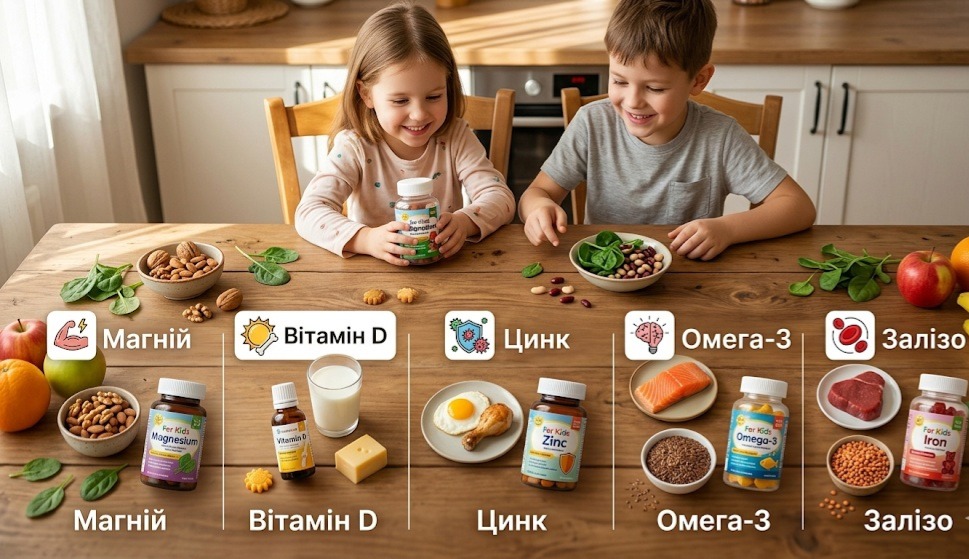
1. Iron: blood, growth, and development
Iron is needed to make hemoglobin, which carries oxygen, and it supports growth and nervous-system development during childhood. Food sources include meat, poultry, fish, eggs, lentils, beans, peas, and iron-fortified cereals.
Iron from beans and grains is absorbed better when the meal also contains vitamin C, such as bell peppers, broccoli, berries, citrus fruit, or tomatoes. This can be as simple as serving lentils with vegetables or cereal with berries.
Preterm and low-birth-weight infants, children with highly restricted diets, teens with heavy menstrual bleeding, and children with conditions that impair absorption may need closer attention. Pallor, fatigue, and poor concentration can occur with anemia, but they do not confirm it without pediatric assessment and, when appropriate, testing.
2. Vitamin D: bones and calcium metabolism
Vitamin D helps the body absorb calcium and supports normal bone formation. Few foods contain much naturally; fatty fish, egg yolks, and certain fortified foods are among the main dietary sources.
Unlike most children’s supplements, vitamin D is covered by age-specific preventive guidance. In the United States, the American Academy of Pediatrics recommends 400 IU (10 mcg) daily for infants younger than one year and 600 IU (15 mcg) daily after the first birthday. Recommendations and available fortified foods vary by country, so families elsewhere should follow their national guidance.
Treatment doses for a diagnosed deficiency are a different matter and should be directed by a clinician. Do not add drops, gummies, and a multivitamin by guesswork; check the amount in each serving and the concentration of the specific product.
3. Zinc: growth, wound healing, and immune function
Zinc is involved in cell growth, protein synthesis, tissue repair, and immune function. Meat and seafood are rich sources; dairy products, eggs, legumes, nuts, seeds, and whole grains also contribute.
Zinc deficiency can affect growth and appetite, but ordinary picky eating is not a diagnosis. Risk can be higher with a very limited plant-based diet, certain digestive diseases, and malabsorption. Long-term high doses are not harmless either: they can cause side effects and disrupt the balance of other minerals.
4. Magnesium: muscles, nerves, and bones
Magnesium supports normal muscle and nerve function, protein production, and bone. Food sources include oats and other whole grains, beans, lentils, nuts, seeds, and leafy green vegetables.
Supplement marketing often connects magnesium with calm behavior, concentration, and perfect sleep. In reality, hyperactivity, anxiety, or difficulty falling asleep does not prove a magnesium deficiency. Supplemental magnesium can cause diarrhea and interact with some medicines, so an adult regimen should not be transferred to a child.
5. Omega-3s: more than fish oil in a bottle
Omega-3 fatty acids include plant-derived ALA as well as DHA and EPA, found mainly in fish and seafood. Walnuts, flaxseed, and chia provide ALA, while oily fish provides DHA and EPA.
Omega-3s belong in a varied diet, but a syrup or chewable capsule is not a universal remedy for intelligence, focus, or cold prevention. If a child does not eat fish because of allergy, preference, or a plant-based diet, discuss suitable alternatives with a pediatrician or registered dietitian instead of relying on the claim on a package.
What these nutrients look like in ordinary meals
Oatmeal or another whole grain, yogurt or a fortified alternative, berries, and age-appropriate nut butter.
Lentils, beans, or hummus served with tomatoes, broccoli, or bell peppers.
A fish cake, baked fillet, or fish pasta prepared in a safe texture for the child’s age.
Add a meat or lentil sauce to pasta, or serve a sandwich with egg, cheese, or hummus.
No single food needs to meet every requirement. Repeated variety across the week matters more than producing a perfect plate at every meal.
What to do when a child is highly selective
Instead of pressure or bargaining with dessert, keep at least one familiar food on the table and offer a small amount of something new beside it. Some children need many low-pressure exposures before a food becomes familiar.
If the list of accepted foods keeps shrinking, textures cause gagging, growth is poor, weight is falling, or every meal creates severe distress, speak with a pediatrician. The next step may be a feeding and nutrition assessment rather than a random multivitamin.
Who benefits most from a full diet review
- children following vegan or other elimination diets;
- children with food allergy, celiac disease, inflammatory bowel disease, or another absorption problem;
- preterm infants and children with special growth needs;
- teens who sharply restrict food or lose weight quickly;
- children with poor weight gain, persistent diarrhea, or recurring symptoms that concern the family.
Vitamin B12 deserves particular attention in a vegan diet because there is no reliable unfortified plant source. Iodine, calcium, vitamin D, iron, zinc, protein, and omega-3 intake should also be reviewed.
How to choose a supplement when one is actually needed
- Define the purpose and expected duration.
- Choose a formulation and dose appropriate for the child’s age.
- Check whether the ingredient already appears in drops, fortified products, or a multivitamin.
- Measure liquid products only with the device supplied or recommended by the manufacturer.
- Store the package where the child cannot reach or open it.

Looking like candy is a safety concern, not a benefit. Children should never have unsupervised access to gummy vitamins.
Take special care with iron
Iron should not be given as a trial supplement. Acute overdose can be dangerous for a child. Do not use adult formulas, and never leave supplements in a handbag, bedside drawer, or kitchen cabinet a child can reach.
For more on checking total doses, overlapping ingredients, and interactions, read “7 Supplement Mistakes.”
Bottom line
The five nutrients in this article do not need to become five bottles. Start by looking at what the child eats across a week, whether age or health creates a particular risk, and whether national guidance calls for routine supplementation. A useful supplement solves a defined problem; it does not disguise one or replace a varied diet.
- American Academy of Pediatrics — vitamins and supplements for children
- American Academy of Pediatrics — vitamin D and iron guidance for infants
- NIH Office of Dietary Supplements — iron
- NIH Office of Dietary Supplements — zinc
- NIH Office of Dietary Supplements — magnesium
- NIH Office of Dietary Supplements — omega-3 fatty acids