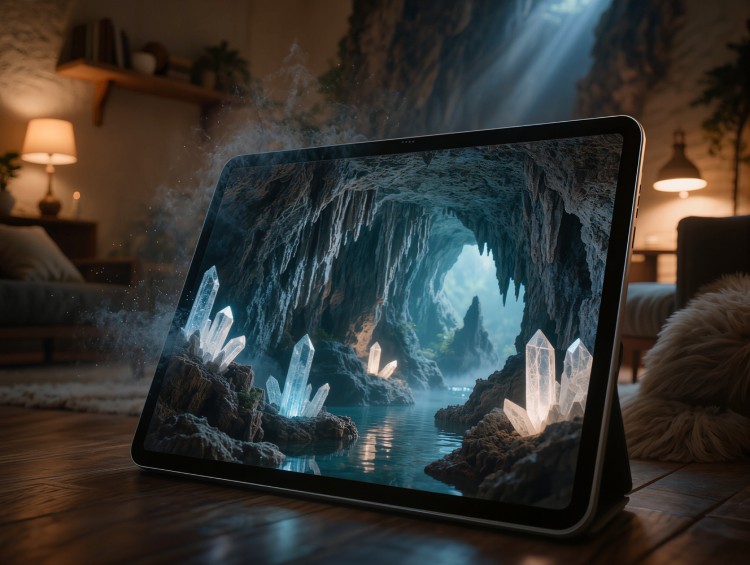
Do you want to descend into mysterious, cool darkness, see prehistoric cave paintings, or wander through the largest cave in the world—all without heavy caving gear, mud, or risking your life? Modern technology allows every one of us to become a true speleologist with just a single click.
Thanks to highly detailed 360° tours, ultra-precise LiDAR scanning, and VR technologies, access to the most restricted, dangerous, and remote underground sites on the planet is now completely open. We have gathered seven incredible virtual locations where wild nature and ancient history have carefully guarded their secrets for millennia.
1. Lascaux Cave (France) — The "Sistine Chapel" of Prehistory
The Lascaux Cave is, without exaggeration, the world's most famous underground gallery of primitive rock art. Because the original cave was permanently closed to tourists in 1963 (the carbon dioxide from visitors' breath began to destroy the priceless frescoes), this official virtual tour is your only chance to stroll through the famous "Hall of the Bulls." You can examine in minute detail the hunting scenes, depictions of horses, deer, and enigmatic symbols created by our ancestors over 17,000 years ago.

2. Chauvet Cave (France) — The Cradle of Human Art
Here you will find some of the oldest and most sophisticated images known to humanity, dating back an incredible 36,000 years! The cave remained perfectly preserved thanks to a rockfall that sealed the entrance for tens of thousands of years. Unlike Lascaux, the drawings in Chauvet Cave feature astonishing dynamism: cave lions, woolly rhinos, and bears are painted in a way that makes them seem to move in the flickering light of a torch. The Google Arts & Culture team has created a stunning VR experience featuring professional narration and 3D models.

3. Sơn Đoòng (Vietnam) — The Largest Cave on the Planet
Sơn Đoòng is so gigantic that an entire New York City block, complete with 40-story skyscrapers, could easily fit inside its main cavern! It has its own fast-flowing underground river, a localized climate system, an entire tropical jungle, and even actual clouds forming beneath the ceiling. National Geographic, in collaboration with Oxalis Adventure, created an interactive 360-degree tour that lets you truly grasp the monumental scale of this underground ecosystem. You can marvel at 70-meter-tall stalagmites and massive sinkholes (dolines) in the ceiling where magical sunbeams break through into the darkness.

4. Lehman Caves (USA) — Bizarre Architecture of Nature
Located in the heart of Great Basin National Park in Nevada, this cave system amazes visitors with its rare and fragile geological formations. Thanks to incredibly detailed, high-resolution LiDAR scanning, you can virtually and safely navigate through the famous "Gothic Palace." Pay special attention to the unique mineral formations resembling parachutes or shields—such strange shapes are found in only a handful of caves across the entire globe.

5. Creswell Crags (UK) — Footprints of the Ice Age
The limestone gorge of Creswell Crags is the only place in the entire UK where Paleolithic cave art has been discovered. This high-quality 3D virtual tour allows you to peer deep into Church Hole cave and learn how primitive hunters and Neanderthals survived amidst the harsh, rocky canyons thousands of years ago during the last Ice Age. Additionally, the cave is famous for hundreds of so-called "Witch Marks" (apotropaic marks) carved during the Middle Ages to ward off evil spirits.
6. Diros Caves (Greece) — A Mystical Underwater Odyssey
The Diros Cave (Vlychada), located on the Mani Peninsula in southern Greece, is a true flooded natural labyrinth. In real life, visitors navigate its narrow tunnels on small wooden boats. The virtual 360-degree tour beautifully captures this magical atmosphere of a subterranean underwater world, where snow-white and pink stalactites reflect perfectly in the crystal-clear, bluish brackish water.
7. Rat’s Nest Cave (Canada) — Extreme Wild Caving
Rat’s Nest Cave in Alberta is the perfect choice for those seeking the thrill of a truly "wild" nature experience, far from artificial lighting and concrete walkways. This VR tour realistically guides you through tight, claustrophobic crawls, muddy tunnels, and massive grottos within the Canadian Rockies. It is the best way to understand what professional, extreme explorers actually experience and see in caves that are entirely unequipped for mass tourism.
💡 How to Get the Most Out of Virtual Caving
- Turn off the lights: Caves are the primordial realm of darkness. The less natural or artificial light in your room, the more contrasting and realistic your screen will appear.
- Headphones are a must: The sounds of dripping water, the roar of an underground river, and the echo of your own breathing in the tours (especially the Chauvet project) create an incredibly deep sense of psychological presence.
- Use VR goggles: If you have even the simplest Google Cardboard headset lying around, use it. Almost all of these websites are optimized and support a virtual reality mode for smartphones, guaranteeing full 3D immersion.
Taking a virtual journey through caves is much more than just technological entertainment. It is a unique opportunity to witness fragile ecosystems that are often permanently closed to the general public for their own protection. It serves as a wonderful reminder of how many astonishing secrets and untold beauties our planet still hides right beneath our feet.