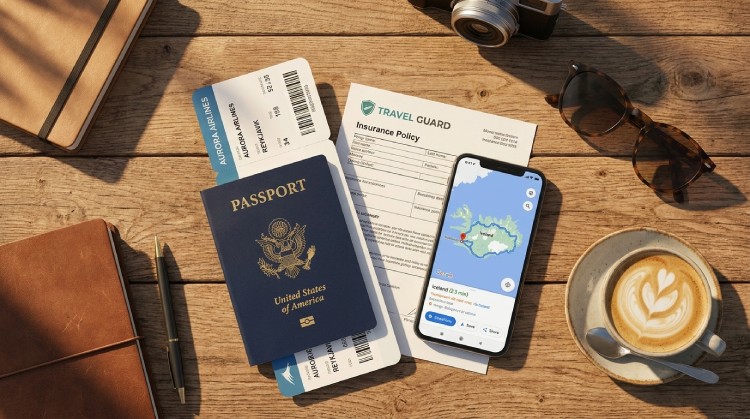
The cheapest travel insurance policy may satisfy a formal entry requirement yet prove almost useless in the situation for which it was purchased. One policy may cover treatment with little or no excess; another may require the traveller to pay first and claim reimbursement later. One may include hiking, while another classifies even a modest trail as an adventure activity.
Travel insurance should therefore be chosen on more than price and the headline coverage figure. The important question is whether the policy matches the risks of your particular trip—and under what conditions the insurer will actually arrange or pay for help.
Is travel insurance compulsory?
There is no single rule for every country. Insurance may be required for a visa or entry to a particular destination, while elsewhere it remains strongly recommended rather than a formal border requirement.
An important rule for Schengen visa applicants
Applicants for a Schengen visa must hold travel medical insurance with at least €30,000 of cover. It must remain valid throughout the Schengen area and for the full intended stay. This requirement applies specifically to visa applicants and should not be assumed to govern every visa-free journey.
Check the official entry rules for both your destination and any transit countries before travelling. Even when insurance is not checked at the border, foreign visitors should not assume that medical treatment will be free.
One name, several different kinds of protection
Products with very different benefits can all be sold under the label “travel insurance”. Before paying, identify which parts are actually included in the package.
Medical expenses abroad
This section may cover emergency treatment, medical consultations, tests, hospital admission, ambulance transport and urgent dental care.
“Medical cover” does not mean that every visit to a clinic will be paid for. Planned treatment, routine examinations, procedures that can wait until the traveller returns home, and conditions expressly listed as exclusions are generally not covered.
Medical evacuation and repatriation
A person in a remote area—or somewhere without suitable medical facilities—may need transport to another city or country. The cost of such an evacuation can be substantially higher than the treatment itself.
Check whether evacuation comes from the main medical limit or has a separate limit. It is also important to understand who authorises an evacuation and whether the assistance provider arranges it.
Trip cancellation or interruption
This is separate from medical cover. It protects the money invested in a journey and may reimburse non-refundable transport, accommodation or a package holiday when the trip must be cancelled for a reason named in the policy.
Covered reasons may include sudden illness, injury, the death of a close relative, serious damage to the traveller’s home, or another defined event. Simply changing your mind, becoming worried by the news or no longer wanting to travel is usually insufficient.
Baggage, documents and delays
A policy may provide benefits for lost or damaged baggage, a delayed flight, an unexpected overnight stay or the replacement of documents. These sections, however, often contain relatively low limits, excesses and detailed conditions.
An insurer may impose a separate maximum for each individual item. An expensive laptop or camera will not necessarily be reimbursed in full even when the overall baggage limit looks adequate.
Seven conditions worth reading especially carefully
Select an item to open the explanation.
1. Territory and dates
The policy should cover every country on the itinerary, including transit countries, and the entire period from departure to return. With annual multi-trip insurance, check the maximum duration of each individual journey. It may be much shorter than the policy’s overall term.
2. Overall cover and internal limits
The headline figure on the first page is only the beginning. Much smaller limits may apply to dental treatment, outpatient care, evacuation, accommodation for a companion, baggage or travel delay.
Consider not only the overall amount but the sub-limit attached to the most plausible risk on your trip.
3. The excess or deductible
The excess—also called a deductible in some markets—is the part of a claim that the traveller pays. If a bill is €80 and the excess is €50, the insurer may pay only the difference.
An excess may apply to each consultation, each claim or the entire trip. Establish which rule applies before buying.
4. How medical treatment is paid for
Under one policy, the assistance provider may contact the hospital and guarantee payment directly. Under another, the traveller must pay personally and submit documents for reimbursement later.
If the second arrangement would be difficult for you, ask about it explicitly. Even with insurance, some medical facilities may still request payment in advance.
5. Assistance and communication
The assistance provider usually answers the emergency call, identifies a clinic and authorises treatment. Check:
- whether the service operates 24 hours a day;
- which languages are available;
- whether it can be contacted through an app or messaging service;
- whether it has partner clinics at the destination;
- what to do if contact is impossible before treatment.
A telephone number without a clear procedure offers limited reassurance.
6. Pre-existing medical conditions
Insurers define a “pre-existing condition” in different ways. It may include not only a diagnosis but also symptoms, investigations, medication changes or treatment during a specified period before departure.
Do not rely solely on a seller’s verbal explanation. Disclose relevant conditions during the application and obtain written confirmation of whether an unexpected flare-up is covered. Withholding information may give the insurer grounds to decline a claim.
7. Activities and transport
Skiing, snowboarding, diving, surfing, high-altitude trekking, skydiving and riding a quad bike or scooter often require additional cover.
Details can matter: the altitude, going off-piste, the presence of an instructor, use of a helmet or possession of the correct driving licence. Do not rely on a package name such as “active travel”; find the specific activity in the policy wording.
When cancellation insurance applies
Standard cancellation cover works only for reasons listed in the contract. The insurer may also examine when the event arose, when the insurance was purchased and whether the expenses were genuinely non-refundable.
It is therefore sensible to buy cancellation protection soon after making the first substantial booking, rather than on the evening before departure. An event already known when the policy was purchased is generally not treated as unforeseen.
In the United States and some other markets, an optional benefit known as CFAR—Cancel For Any Reason—may be available. It can allow cancellation for a reason outside the standard list, but normally reimburses only part of the cost and comes with strict purchase and cancellation deadlines.
CFAR is not a universal international benefit. Instead of searching only for a familiar acronym, read the actual terms: how much will be reimbursed, when the option must be purchased and how late the trip can be cancelled.
What is commonly excluded
Every contract is different, but pay particular attention to:
- medical conditions that were not disclosed;
- injuries during excluded activities;
- incidents involving alcohol or illegal drugs;
- breaking the law or ignoring safety rules;
- property left unattended;
- travel to an area covered by an official warning;
- war, civil unrest and certain natural disasters;
- events already known before the policy was purchased;
- treatment that was the purpose of the journey.
Statements such as “COVID covered”, “suitable for sports” or “baggage protected” mean little without the definitions and exclusions in the contract.
How to check the insurer
Verify the insurer through the financial regulator in the country where the policy is issued. If you are buying a Ukrainian policy, you can check the company in the National Bank of Ukraine’s register. A polished website, familiar logo or prominent position on a comparison site does not replace a regulatory check.
Also establish:
- which company is the insurer and which is only the seller or intermediary;
- which assistance provider operates abroad;
- where a complaint or claim should be submitted;
- how quickly an incident must be reported;
- which documents will be required.
Comparison tools can be convenient, but the decision should be based on the contract rather than the policy’s position in a list.
What to do when something happens
Save the policy, its number and the assistance contact details on your phone and in an offline copy. Share them with a travelling companion or someone at home.
If the situation is not life-threatening, contact the assistance provider first and follow its instructions. Seeking treatment independently at an unapproved clinic may complicate reimbursement.
In an emergency, call the local emergency services first and notify the insurer as soon as reasonably possible. Keep medical reports, prescriptions, bills and proof of payment.
For missing baggage, obtain a report from the carrier. After a theft, contact the police within the period stated in the contract. An insurer will consider not only what happened, but whether the traveller followed the required claims procedure.
A good policy is one you understand
Travel insurance cannot remove the risks of a journey. It defines which costs the insurer will accept—and under what circumstances.
The best policy is therefore not necessarily the most expensive, and certainly not always the cheapest. It is the contract that matches your itinerary, health, planned activities and the amount of money you could lose.
Ten minutes spent reading limits and exclusions before purchase can be more valuable than any promise of “complete protection”.
Sources
- National Bank of Ukraine: register of non-bank financial institutions and insurers
- National Bank of Ukraine: insurance guidance for consumers
- GOV.UK: Foreign travel insurance
- CDC Yellow Book 2026: Travel Insurance, Travel Health Insurance, and Medical Evacuation Insurance
- European Union Visa Code, Article 15
- Smartraveller: What you need to know about travel insurance
- National Association of Insurance Commissioners: Travel Insurance