Choosing a thermal bath in Budapest used to come down to three familiar names: Széchenyi, Gellért or Rudas. That comparison no longer works in 2026. Gellért is fully closed for renovation, leaving first-time visitors with a practical choice between the vast Széchenyi complex and historic Rudas.
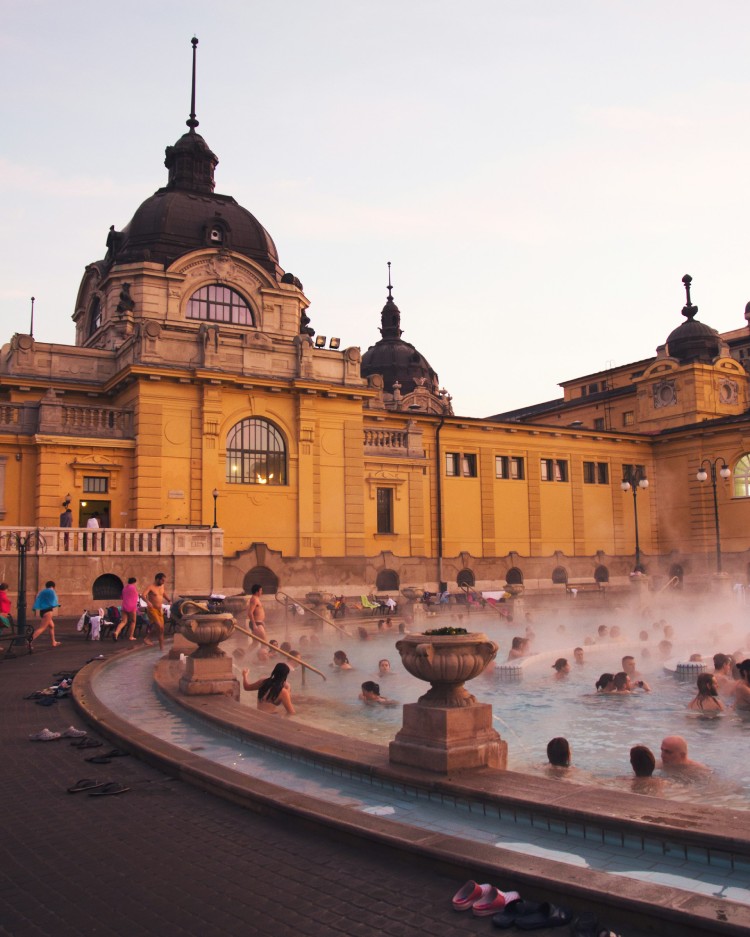
Széchenyi is for travelers who picture Budapest as broad outdoor pools, yellow Neo-Baroque façades and chess games in the water. Choose Rudas for Ottoman architecture, a more intimate atmosphere and a rooftop pool overlooking the city.
The prices and opening hours in this guide were checked in August 2026. Confirm them on the bath’s official website before your visit, as holiday schedules and peak-season prices may change.
At a glance: which bath should you choose?
A first visit, large outdoor pools and several hours of relaxation.
Ottoman architecture, Danube views and late-night bathing.
The bath is undergoing a complete renovation and has no tickets in 2026.
Széchenyi and Rudas do not admit children under 14.
Széchenyi: the classic first-time choice
Széchenyi is one of Budapest’s largest and best-known bath complexes. Its main stage is a broad courtyard with three outdoor pools. One has swimming lanes, another uses currents and massage features, while the warmest is easy to recognize by the chessboards set directly in the water.
Inside are thermal pools at different temperatures, saunas and steam rooms. There is no need to try every pool: the complex is large, and after a few hours the rooms can begin to blur together. It is more enjoyable to choose a handful of areas and avoid turning a spa visit into a competition.
Opening hours
Pool areas close about 20 minutes before the bath itself. Hours may differ on public holidays.
The first hours after opening are the quietest. Crowds increase after lunch, particularly on summer weekends. An early visit is useful not because morning water has special healing powers, but because it is easier to find a locker, move between pools and see the architecture without a crowd.
2026 prices
These are standard day tickets with locker use. The morning ticket, valid when entering before 9 a.m., starts at HUF 10,500 and suits visitors willing to arrive as the bath opens.
Fast Track costs more and is mainly useful for quicker entry. A standard ticket already includes a locker, while a private changing cabin can be added for an extra fee.
Good to know
A swimming cap is required in the lap pool but not in the regular thermal or leisure pools.
Széchenyi no longer rents the main accessories. Towels, slippers, swimwear and caps can be purchased, but bringing your own is considerably cheaper.
Széchenyi also hosts Sparty events. These are separately ticketed parties, not an extension of ordinary daytime admission. If you want a quiet bath visit, check the events calendar before booking.
Rudas: an Ottoman dome and a pool above the Danube
Rudas consists of several distinct sections. The oldest is a 16th-century Turkish bath with an octagonal pool beneath a stone dome. Light enters through small colored openings, creating a very different atmosphere from the broad courtyards of Széchenyi.
The modern wellness area has pools at several temperatures, saunas and an outdoor panorama pool on the roof. From here, you can see the Danube, Elizabeth Bridge and the Pest side of the city.
The rooftop pool is small and can feel crowded at popular times. It is not worth buying a ticket for one photograph alone: Rudas is most rewarding as a combination of the old Turkish bath and the modern complex.
Opening hours and single-gender sessions
The wellness area operates daily. Restrictions for men and women mainly apply to the historic Turkish section:
On Monday, the complex remains open until 10 p.m. Daytime bathing ends at 8 p.m. on the other days.
Late-night sessions run from 10 p.m. to 3 a.m. on Fridays and Saturdays. Tickets are sold online only. The Turkish bath, wellness area and panorama pool are available during night bathing.
Rudas has a more complicated schedule than Széchenyi, so check the exact day before visiting.
2026 prices
These are day tickets covering all areas. Friday and Saturday night bathing costs HUF 15,000.
On selected weekdays, an HUF 8,000 ticket may cover only the Turkish bath or wellness section. Check the included areas and hours carefully before buying.
Good to know
Rudas does not admit visitors under 14.
A regular ticket may not provide immediate admission when the complex is full. The official website states that only Fast Track guarantees immediate entry.
A cap is required in the swimming pool. Towels, slippers and swimwear are sold on site rather than provided free of charge.
What happened to Gellért Baths?
The bath closed because its aging infrastructure and historic building require a comprehensive renovation. The project is intended to preserve and restore its most valuable features, including mosaics, columns, glass structures and Hungarian Secession interiors.
There are consequently no Gellért tickets in 2026. Pages that still recommend it for a current trip or list active opening hours are out of date.
There is no exact replacement for Gellért. Choose Széchenyi if architecture is the priority, or Rudas if you prefer an older historic interior in a smaller complex.
Where to go with children
Since late 2025, Széchenyi has not admitted children under 14. The same age restriction applies at Rudas. It covers entry to the entire complex, not only the hottest thermal pools.
For a family visit, Budapest Spas recommends baths with areas suitable for children:
- Palatinus
- Paskál
- Csillaghegy
- Pesterzsébet
- Római and Pünkösdfürdő during summer
Before traveling, check both the child’s age and the rules for individual pools. Access to medicinal thermal water may still be restricted within a family-friendly complex.
Széchenyi or Rudas: the final choice
Széchenyi is the easier recommendation for a first trip and classic Budapest photographs. It is larger, has a simpler schedule and provides the open-air thermal-pool experience most visitors associate with the city.
Rudas is more interesting if you have already seen Széchenyi or want to combine Ottoman architecture with a view over the Danube. You will, however, need to check the day, available areas and session format more carefully before buying a ticket.
For now, Gellért remains part of Budapest’s architectural history rather than an option for a 2026 itinerary.