The hardest part of planning a first trip to Norway is accepting that you cannot see the whole country in one holiday. Oslo and the Lofoten Islands are far apart even by Norwegian standards, while a journey between neighbouring fjords can take half a day because of mountains, ferries and narrow roads.
A good itinerary therefore begins not with a long list of attractions, but with one region and one main purpose. That could mean travelling by rail between Oslo and Bergen, spending several days among the western fjords, or taking a separate northern trip for the midnight sun or aurora.
Choose one Norway first
Three broad itineraries work particularly well for a first visit.
Oslo, Bergen and the railway
This option combines cities, museums and scenery without requiring a rental car. One of Norway’s best-known railway journeys connects Oslo and Bergen. A stop around Flåm or Myrdal can be added, but only after checking how it fits the timetable and budget.
Allow at least five days: two for Oslo, one for the journey and two for Bergen. With more time, add a separate fjord excursion from Bergen.
The western fjords
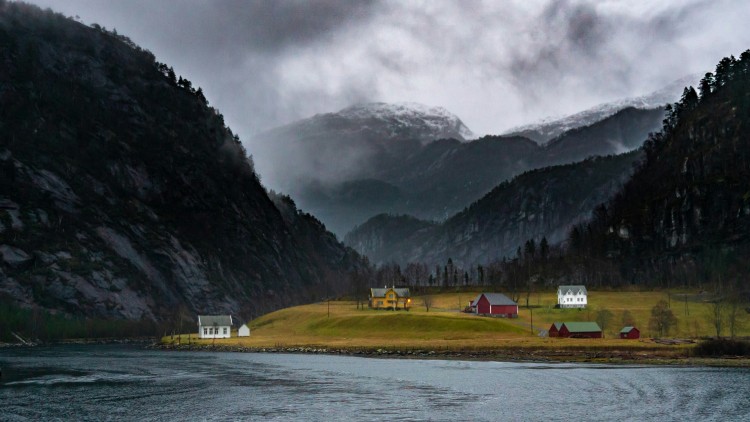
Bergen, the Aurlandsfjord, the Sognefjord, Geiranger and the surrounding valleys suit a trip of at least a week. A car offers more freedom but is not compulsory; parts of the region can be combined using trains, buses and ferries.
Do not try to fit every famous viewpoint into one week. Roads look short on a map, but actual travel time depends on ferry schedules, weather, roadworks and mountain passes.
Northern Norway
Tromsø and the Lofoten Islands are better treated as a separate journey. Travellers come north for Arctic landscapes, hiking, fishing villages, the midnight sun and the northern lights.
With only five to seven days, choose Tromsø or Lofoten rather than trying to cover both. Distances take longer than they appear on a map, and the weather can quickly rearrange a carefully planned day.
Route finder
Which Norway trip suits you?
Choose your main interest, trip length and attitude to renting a car. The route changes immediately after each selection. The result is a realistic starting point rather than a live timetable.
Suggested format
Bergen and one western fjord area
Seven to nine days allow you to combine Bergen with Flåm or Aurland and still leave time for one or two unhurried outings rather than spending the whole holiday in transit.
2 nights in Bergen → 3–4 nights beside one fjord → a spare day for weather or an extra walk.
Use public transport to reach Bergen and the main hubs, then consider a car for only a few days if you want remote valleys and scenic roads.
The intercity journey, fjord accommodation and the exact rental-car dates if you decide to drive.
Check the seasonal availability of roads, ferries and trails before paying. This tool does not use live schedules.
How much time do you need?
Four or five days are enough for Oslo and Bergen, or for several days in one northern region. Adding Lofoten, Geiranger and several major hikes would mean spending much of the holiday in transit.
Seven to nine days allow a city to be combined with one fjord area, or provide time for a calmer journey through the Lofoten Islands.
With ten to fourteen days, you can plan a road trip within one region, add several hikes or combine the Oslo–Bergen railway with the fjords. Even then, keep one day free for poor weather or transport changes.
When to visit Norway
Choose the season by more than temperature. The availability of mountain roads, trail conditions, daylight and the natural phenomenon you hope to see all matter.
Summer
June, July and August are the simplest months for a first fjord trip, camping and most mountain routes. They are also the high season, with stronger demand for accommodation, rental cars and popular ferries.
The true midnight sun occurs only north of the Arctic Circle. Around Tromsø it lasts approximately from the second half of May to the second half of July. Summer nights in the south are very light, but the sun still sets.
May and September
The shoulder season can mean fewer visitors and more attractive accommodation prices, but it does not guarantee summer conditions. High mountain trails and roads may still be snowy in May, while September brings shorter days and faster weather changes.
Before committing to a particular hike, check the current trail conditions rather than relying only on average temperatures.
Autumn and winter
For the northern lights, travel north during the dark-night season, roughly from September to late March. The aurora does not appear on a timetable: sufficient solar activity, darkness and clear skies must come together.
Winter also means short daylight hours, snow, wind, possible road closures and timetable changes. For a first winter journey, one base such as Tromsø is easier to manage than a long road trip.
Train, car or domestic flight?
There is no universally best form of transport in Norway. The right choice depends on the region.
Public transport
A car is unnecessary for the Oslo–Bergen route, the larger cities and some fjord itineraries. Norway’s national journey planner, Entur, combines public-transport timetables and shows connections between operators.
Check popular long-distance trains in advance. Booking immediately before departure may cost more, while the seats you need might no longer be available.
Rental car
A car is useful around the fjords, smaller villages and places with infrequent public transport. The real rental cost, however, also includes fuel or charging, toll roads, ferries, parking and any administration fees charged by the rental company.
Norwegian roads can be narrow, and mountain sections may close because of snow, strong wind, landslides or roadworks. Check roads and mountain passes through Statens vegvesen before setting out.
A car does not automatically save money for a solo traveller. It may become more competitive for two to four people, but only after every additional charge has been included.
Domestic flight
Flying from southern Norway to Tromsø, Bodø or another northern city can save a full day. If an itinerary includes Oslo and Northern Norway, compare a domestic flight with the complete overland journey rather than assuming every part should be done by train.
Build a realistic budget
Instead of relying on one universal daily figure, calculate the trip in separate parts:
- Getting thereFlights to Norway, travel between regions and the transfer to your first accommodation.
- AccommodationEvery night, plus any separate charges for linen, cleaning or late arrival.
- Daily transportPublic transport or the car together with fuel, ferries, toll roads and parking.
- FoodGroceries, cafés, restaurants and meals during long travel days.
- ExperiencesTours, museums, cruises, equipment and other paid activities.
- ContingencyA reserve for weather, itinerary changes or an additional night.
Accommodation, restaurant meals and transport between distant regions are normally the biggest pressures on the budget. The landscapes themselves, city walks and many hiking routes do not require an admission ticket.
Apartments or hostels with a kitchen, supermarket lunches and advance intercity bookings can reduce costs. But do not choose accommodation far from the station solely because the room is cheaper: an early-morning taxi can remove the entire saving.
Norway uses the krone, NOK. Cards and mobile payments are accepted almost everywhere, but carrying a physical Visa or Mastercard and a small amount of cash is sensible in case a foreign card fails. Tipping is optional.
A short planning checklist
- Choose the main purpose: cities and rail, the western fjords or Northern Norway.
- Select one region that fits the number of available days.
- Check whether the necessary roads, trails and ferries operate in your season.
- Compare public transport with the full cost of a rental car.
- Include the journey to your departure airport, not only the airfare.
- Book the critical transfers and the first accommodation bases.
- Keep at least one spare day or a simpler wet-weather alternative.
- Recheck the forecast and trail conditions before every hike.
Do not try to “complete” Norway in one holiday
The trip becomes both cheaper and more enjoyable when it contains fewer long transfers and more time in one region.
Choose the main purpose, account for the season, calculate the full transport cost and leave room to change the plan. In a country where weather and road conditions can reshape a day within hours, a flexible itinerary is more useful than a long list of compulsory sights.
Sources
- Visit Norway: Plan your trip
- Visit Norway: Norway month by month
- Visit Norway: The midnight sun
- Visit Norway: Northern lights facts and season
- Visit Norway: Getting around by train
- Entur: Norway’s national journey planner
- Statens vegvesen: Road and traffic information
- Visit Norway: Currency and prices