Oat milk is a popular choice for coffee: it has a mild flavor, and some varieties froth well. Some people buy it because they avoid dairy; others simply want to try something different. But does “oat” on the carton mean the drink is as nutritious as a bowl of oatmeal?
Not quite. Oat milk can be a good choice, but its nutritional value depends on the ingredients. Two cartons with the same name may differ considerably in sugars, protein, fats, and added vitamins.
What is oat milk?
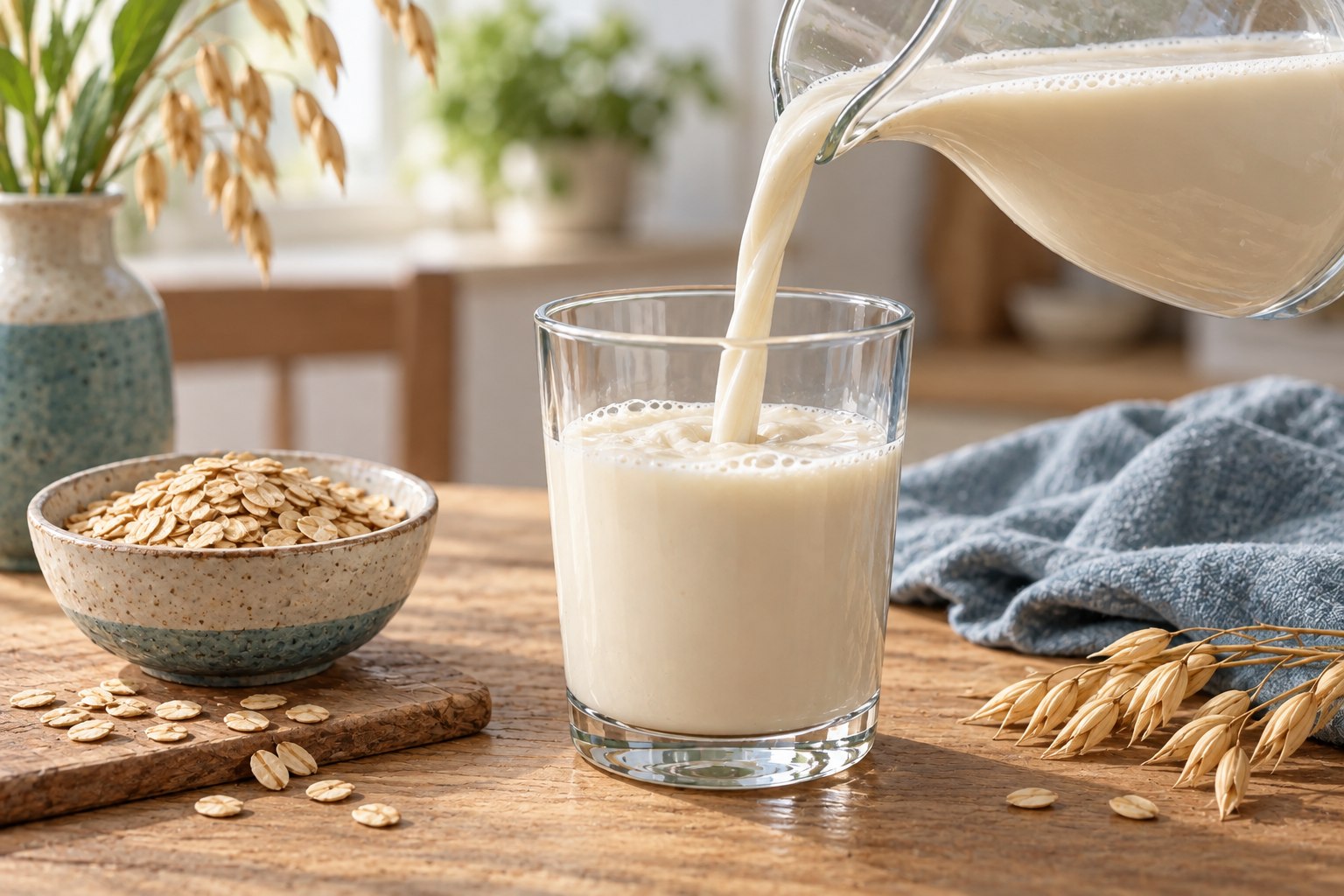
The drink starts with oats and water. The oats are mixed with water and processed, then the solids are separated out. Manufacturers may use enzymes to achieve a particular texture and flavor. They may also add oil, salt, sweeteners, or ingredients that help keep the drink smooth and uniform.
It is best to think of oat milk as an oat-based drink, not a nutritional equivalent of cow’s milk.
What are its potential benefits?
Oat milk contains no lactose or milk proteins. That makes it a convenient alternative for people who avoid cow’s milk because of lactose intolerance, a milk allergy, or personal preference.
Many manufacturers add calcium, vitamin D, and vitamin B12. A fortified drink can help you get these nutrients from your diet. But not every oat milk is fortified, so check the ingredients on the carton.
Another reason oats attract interest is beta-glucan, a soluble fiber. Research suggests that enough oat beta-glucan may help lower LDL cholesterol. However, fiber content varies between products, and some contain very little. If the label lists fiber, compare that number. A study of a drink with a measured dose of beta-glucan.
What to check before buying

Protein. Many oat drinks have less than cow’s milk or fortified soy milk. If milk was a significant source of protein in your diet, make sure you get enough from other foods after switching.
Sugars and carbohydrates. “No added sugar” does not mean “sugar-free.” During processing, some oat starch may be broken down into sugars. Flavored varieties may also be sweetened. Check both the ingredients and the amount of sugars and carbohydrates per serving.
Oil and other additives. These are often included for taste and texture, especially in barista varieties. If the ingredient list or calories matter to you, compare a few options—they can differ substantially.
Calcium and vitamins. If you plan to use oat milk instead of cow’s milk every day, check whether it contains added calcium and the vitamins you need. Plant-based drinks are not always nutritionally equivalent to milk. The FDA explains the differences.
Who should take extra care?
If you avoid gluten because of celiac disease, look for oat milk clearly labeled “gluten-free.” Oats are not wheat, but they can come into contact with gluten-containing grains during growing or processing. The Celiac Disease Foundation explains why.
So, is it worth drinking?
If you like the taste, oat milk works well in coffee, oatmeal, smoothies, and baking. For many people, it is a convenient everyday drink. Start by comparing two or three products for protein, sugars, fiber, calcium, and vitamins. That makes it easier to find one that suits your needs, rather than choosing it for the appealing name on the carton.