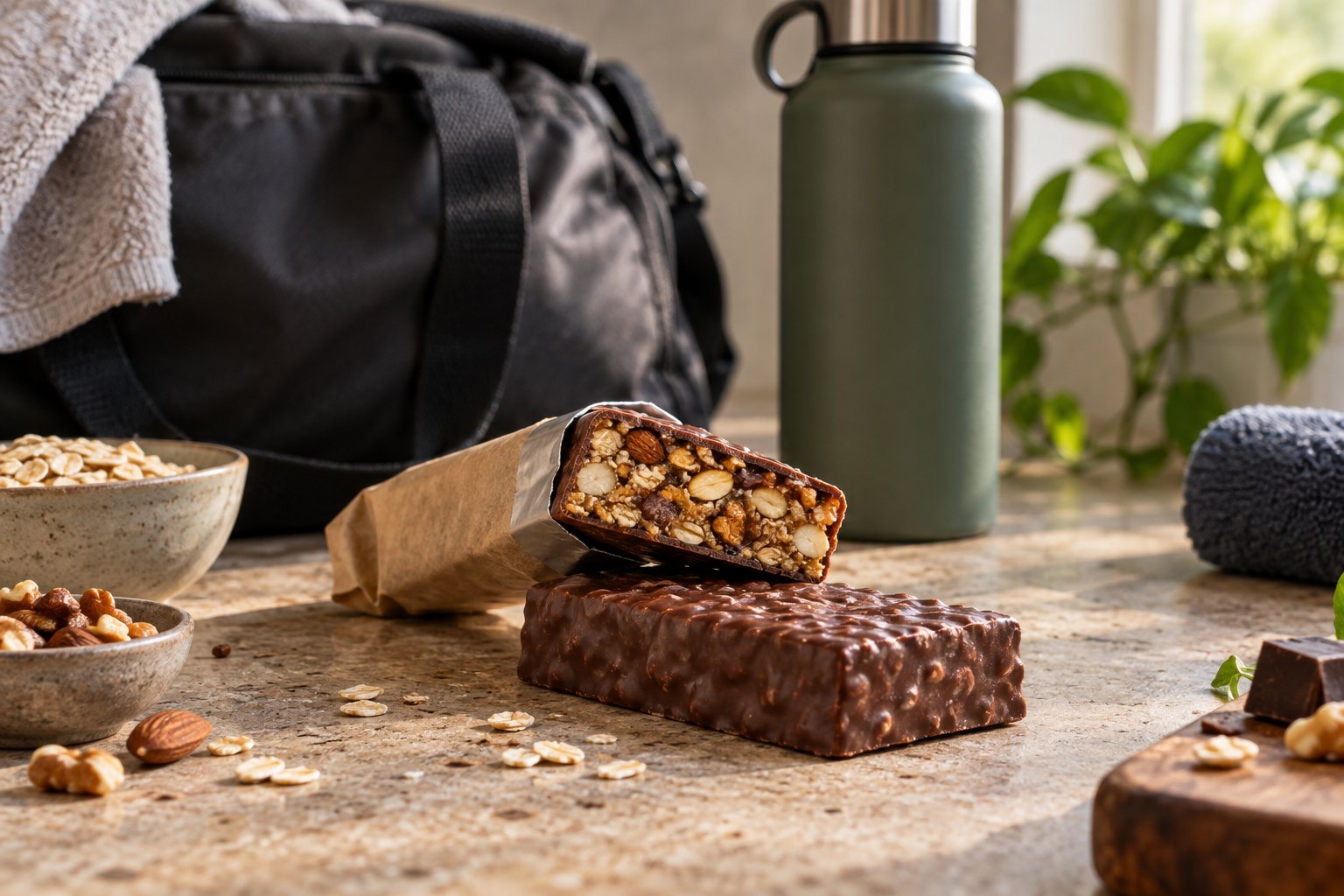
A protein bar is easy to slip into a bag, take on a trip or eat after a workout. The wrapper may announce “20 g protein” in large letters, making it look healthier than an ordinary sweet snack. But one number on the package cannot tell you whether the product is right for you.
Taking an iHerb article as a starting point, let’s look at when a protein bar is useful and what to check before buying one.
What should you look for on the label?
Check how much protein, sugar, fibre and saturated fat you get from one bar. Fibre is a plus, but its amount alone does not tell you whether a product suits your needs.
When comparing two bars, check their weights: one might weigh 40 g and the other 80 g. Read the nutrition figures for the amount you will actually eat. If the package contains more than one serving, adjust the numbers accordingly. The FDA guide to Nutrition Facts labels explains how to check serving size.
If added sugars are listed separately, compare them across products. If they are not, read the ingredient list: sugar, honey and syrups may appear there. Check for allergens such as milk, soy or nuts, too. The ingredient list can tell you more than the claim on the front of the wrapper.

Does the protein-to-calorie ratio matter?
It can help show how concentrated a source of protein a bar is. Two products might each contain 20 g of protein, for example, while one provides 200 kcal and the other 350 kcal.
The second is not necessarily worse: you might need a more substantial snack. There is no universally “ideal” ratio. Judge a bar by what you need it for and how it fits into your overall diet.
“Sugar-free” does not mean “without trade-offs”
The “sugars” line on a label does not always tell you how much sugar was added during production. That is another reason to read the ingredients: they may include sugar, syrups or honey. The WHO recommends limiting free sugars, which include added sugar, honey and syrups.
Low-sugar bars are sometimes sweetened with polyols, such as maltitol or sorbitol. These can cause bloating, gas or abdominal discomfort in some people, especially in larger amounts. If a particular bar leaves you feeling unwell, check its ingredients. Poison Control explains why this happens.
Do you need a bar after a workout?
Not necessarily. Your body needs protein to maintain and repair tissues, but you can get it from ordinary foods, including dairy, eggs, fish, pulses and soy. Your needs depend in part on your age, body weight and activity level. NHS dietitians explain the basics.
If a bar is convenient on the way home from a workout, that is fine. But there is no need to buy one solely because you think exercise must be followed by a special protein product. A regular meal can meet that need too.
When is a bar genuinely useful?
A bar makes sense when you will be away from food for a while, are travelling, or want a snack you can keep in your bag without preparation. Its strength is convenience, not a special effect that ordinary foods cannot provide.
At home, when you have a few minutes, alternatives might include yoghurt with fruit, a sandwich, eggs, or a small handful of nuts and a piece of fruit.

How many protein bars can you eat in a day?
There is no single number that fits everyone. One bar can complement a regular diet; two do not automatically mean you have had too much. Their ingredients and size, and what else you eat that day, matter more than the count alone.
But if ordinary protein bars regularly replace breakfast, lunch or dinner, that is not a good habit. A bar works as a snack or an occasional stand-in when you cannot eat a proper meal. Varied, complete meals should remain the foundation of everyday eating. Specially formulated meal replacements are a different category of product.
The bottom line: a protein bar is not an essential part of healthy eating, but it is not automatically “just candy” either. It is a ready-to-eat snack worth judging by its ingredients, portion size and your needs.