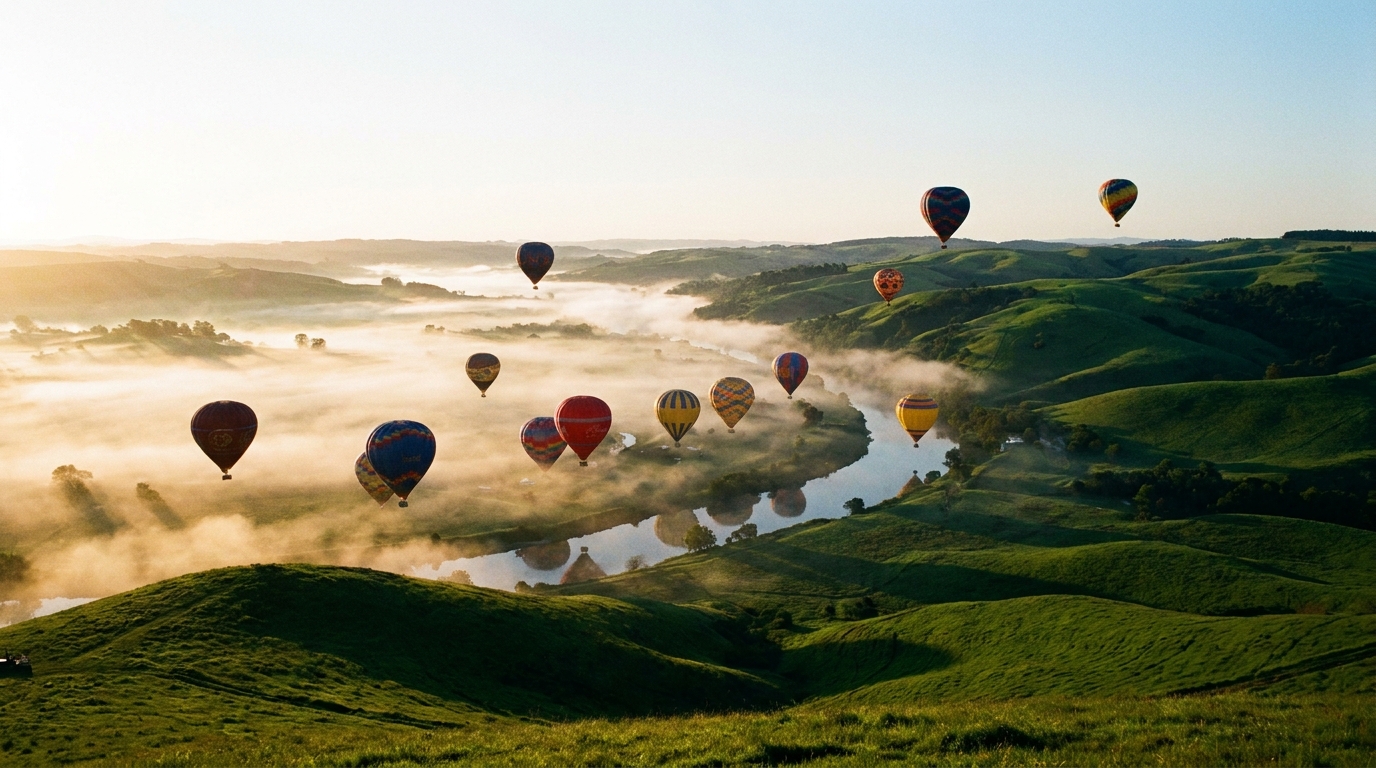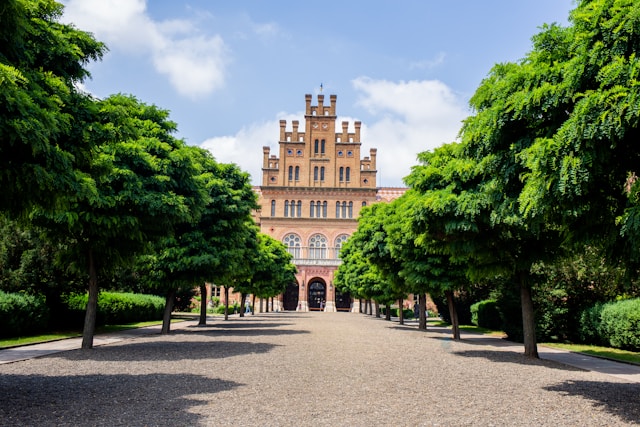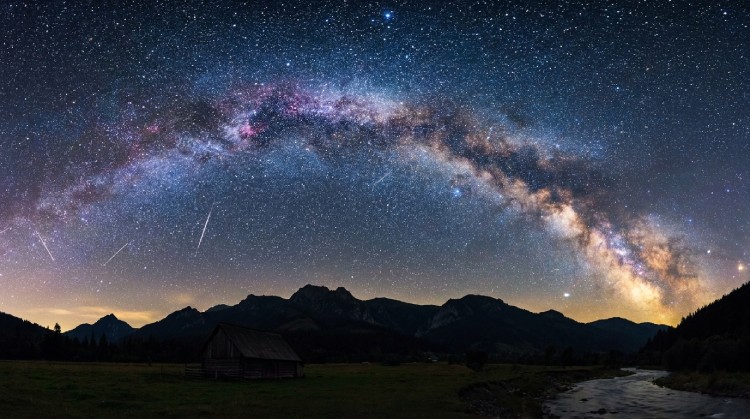
Dracula’s castle, bears beside mountain roads and mist-covered Carpathian peaks dominate the way Transylvania is marketed to travellers. The region is more interesting than this collection of images suggests. It contains towns shaped by the Transylvanian Saxons, royal palaces, useful railway connections and mountains that do not require a multi-day expedition to reach.
Six days and two bases—Brașov and Sighișoara—are enough for a first trip. A car is not essential. Public transport reaches Bran and Peleș castles, while a local guide is a better investment for a more demanding mountain route than renting a vehicle for one day.
The itinerary at a glance
- Days 1–4Use Brașov as a base for the city, Bran, Sinaia and the Carpathians.
- Day 5Travel to Sighișoara and spend the evening in the old citadel.
- Day 6Explore Sighișoara at an unhurried pace before travelling onwards.
- CarNot required for the main itinerary.
- BudgetApproximately 250–400 lei per day for a budget trip, excluding travel to Romania.
Day 1: Brașov without rushing
Brașov is useful for more than its location. It deserves a complete day rather than serving only as somewhere to sleep between excursions.
Begin in Piața Sfatului, continue to the Black Church, then turn into the side streets of the old centre. Catherine’s Gate and surviving sections of the city walls recall the period when Brașov was an important trading town of the Transylvanian Saxons.
You can walk up Mount Tâmpa or use the cable car when it is operating. Check the weather and current path conditions before setting out: the forest above the city is part of the Carpathian environment, not an urban park with lighting throughout the night.
Leave the evening free. Although the old centre is compact, repeated day trips to castles become tiring, so use the first day to get to know Brașov itself.
Day 2: Bran Castle without the invented Dracula
Buses connect Brașov with Bran. Confirm the departure point and timetable before travelling, and arrive near opening time in summer: tour groups and queues build quickly later in the day.
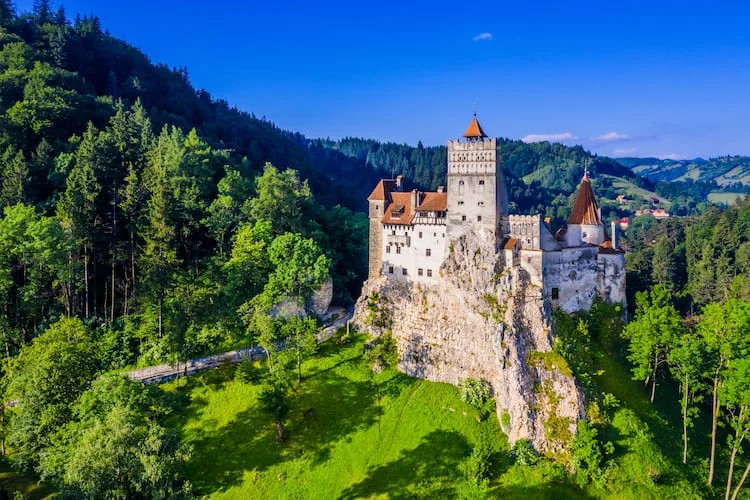
Bran is worth seeing, but not for the reasons promised by the souvenir shops. Bram Stoker did not identify it as the documented home of his fictional count, while the castle’s connection with Vlad the Impaler remains limited. Bran Castle’s own website explains that it became known as “Dracula’s Castle” because the building most closely resembles the description in the novel.
Count Dracula’s castle
Bran was Dracula’s home, and its secret corridors belong to the history of the vampire count.
A fortress, customs point and royal residence
The castle controlled an important route between Transylvania and Wallachia, served defensive and customs functions, and became a residence of Queen Marie in the twentieth century. Vlad the Impaler did not live here as the owner of “Dracula’s Castle.”
Inside, pay more attention to the fortress layout, courtyard, passages between floors and the story of the royal residence. The vampire image can remain part of popular culture without replacing the castle’s actual history.
A standard adult ticket no longer costs only a few euros. In 2026, the official website lists a price of roughly 100–120 lei depending on the current tariff. Additional rooms and fast-track access cost extra.
Day 3: Sinaia and Peleș Castle
The train is a convenient way to travel from Brașov to Sinaia. The royal estate stands uphill from the station, so allow time for the walk as well as the museum visit.
Peleș is entirely different from Bran. Rather than an austere frontier fortress, it is a former summer residence of the Romanian royal family, with carved wooden interiors, weapon collections, stained glass and rooms designed in several historic styles.
The smaller Pelișor Castle stands nearby. Visit both in one day only if you are genuinely interested in interiors. Otherwise, keep time for the park, Sinaia Monastery and a relaxed lunch.
Peleș is normally closed on Mondays and Tuesdays, and additional preventive-conservation closures occur during the year. Tickets are sold for defined time slots, so check the official calendar before fixing the order of your itinerary.
Day 4: A mountain route or Libearty Sanctuary
Choose one main plan for the fourth day: a proper Carpathian walk or a visit to the bear sanctuary. Trying to combine a demanding hike, the animals and another castle would turn the day into a race.
Option 1: Zărnești and the Piatra Craiului Mountains
Zărnești is a convenient gateway to Piatra Craiului National Park. The word “hiking,” however, can mean anything from a gentle valley walk to a long route with substantial elevation gain.
Check the forecast, daylight hours and current trail conditions before setting out. If you have little Carpathian experience or plan to climb above the forest, arrange a local guide.
Do not choose a hike solely from photographs taken at the summit. A good route is one that matches your experience, the weather and the time available for a safe return.
Option 2: Libearty Bear Sanctuary
Libearty near Zărnești is not a zoo and not a place for viewing wild bears. It cares for animals rescued from unsuitable captive conditions that cannot be returned to the wild.
Visits take place with a guide at fixed times. Places are limited, and tickets are released shortly before the tour date. The classic visit follows a forest route and lasts about one hour and fifteen minutes. Children under five are not admitted.
Ticket revenue supports the animals’ care, but no visit guarantees seeing every bear. The animals can retreat deeper into their grounds, and that ability to move away from visitors is one of the differences between a sanctuary and a conventional tourist display.
Day 5: Travel to Sighișoara
Sighișoara deserves at least one overnight stay. Day tours fill its streets during the afternoon, while the upper town becomes noticeably quieter in the evening.
UNESCO lists the historic centre as a well-preserved example of a small fortified medieval town founded by the Transylvanian Saxons. Its importance lies not in one building but in the complete structure of the citadel: guild towers, narrow passages, houses and the Lower Town beneath the hill.
After checking in, walk from the Clock Tower to the Covered Stairway and the Church on the Hill. There is no need to hurry into every museum. Sighișoara works best as a complete town rather than a collection of ticketed rooms.
The house supposedly associated with Vlad the Impaler’s birth remains a popular tourist stop. Describing it as “traditionally linked with his birthplace” is more accurate than presenting the address as definitively established.
Day 6: A morning in the citadel and the onward journey
Visit the viewpoints in the morning before the day groups arrive. Afterwards, you can return to Brașov, continue to Sibiu or travel towards Cluj-Napoca.
Do not try to add every fortified village in Transylvania to these six days. Biertan, Viscri and other settlements are worthwhile, but public transport between them is limited. A separate village itinerary is better with a car or an organised excursion.
A realistic travel budget
Use the following ranges for planning:
- HostelApproximately 70–120 lei per night for one bed.
- Private accommodationAround 180–350 lei for a simple double room or apartment.
- FoodApproximately 100–180 lei per person per day.
- TransportAn average of 30–80 lei per day.
- AdmissionApproximately 30–120 lei for one castle, museum or sanctuary.
- Budget tripAround 250–400 lei per day, excluding travel to Romania.
- More comfortApproximately 400–650 lei per person per day with a private room and regular restaurant dinners.
These are planning ranges rather than fixed prices. Accommodation in Brașov and Sighișoara can cost more at weekends, during festivals and in the autumn foliage season. For two people, a private apartment may offer better value than two separate beds in a good hostel.
Calculate castle tickets separately from the ordinary daily budget. This makes the real cost of a day in Bran or Sinaia clearer and avoids the assumption that every Romanian attraction costs only a few euros.
What to eat in Transylvania
Transylvanian food is substantial and well suited to the end of a long day on foot. Not every dish is unique to the region: many are prepared throughout Romania, with recipes and presentation varying locally.
- Ciorbă — a sour soup made with meat, beans or vegetables.
- Mămăligă — polenta served with cheese, sour cream or meat.
- Sarmale — cabbage leaves filled with meat and rice.
- Mici — small, spiced skinless sausages cooked on a grill.
- Papanași — cheese doughnuts served with sour cream and jam.
- Zacuscă — a vegetable spread made with roasted peppers, aubergines or beans.
Ciorbă is not routinely served inside bread, although that presentation appears in some tourist restaurants. In an ordinary local restaurant, it is first and foremost a bowl of soup rather than a photographic prop.
Money and transport
The national currency is the Romanian leu. Hotels, restaurants and shops in Brașov, Sinaia and Sighișoara generally accept cards, but cash may still be useful for small businesses, markets and parts of the local transport network.
Trains connect Brașov, Sinaia and Sighișoara. Check the timetable through CFR Călători and avoid building a day around several tight connections without any margin. Buses are more useful for Bran and Zărnești.
Romania has been fully part of the Schengen Area since 1 January 2025. Entry requirements depend on nationality, and days spent in Romania count towards a traveller’s applicable Schengen allowance. Check the rules for your passport and residence status before travelling.
Transylvania without the stage scenery
Transylvania does not need promises of a “real land of Dracula.” Its strongest features are entirely real: Brașov as a convenient city beside the mountains, the royal history of Peleș, fortified Sighișoara and the Carpathian landscape.
Six days will not reveal the entire region. They are enough, however, to separate history from a tourism legend, see several different sides of Transylvania and avoid turning the journey into an uninterrupted transfer between castles.
Sources
- Bran Castle: castle history and the Dracula myth
- Bran Castle: current opening times and tickets
- Peleș National Museum: opening times and admission fees
- UNESCO: Historic Centre of Sighișoara
- Libearty: sanctuary visiting conditions
- CFR Călători: train timetables
- European Commission: Romania’s full entry into the Schengen Area