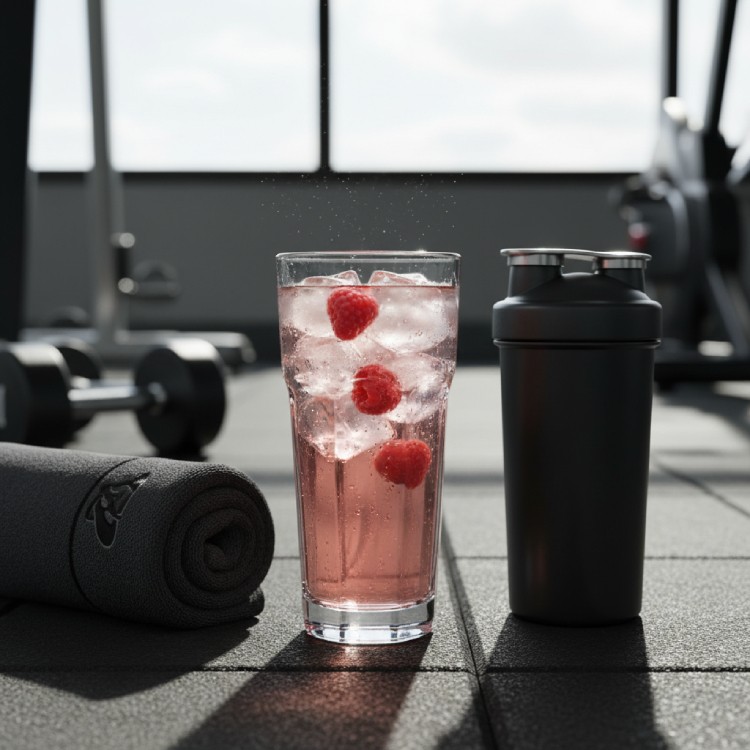
Clear protein can easily be mistaken for lemonade or a fruit drink. It is translucent, lacks the familiar milky texture, and usually comes in citrus, berry, or tropical flavors. Yet it is still a protein supplement—often made from the same whey used in conventional protein powders.
The main difference is not a special muscle-building effect but the formula, flavor, and texture. Clear protein can be a convenient option for someone tired of thick, milky shakes, but its transparent appearance does not make it inherently better absorbed or capable of burning fat.
What “clear protein” actually means
Here, the word clear describes the finished drink. Once mixed with water, it stays clear or translucent and resembles juice more than a milkshake.
Common protein bases include:
- whey protein isolate;
- hydrolyzed whey protein;
- a blend of isolate and hydrolysate;
- a plant protein isolate or hydrolysate, such as pea or soy.
The word clear therefore tells you neither the exact protein source nor whether it has been hydrolyzed. You need to check the ingredient list.
Transparency depends on the protein’s properties, the drink’s acidity, filtration, and other parts of the formula. Food scientists have developed clear whey beverages without every formula having to be a protein hydrolysate. The familiar explanation that “it is clear because all the protein has already been broken into tiny peptides” is too simplistic.
Isolate and hydrolysate are not the same thing
Whey isolate is produced through filtration. It generally has a high proportion of protein and less fat, carbohydrate, and lactose than whey concentrate.
A hydrolysate is treated with enzymes that partly break the protein into shorter chains. The degree of hydrolysis varies from one product to another, and manufacturers do not always feature it on the front of the package.
A clear protein may be hydrolyzed, but that is not a requirement for the category. If the ingredient list says only whey protein isolate, it is an isolate. If it lists hydrolyzed whey protein or whey protein hydrolysate, the product contains a hydrolysate.
How clear protein differs from regular whey
Compared with whey concentrate
Whey concentrate generally retains more milk components, giving the finished shake a creamy texture. It may contain more lactose, fat, and carbohydrate, although the exact values depend on the brand.
Clear protein is more often made from isolate or hydrolysate, so the drink may contain less fat and carbohydrate. The word clear guarantees none of that, however; compare the nutrition labels.
Compared with regular whey isolate
If both products are made from whey isolate and provide the same amount of protein, their nutritional role will be very similar.
You are more likely to notice the difference in the glass:
- regular isolate usually has a dairy or dessert-style flavor;
- clear protein tends to taste sharper and fruitier;
- regular whey produces an opaque shake;
- clear protein resembles lemonade, iced tea, or diluted juice.
These are two ways to consume protein, not two different grades of muscle-building quality.
Compared with an electrolyte drink
Clear protein is mixed with water, but that does not make it an electrolyte replacement. Unless the formula provides meaningful amounts of sodium and other electrolytes, it remains primarily a protein drink.
The water used to make it counts toward fluid intake. After prolonged exercise, heavy sweating, or training in hot conditions, however, a person’s needs may extend beyond water and protein alone.
Compared with a meal replacement
A serving of clear protein often supplies mostly protein and relatively little else. It may lack the fiber, fat, carbohydrate, vitamins, and minerals expected from a complete meal.
Protein lemonade should not automatically replace breakfast or lunch. It is a dietary supplement, not a ready-made balanced menu.
The advantages this format can genuinely offer
It may be easier to drink if you dislike milky shakes
This is the clearest advantage of the format. A fruit flavor and lighter texture may feel more appealing after a workout or on a warm day.
Convenience matters in practice: a product you enjoy and do not quickly tire of is easier to use consistently when your diet genuinely falls short on protein.
A serving is often low in fat and carbohydrate
When whey isolate is the base, a product may deliver plenty of protein for relatively few calories. That is a feature of the individual formula, not the entire category.
A regular whey isolate can have almost identical nutrition figures. The word clear is not a reason to pay more without comparing labels.
Whey contains all essential amino acids
Whey-based products are complete protein sources and contain all essential amino acids. This makes them a convenient addition for people who train and do not always get enough protein from food.
A plant-based clear protein may have a different amino acid profile. In that case, look at the protein source and the full serving rather than just the amount of powder in a scoop.
Does it really digest faster?
Whey is already considered a relatively fast-digesting protein without hydrolysis. In theory, partially breaking it into shorter peptides could further affect how quickly amino acids appear in the bloodstream.
In practice, the findings are mixed. A review of protein hydrolysate studies found faster responses in some experiments but no meaningful difference between hydrolyzed and intact whey isolate in others.
Even if amino acids from one product reach the bloodstream somewhat faster, that does not prove it will produce more muscle growth or better recovery over months of training.
In one longer training study, whey concentrate and whey hydrolysate produced similar changes in strength and lean mass. Evidence that hydrolysis itself consistently outperforms a good-quality intact whey protein remains insufficient.
What matters more than absorption speed
For building and maintaining muscle, the more important factors are:
- consistent resistance training;
- adequate total protein intake;
- an appropriate overall calorie intake;
- distributing protein-containing foods across the day;
- sleep and recovery.
A meta-analysis of resistance-training studies found that supplemental protein can modestly improve gains in strength and fat-free mass. On average, further benefits were not apparent once total intake exceeded roughly 1.6 grams of protein per kilogram of body weight per day.
This is not a universal prescription for every person. The finding mainly concerned healthy adults doing resistance training. It is better understood as evidence that adding more and more protein servings does not produce unlimited muscle growth.
Clear protein helps only when it addresses a genuine gap in protein intake. If your diet already supplies enough, an extra serving does not become more effective because the drink is transparent.
Do you need protein immediately after a workout?
You do not have to finish a shake in the locker room within 30 minutes. Muscle recovery continues for much longer, and your overall intake across the day matters.
Clear protein can be useful:
- after training when your next proper meal is still several hours away;
- alongside a snack that contains little protein;
- during the day when food alone makes your target difficult to reach;
- instead of another protein drink when you prefer a fruit flavor.
A double routine—one serving before training and an even larger one immediately afterward—is not necessary for everyone. Base the decision on your diet, not a promotional schedule printed on the tub.
Can clear protein help with weight loss?
A protein drink does not burn fat on its own. It still contains calories, although it may provide fewer than a shake made with milk, ice cream, or several extras.
Clear protein may be useful during weight management when it:
- replaces a more calorie-dense drink or dessert;
- helps maintain adequate protein while calorie intake is moderately reduced;
- fits into the overall diet without simply adding another serving.
Adding it to your usual diet without changing anything else will not automatically cause weight loss. Nor should it be advertised as guaranteed appetite control: a liquid drink may satisfy hunger differently from a complete meal containing protein, fiber, and solid food.
Is it easier to tolerate?
Whey isolate generally contains less lactose than concentrate. “Less” does not always mean “none,” so people with lactose intolerance should look for suitable labeling and assess the individual product.
Hydrolysis breaks down protein; it does not remove lactose. A hydrolysate therefore cannot be assumed to eliminate bloating or other digestive discomfort.
Also consider that:
- whey-based clear protein remains a milk product and is unsuitable for a milk-protein allergy;
- large amounts of sweeteners can cause discomfort for some people;
- citric, malic, or other food acids may create the tart flavor;
- a plant-based version can differ in taste, ingredients, and amino acid profile.
How to read the label
1. Identify the protein source
Look past the large word Clear and find the exact ingredient: whey protein isolate, whey hydrolysate, pea protein isolate, soy protein, or a blend.
2. Check the full serving
See how many scoops make one serving. Compare grams of protein per serving, not the total weight of powder in the scoop.
3. Compare protein and calories
Two products may each provide 20 grams of protein but differ in sugar, carbohydrate, and calories. Clear protein does not necessarily beat a regular isolate on these numbers.
Label calculator
Compare two protein powders
Enter figures based on the same serving unit. Package size will not distort the result when the number of servings is entered correctly.
How to read it: more protein per 100 calories means greater protein density; a lower cost per 20 grams means better value. The calculator does not assess flavor, protein source, allergens, ingredients, or third-party testing.
4. Read the complete ingredient list
Look for:
- sweeteners;
- sugar;
- food acids;
- colors and flavorings;
- caffeine;
- added electrolytes;
- allergens.
The word “lemonade” in a product name does not mean it contains caffeine or electrolytes, although some combination formulas may include them.
5. Calculate the price of protein, not the size of the tub
A larger container is not always better value. Compare the number of servings, grams of protein in each, and the cost of the same amount of protein—for example, 20 grams.
For athletes subject to anti-doping rules, independent batch testing also matters. It does not prove that a supplement builds more muscle, but it can reduce the risk of undeclared prohibited substances.
How to mix it without lumps and excessive foam
Clear protein often foams heavily when shaken. That does not mean the product has spoiled.
A basic method:
- Pour the amount of water listed by the manufacturer into a shaker.
- Add the powder to the water, not the other way around.
- Close the shaker and shake thoroughly.
- Let the drink stand for a few minutes until the foam settles.
- Add ice if you like.
Cold water usually suits a fruit flavor, but “cold water only, never milk” is not a universal rule for the category. Some acidic formulas do mix poorly with milk, so follow the directions for the specific product.
A summer idea: protein ice pops
If the manufacturer allows the product to be used in frozen recipes, pour the prepared drink into ice-pop or ice-cube molds and add a few berries.
Freezing can change the flavor and texture, so make a small batch first. Do not call the result “sugar-free” until you have checked both the powder label and every added ingredient.
Who should be cautious?
Clear protein is not a separate category that is safe for everyone. Suitability depends on what is actually in the product.
Do not use a whey-based product if you have a milk-protein allergy. If you have been told to limit protein because of kidney disease or another medical condition, discuss the amount with a physician or dietitian. Persistent bloating, pain, or diarrhea is not a reason to simply switch from concentrate to hydrolysate and expect a guaranteed solution.
So, is it worth buying?
Clear protein makes sense when you want a convenient protein source but dislike thick, milky shakes. Its principal advantages are fruit flavors, a lighter texture, and often low amounts of fat and carbohydrate.
It is not necessarily better than a regular whey isolate. At a similar protein quantity and quality, the meaningful differences for most people will be taste, ingredients, and price.
The bottom line: do not choose the clearest drink or the loudest promise on the tub. Compare the protein source, full serving, calories, added ingredients, and cost. That will tell you whether the format is genuinely more convenient for you.
Sources
- Smith KE et al. Ingredients and pH Are Key to Clear Beverages That Contain Whey Protein
- D’Lugos AC et al. The Role of Protein Hydrolysates for Exercise-Induced Skeletal Muscle Recovery and Adaptation
- Morton RW et al. Protein Supplementation and Resistance Training: Systematic Review and Meta-Analysis
- NIH Office of Dietary Supplements: Dietary Supplements for Exercise and Athletic Performance
- IOC Consensus Statement: Dietary Supplements and the High-Performance Athlete