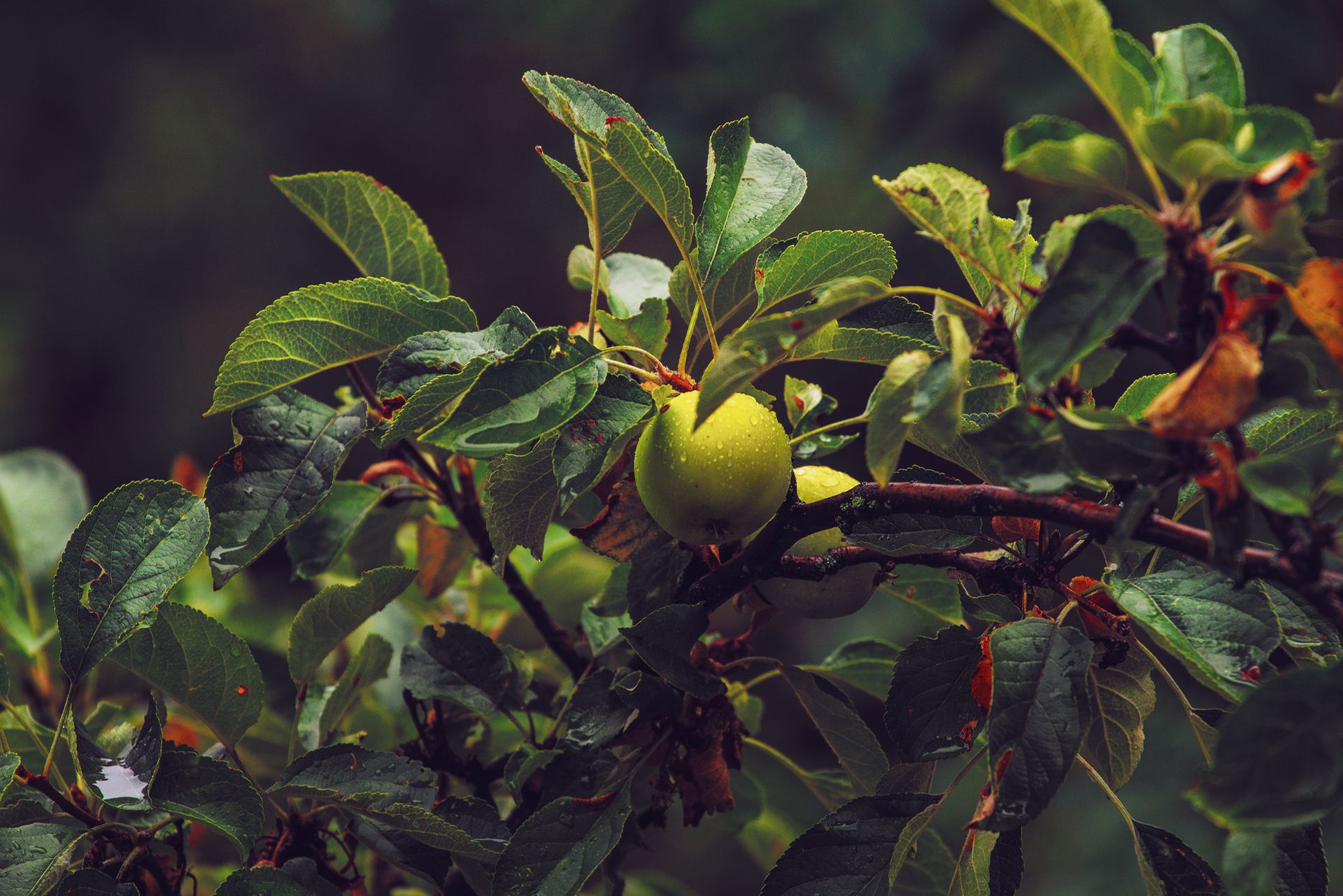
A dwarf apple tree can seem almost perfect for a small garden. It takes up less room, begins cropping earlier and lets you pick apples without a tall ladder. All of that can be true, but one detail shapes almost everything that follows: the rootstock. It determines the tree’s size, its need for support, its sensitivity to drought and even the amount of space it should be given.
A dwarf apple tree is not a cultivar
The cultivar determines the flavour, colour and harvest season of the apples. The rootstock — the lower part of the plant, including the roots — controls vigour. The same cultivar may become a large garden tree on a vigorous rootstock and remain far more compact on M9.
A label that merely says “dwarf apple” is therefore incomplete. Before buying, ask for the rootstock name and the expected height and spread in your climate and soil.
Any quoted mature height is approximate. Cultivar, soil fertility, irrigation, pruning and training method all modify the effect of the rootstock.
Will it really produce apples in its second year?
Dwarfing rootstocks are precocious and may carry a few apples in their second or third season, but this is not guaranteed for every nursery tree. A young apple must first establish roots and build a strong framework.
If a very small tree sets a heavy crop, remove some of the fruitlets. Too many early apples slow growth, bend branches and can weaken the tree before its canopy has developed properly.
Keep the graft union above the soil
The swollen point where the chosen cultivar joins the rootstock should remain above ground. If it is buried, the upper portion may form its own roots and reduce the dwarfing effect. Recheck the final planting depth after watering and after the soil has settled.
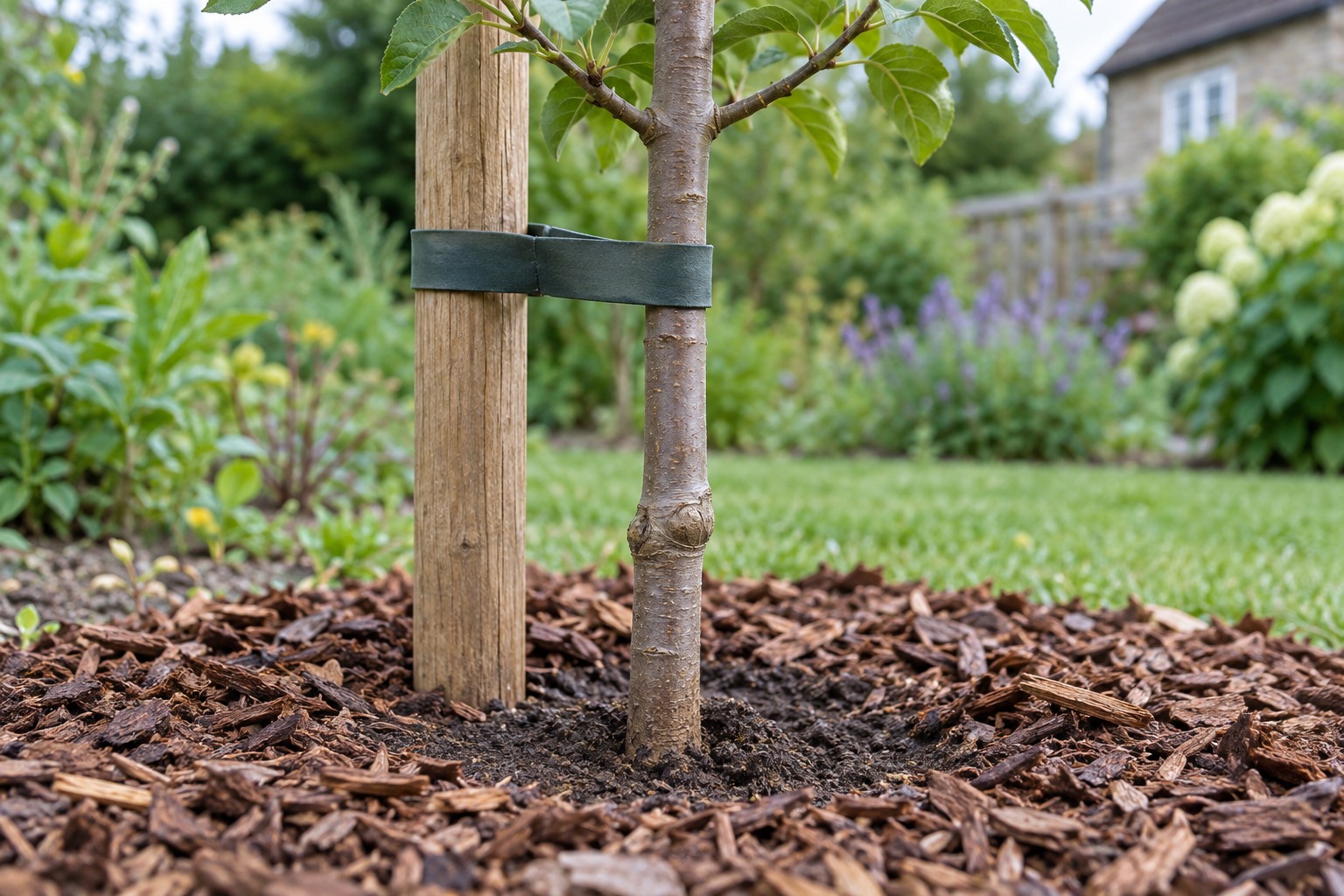
Do not create a concentrated layer of wood ash or mineral fertiliser at the bottom of the hole. It can damage new roots, while ash also raises soil pH. On poor ground, blend mature compost with the excavated soil instead. Water after planting and mulch the root zone, leaving a clear gap around the trunk.
Install the support when you plant
Apple trees on M9 and other very dwarfing rootstocks have relatively small root systems and usually require a permanent stake or trellis. Installing the support at planting is easier and safer than driving it through established roots later.
Use a wide, flexible tie and inspect it at least once a year. Thin string or a forgotten tight strap will gradually cut into the bark. Support requirements for M26 and semi-dwarfing rootstocks vary, so follow advice for the actual rootstock rather than assuming that every small apple tree is identical.
How far apart should the trees be?
There is no universal spacing of 1.5–2 metres. A narrow espalier and a free-standing round-headed tree on the same rootstock occupy different amounts of space. M27, M9 and M26 also produce different sizes. Base the distance on the rootstock, canopy form and expected width of the particular cultivar.
Resist the temptation to fit in as many trees as possible. Sunlight and airflow between canopies help the fruit colour, allow wet leaves to dry and leave enough room for pruning and harvesting.
A dwarf tree cannot be left without water
A compact root system explores a smaller volume of soil, so a dwarf apple tree feels drought sooner. Water particularly carefully during its first years, prolonged hot weather and fruit development. Irrigation should moisten the root zone rather than merely wetting the top centimetre of soil.
Mulch made from compost, bark or partly dried grass helps retain moisture and reduces competition from lawn. Do not pile it against the trunk; damp material held against bark encourages damage and disease.
Does it need fertiliser every year?
The rule “always give nitrogen in spring, then phosphorus and potassium at bloom” sounds convenient but ignores soil fertility and tree growth. Excess nitrogen produces long shoots, shades the fruit and can increase susceptibility to some diseases.
Look at annual shoot growth and leaf condition, and test the soil where possible. In many gardens, a layer of compost and a modest amount of balanced fertiliser based on evidence of need are sufficient. Container trees require more regular feeding because the nutrient supply in a pot is limited.
A second cultivar may be needed
Most apples set a better crop when a different compatible cultivar flowers nearby. Ten or fifteen metres is not a strict boundary; bees may bring pollen from a neighbouring garden. What matters most is an overlap in flowering time.
A self-fertile cultivar may crop alone, although a partner often improves fruit set. Triploid cultivars are more complicated because their pollen does not reliably pollinate other apples, so two compatible diploid cultivars may be needed for a dependable group. Check the flowering group in the nursery catalogue before buying.
How to prune a small apple tree
Pruning time depends less on height than on the way the tree is trained. A free-standing apple is generally pruned during winter dormancy to remove dead, damaged and crossing branches and maintain a well-lit canopy. Cordons, espaliers and other trained forms are also pruned in late summer to restrict growth.
Do not remove a large amount at once or shorten every shoot in the same way. Some cultivars carry most of their fruit on short spurs, while tip-bearing cultivars crop towards the ends of shoots. The wrong cut can remove the wood that would have produced next season’s apples.
Not every fallen apple contains codling moth
Apples fall because of natural June drop, drought, excessive crop load, ripening and several different pests. Codling moth damage is suggested by a tunnel leading towards the core, damaged seeds and crumbly frass near the opening.
When a dwarf apple tree is the right choice
It works well in a small garden, a large container or a carefully trained espalier when regular watering and secure support are possible. The price of compact size and early cropping is slightly more attentive care.
Its useful life should not be reduced to a fixed 15 or 20 years. Longevity varies with rootstock, cultivar, soil, climate, disease and repeated overcropping. A dwarf tree often lives for less time than a vigorous standard, but with good care it can remain productive for many years.
The most useful question before buying is not simply “what colour are the apples?” but “which rootstock is this tree on?” The answer tells you how much room it needs, what kind of support to install and whether you can provide enough water.