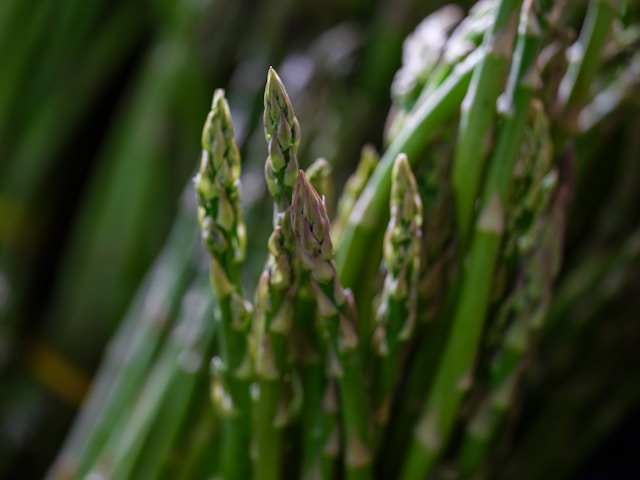
Asparagus is a perennial vegetable crop that can produce harvests in the same location for 15–20 years. However, it is not a plant for gardeners seeking immediate results: during its first seasons, it needs time to develop a strong root system. Choosing the right site, ensuring good drainage and being patient are the keys to success.
Quick facts about asparagus
- Botanical name Asparagus officinalis.
- Soil Fertile, deep and well-drained. The optimum soil pH is approximately 6.5–7.0.
- Light Grows best in full sun, although light partial shade is acceptable.
- Cold hardiness The crowns of many varieties survive cold winters well, but young spring spears can be damaged by frost.
- Spacing Leave approximately 30–45 cm between plants. If you are planting several rows, allow at least 90 cm between them for easier maintenance.
- Productive lifespan A well-maintained asparagus bed can remain productive for 15 years or longer.
Where to plant asparagus
Choose the location carefully, as the plants may remain there for many years. A sunny site with deep soil and no standing water is ideal.
Avoid low-lying areas where rainwater or melting snow remains for long periods. Excess moisture increases the risk of crown and root rot. It is also important to remove couch grass, bindweed and other perennial weeds before planting. Once the asparagus roots have spread, deep cultivation is no longer safe, making established weeds much more difficult to control.
The tall, feathery foliage can shade nearby crops during summer. If the bed forms part of a larger vegetable garden, consider placing it on the northern side or giving asparagus its own permanent area.
Seeds or crowns?
Asparagus can be grown from seed, but this method requires more time and care. Harvesting generally begins around the third year, and developing a fully productive bed takes even longer.
The simpler option is to buy dormant one-year-old roots known as crowns. They establish more quickly and allow harvesting to begin sooner.
When and how to plant crowns
Plant crowns in spring, once the soil is workable but before the plants begin active growth. The exact month depends on the region: it may be March, April, May or even early June in a colder climate.
- Dig a trench approximately 15–25 cm deep. It should be shallower in heavy soil and may be slightly deeper in light, sandy soil.
- Create a low ridge of soil along the bottom, mixing in mature compost if the soil needs improvement.
- Place each crown on the ridge with its buds facing upward. Arrange the roots gently without sharp bends; there is no need to form a perfect “octopus” shape.
- Cover the crown with approximately 5–8 cm of moist soil and water it.
- As the shoots grow, gradually add the remaining soil until the trench is level with the surrounding bed.
Do not leave purchased crowns exposed to sunlight or dry air for long periods. If they cannot be planted immediately, store them temporarily according to the supplier’s instructions and do not allow them to dry out.
The most important harvest rule: do not rush
The above-ground shoots feed the crown. Cutting them too early or harvesting for too long prevents a young plant from storing enough energy for the following season.
- First season after planting: Do not harvest. Allow every spear to develop into tall, green foliage.
- Second spring: If the plants were strong and grew well during the previous season, a very short trial harvest lasting one or two weeks may be possible. Leave weak plants unharvested.
- Third spring: Spears may be harvested for approximately four to six weeks, depending on the strength of the plants.
- Established bed: The harvest can last six to eight weeks, but it should end sooner if new spears become noticeably thinner.
Some gardeners do not harvest asparagus at all during the first two seasons. This cautious approach gives the crowns more time to strengthen and is particularly suitable when the plants are developing slowly.
How to harvest asparagus correctly
Spears grow very quickly in warm weather, so inspect the bed every one or two days.
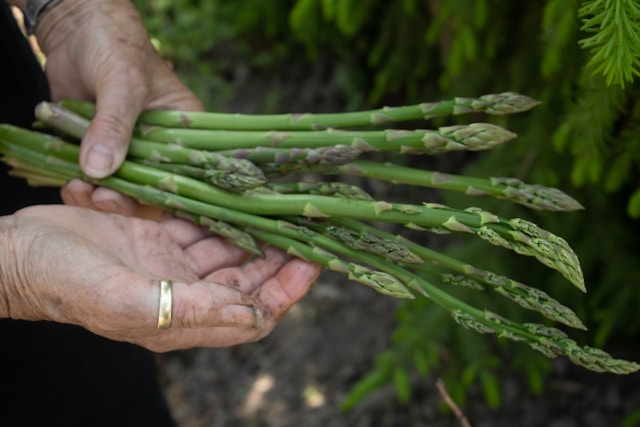
Harvest when the spears are approximately 15–20 cm tall and their tips are still tightly closed. Carefully cut each spear at soil level or 2–3 cm below the surface with a sharp knife, taking care not to damage nearby buds. Alternatively, snap the spear off by hand close to the ground.
Stop harvesting if new spears become thinner than a pencil, emerge more slowly or begin opening while still short. Allow every later spear to grow. They will develop into tall, feathery foliage and replenish the crown’s energy reserves.
Care after the harvest
- Watering Maintain even moisture during dry periods, but never allow the soil to become waterlogged.
- Weeding Weed carefully and cultivate only near the surface to avoid damaging crowns and emerging spears.
- Feeding Apply compost or fertilizer according to the condition of the soil, preferably using the results of a soil test.
- Foliage Do not remove green stems during summer. Cut them down only after they have completely yellowed and died in autumn, or before new growth begins in early spring.
Tall foliage may need support from stakes and twine, particularly in a windy location. Damaging or removing green stems too early weakens the crowns and can reduce the following year’s harvest.
What should be adapted to your garden?
Do not copy planting dates, trench depths or fertilizer quantities literally from recommendations written for another region. Consider soil temperature, soil structure, rainfall and the characteristics of your chosen variety.
A sunny permanent site, reliable drainage and the removal of perennial weeds are particularly important. A productive lifespan of 15–20 years is the potential of a well-maintained bed, not a guarantee for every plant.
Conclusion
Asparagus requires more patience than most garden vegetables, but it can eventually reward the gardener with early spring harvests for many years.
The essentials are choosing a permanent, well-drained site, removing perennial weeds before planting, delaying the first harvest and allowing the foliage to develop fully after the harvest season. Healthy summer foliage is what stores the energy needed to produce next spring’s spears.