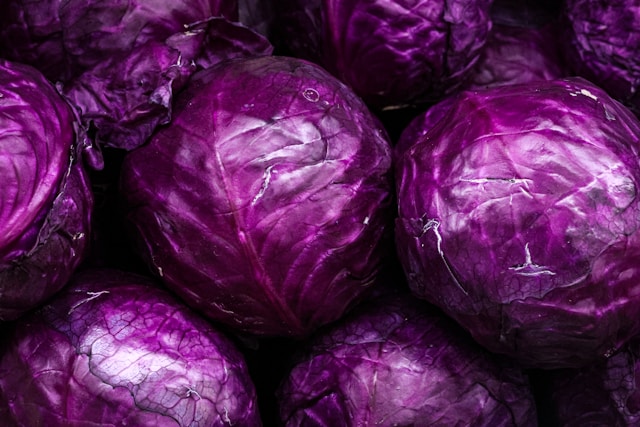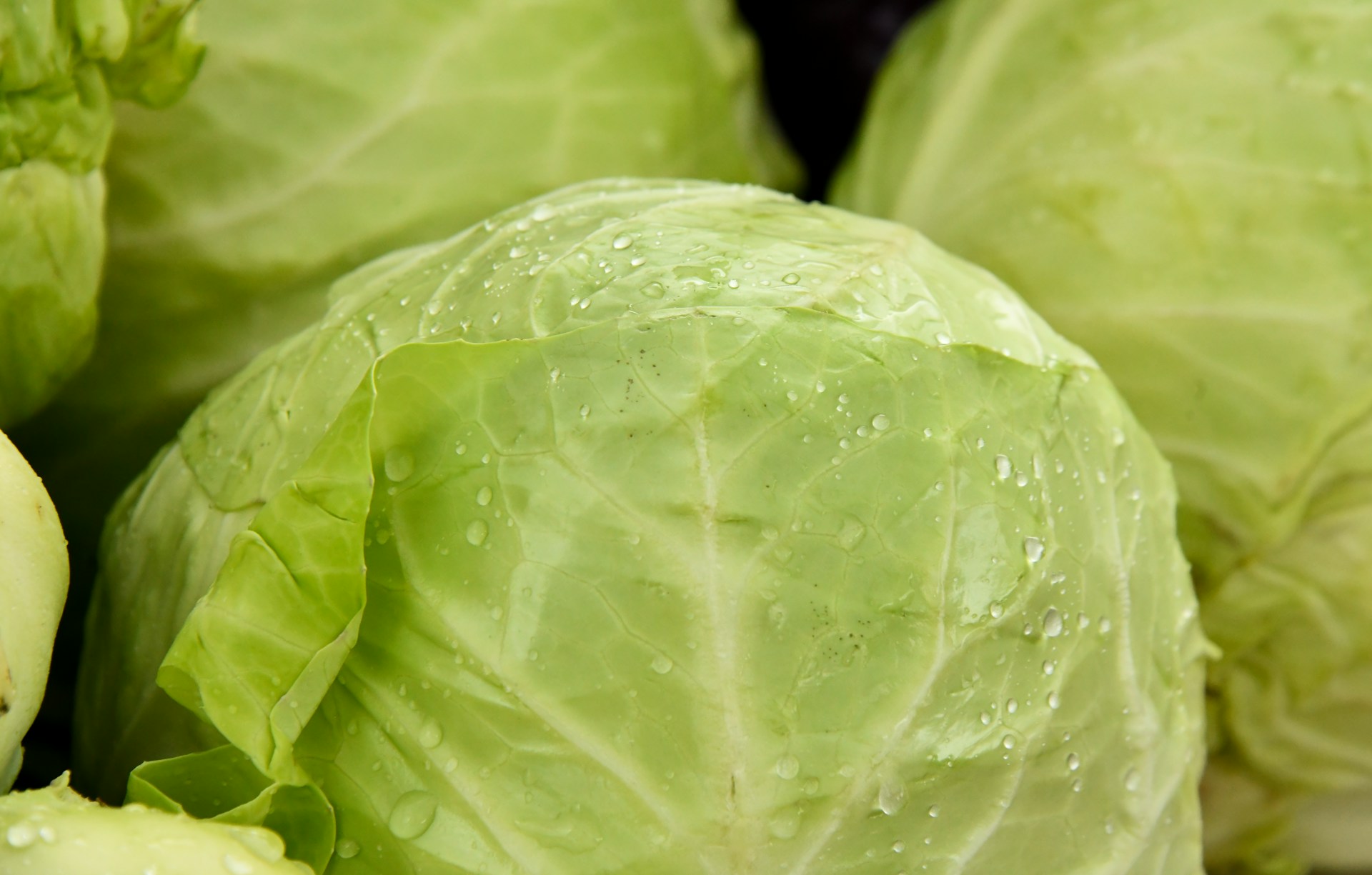
Late-season white cabbage is one of the best vegetables for building a winter food supply. Its dense heads are suitable for fermentation, soups and long-term storage. A large harvest, however, does not depend on one “secret” fertilizer. It requires a suitable variety, fertile soil, enough space and consistent watering.
Quick facts about growing late cabbage
- Soil Fertile and well-drained, yet able to retain moisture. An approximate pH of 6.0–7.0 is generally suitable.
- Light An open, sunny location. In shade, heads develop more slowly and may remain loose.
- Time to maturity This varies by cultivar. Many late varieties need roughly 100–150 days or more from emergence.
- Cold tolerance Mature cabbage can tolerate light autumn frost, but hard frost may damage heads and reduce their storage quality.
- Spacing Large cultivars commonly need about 45–60 cm between plants and 60–90 cm between rows. Check the seed packet for the exact recommendation.
When to sow late cabbage
Calculate the sowing date from the expected autumn harvest and the cultivar’s stated number of days to maturity. A single calendar date cannot suit every growing region.
In climates similar to Ukraine’s, late cabbage is often started indoors in March or April and transplanted in May or early June. Harden the seedlings off before planting. They are usually ready once they have sturdy stems and about five or six true leaves.
Direct sowing outdoors is also possible where the growing season is long enough for the chosen cultivar. Protect young plants from cold, drying out and pests, although covering every seedling with a disposable plastic bottle is not essential.
After transplanting, gently firm the soil around the roots and water thoroughly. The plant should not rock in the wind, but there is no need to stamp heavily on the soil: excessive compaction restricts air around the roots and impairs drainage.
How to feed late cabbage
Cabbage uses substantial amounts of nutrients, but that does not mean more fertilizer is always better. The best foundation is fertile soil amended with compost or well-rotted organic matter during bed preparation.
Plants need nitrogen early in the season to build leaves. As the head develops, they need a balanced supply of nutrients, including potassium. Excess nitrogen later in the season, however, may delay maturity, encourage loose growth and reduce storage quality.
There is no universal feeding schedule. The type and amount of fertilizer depend on the soil’s fertility, pH and structure. Whenever possible, base additions on a soil test rather than a general home recipe.
How to water cabbage without splitting the heads
Late cabbage needs consistently moist soil, especially as heads begin to form. An exact number of litres per plant cannot be prescribed for every garden: water use depends on temperature, rainfall, soil type, plant size and irrigation method.
The most hazardous pattern is a long dry period followed by a large amount of water. Inner leaves may expand rapidly and split the head. Mulch, drip irrigation and regular checks of soil moisture help prevent these extremes.
Protecting cabbage from caterpillars and other pests
Cabbage white butterflies, loopers, moths, aphids and slugs can seriously damage leaves and heads. Effective protection begins with regular inspection rather than dusting plants with homemade powders.
- Insect mesh Cover the bed with fine insect mesh soon after planting and secure the edges. Butterflies must not be able to reach the plants.
- Leaf inspection Check the undersides of leaves and remove egg clusters and young caterpillars before they cause extensive damage.
- Biological control Products containing Bacillus thuringiensis may be used against young caterpillars where they are approved for edible crops. Follow the product label exactly.
- Crop rotation Do not grow cabbage or related brassicas in the same bed every year. A three- to four-year break helps reduce the buildup of soil-borne diseases.
Important: tobacco dust should not be presented as a harmless home remedy. Nicotine is toxic, while the strength and safety of homemade mixtures are uncontrolled.
When to harvest late cabbage
Do not rely on the calendar alone. Check the cultivar description and the condition of the plant. A mature head should feel firm and have reached a size typical for that variety. Avoid squeezing it so hard that the wrapper leaves are damaged.
Mature cabbage usually tolerates a light frost, but there is no need to wait deliberately for freezing temperatures to improve storage. If a hard or prolonged frost is forecast, harvest beforehand. Overmature heads may also split.
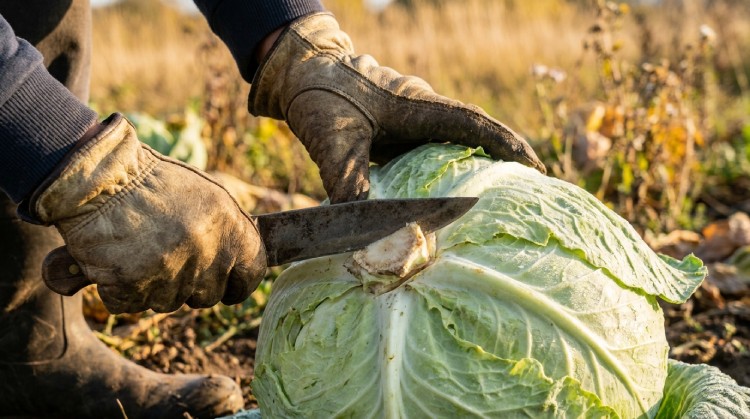
Harvest in dry weather with a clean, sharp knife. Leave a short section of stem and several healthy wrapper leaves. Use cracked, rotting, severely pest-damaged or bruised heads first instead of placing them in long-term storage.
How to store cabbage through winter
Cabbage keeps longest at a temperature close to 0 °C, with high relative humidity and adequate air circulation. In a home cellar, a practical target is a stable temperature of approximately 0–4 °C without freezing or persistent condensation.
Place heads on clean shelves without packing them tightly together. Hanging them by the stem can also work if the heads are secure and do not touch damp surfaces. Inspect stored cabbage regularly and remove spoiled leaves or heads promptly.
Avoid storing cabbage beside large quantities of apples or pears. They release ethylene, which can accelerate ageing and adversely affect cabbage flavour. Storage cultivars may keep for several months under good conditions, but the actual period depends on the variety, the condition of the heads and the storage environment.
What to adapt to your own garden
Sowing dates, spacing, watering frequency and fertilizer rates depend on your climate, weather, soil and cultivar. Before sowing, check the days to maturity on the seed packet and determine whether the crop can mature before hard frosts are likely.
Late cabbage performs best when it grows without abrupt stress: it needs enough room, consistent moisture and balanced nutrition. The right cultivar, insect mesh, crop rotation and timely harvesting are generally more valuable than universal folk remedies.