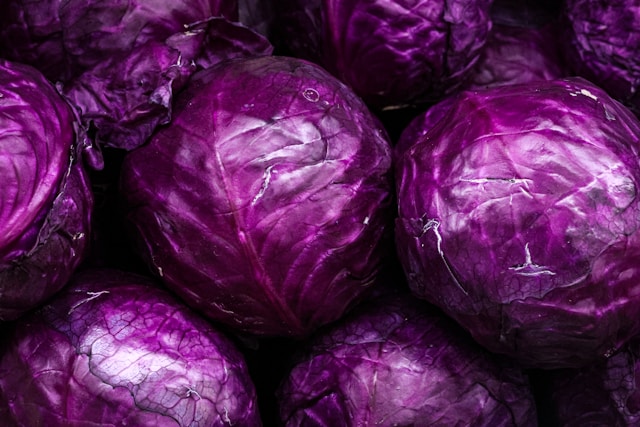
Red, or purple, cabbage is more than a colorful addition to the garden. Its color comes from anthocyanins — plant pigments with antioxidant properties. Late varieties are also valued for dense heads that may remain in storage for several months. Producing a good crop requires cool weather, fertile soil and consistent moisture.
Quick facts about red cabbage
- Soil Fertile and well-drained, but able to retain moisture. The optimum pH is approximately 6.0–7.0.
- Light A sunny position. Heads develop more slowly and may remain loose in heavy shade.
- Time to maturity Depends on the variety. Early cultivars mature quickly, while late storage varieties may need 100–150 days or longer from germination.
- Cold tolerance Mature plants tolerate light autumn frosts, but young seedlings and fully formed heads should not be exposed to severe frost unnecessarily.
- Spacing For large late varieties, allow approximately 45–60 cm between plants and 60–90 cm between rows. Check the seed packet for cultivar-specific spacing.
When to sow and transplant
Red cabbage forms its best heads in cool weather. Growth may slow and crop quality may decline during intense heat.
In Ukraine, late varieties for an autumn harvest are often started indoors in March or April and transplanted in May or early June. One date cannot apply to the entire country, however. Local climate, the frost forecast and the variety’s growing period must all be considered.
Seedlings are ready for transplanting when they have approximately five or six true leaves and a sturdy stem. Harden them off gradually before planting outside.
After planting, gently firm the soil around the roots and water thoroughly. The soil should hold the seedling securely, but there is no need to stamp it down or create a compacted crust.
Feeding: why wood ash should not be applied indiscriminately
Cabbage needs fertile soil, but there is no universal feeding schedule. Potassium is involved in water regulation and crop development, but the color of red cabbage is primarily determined by the variety and its anthocyanin pigments.
Wood ash contains potassium, but it also raises soil pH. Repeated application without testing may make the soil too alkaline and reduce the availability of certain nutrients. Ash and mineral fertilizers should therefore be used only with the acidity and fertility of the particular garden in mind.
Compost or well-rotted manure is normally incorporated while preparing the bed. If additional fertilizer is needed, its composition and quantity should ideally be based on a soil test or recommendations for the chosen variety.
Consistent moisture matters more than large amounts of water
Red cabbage should not be allowed to dry out repeatedly. Stable soil moisture is particularly important as the heads begin to form and fill.
After a prolonged dry period, heavy rain or excessive irrigation may cause a sudden intake of water and split mature heads. Mulch, drip irrigation and checking the soil below the surface can help reduce these fluctuations.
Do not water only by the calendar
Water requirements depend on temperature, wind, rainfall and soil type. Sandy soil dries rapidly, while heavy clay retains water for longer. The goal is not to saturate the plant but to maintain moderate and reasonably stable moisture around its roots.
How to protect cabbage from caterpillars
Red coloring does not make cabbage immune to cabbage whites, loopers and other pests. Butterflies and moths may lay eggs on the undersides of leaves, and young caterpillars can damage plants quickly.
- Fine insect mesh. Cover the bed immediately after transplanting and secure the edges so that butterflies cannot enter. Support the mesh so it does not lie directly on the foliage.
- Regular inspection. Check the undersides of leaves and remove egg clusters and caterpillars by hand while numbers are low.
- Biological controls. Products containing Bacillus thuringiensis can work against young caterpillars where they are locally authorized and used exactly according to the label.
- Crop rotation. Do not grow cabbage, broccoli, cauliflower, radishes and other brassicas in the same location every year. A three- to four-year break helps reduce the buildup of soil-borne diseases.
Mixtures containing tobacco dust should not be presented as a safe home remedy. Nicotine is toxic, and the composition and dose of homemade treatments cannot be controlled reliably.
When to harvest
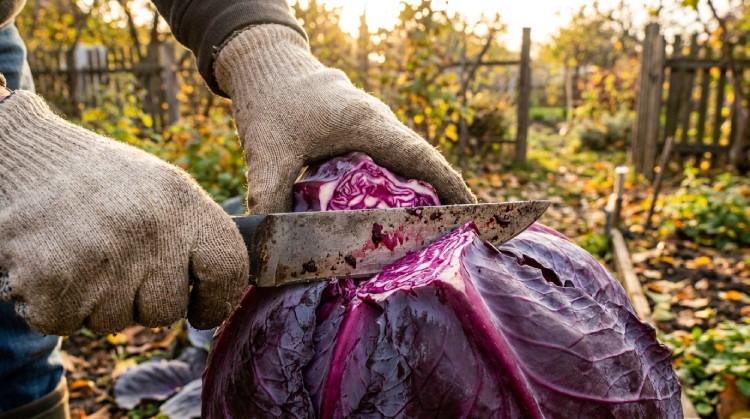
Do not rely on the calendar alone. Consider the variety’s maturity period and the condition of each plant. A cabbage is ready when the head has reached its typical size, feels compact and does not yield to gentle pressure.
Mature cabbage can tolerate a light frost, but there is no need to wait deliberately for freezing weather to improve its flavor. Prolonged or severe frost can damage heads and reduce their storage life. Do not leave mature cabbage in the garden for too long either, as overmature heads are more likely to split.
Cut the heads with a clean, sharp knife, leaving several outer wrapper leaves and part of the stem. Store only healthy cabbages without cracks, decay or severe pest damage.
How to store red cabbage
Cabbage stores best in cold, humid conditions with adequate air circulation. Professional storage conditions are close to 0–4°C with high relative humidity. In a domestic cellar, storage life will depend on temperature, humidity, variety and the condition of the heads.
- arrange the heads so air can circulate between them;
- prevent freezing and condensation;
- inspect the crop regularly and remove any heads that begin to deteriorate;
- do not keep cabbage beside large quantities of apples or pears, as their ethylene can reduce quality and increase bitterness.
Under favorable conditions, some late varieties can be stored for several months and occasionally until spring. This is a possibility, not a guarantee for every head.
What should be adapted to your garden?
Sowing and transplanting dates, spacing, irrigation and fertilizer needs vary with the region, soil and cultivar. Check the stated days to maturity on the seed packet and make sure a late variety has enough time to form heads before persistent hard frosts arrive.
Conclusion
To produce dense heads suitable for storage, red cabbage needs cool conditions, adequate space, fertile soil and consistent watering. Excessive soil compaction, indiscriminate applications of ash and abrupt changes from drought to overwatering will not improve the crop.
A suitable variety, insect mesh, crop rotation and timely harvesting are more useful than universal home remedies.