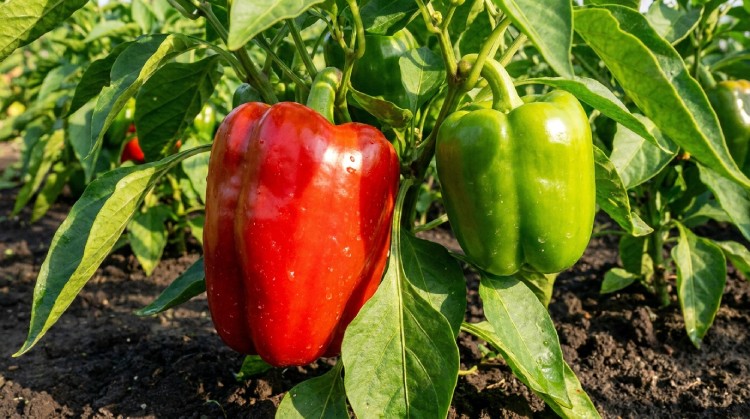
Sweet (bell) pepper is the true king of summer salads and home preserves. Its thick-walled, crunchy, and sweet fruits are packed with an immense amount of vitamin C. However, this crop originates from the tropics, making it highly sensitive to heat, light, and moisture. To grow large, juicy peppers instead of thin, wrinkled pods, you need to follow a few critical care rules.
Quick Facts about Bell Peppers (Capsicum annuum)
- Family: Nightshade (Solanaceae), just like tomatoes, eggplants, and potatoes.
- Soil: Highly loose, warm, rich in organic matter (compost), with a neutral pH level.
- Lighting: Maximum sun exposure. A location protected from cold drafts or a greenhouse is ideal.
- Frost resistance: None. If the temperature drops to +13°C (55°F), the pepper stops growing, and frost kills it instantly.
Growing peppers from seed: Why seedlings hate transplanting
Due to the specific climate in our regions, sweet peppers are grown exclusively through seedlings. Because the plant grows quite slowly at first, seeds are sown very early — from mid-February to early March.
an important point of growing peppers from seed: unlike tomatoes, Pepper seedlings can be slowed by unnecessary root disturbance, so gentle transplanting is preferable. Therefore, it is best to sow the seeds directly into individual cups (peat or plastic ones). In May, you can simply transfer the entire soil ball into the garden bed without damaging the roots at all.
Bell pepper plant care: Essential rules for a heavy harvest
Once your seedlings are safely in the ground, the success of your harvest depends entirely on proper maintenance. Sweet peppers require a balanced approach to watering and physical protection.
Watering guide: The golden mean
Peppers have a shallow root system. They cannot tolerate dried-out soil (which makes the fruits thin and bitter), but they also hate waterlogged "swamps" where the roots suffocate. Water frequently with warm water directly at the root, and make sure to mulch the bed with a thick layer of straw or grass clippings.
Providing sturdy support
The stems of sweet peppers are very brittle. When heavy, thick-walled fruits begin to ripen on the bush, the branches can easily snap under the weight. Every single bush needs to be securely tied to a sturdy stake during the active flowering stage.
Common pepper growing problems and solutions
You don't need to worry about exotic pests; the main enemies of your pepper harvest are improper care and sudden weather fluctuations. Here are the most common issues:
1. Preventing blossom end rot in peppers
If you notice dry, black spots appearing on the tips of the fruits, it is not an infectious disease. It is an acute calcium deficiency caused by irregular watering (alternating between bone-dry and soaking wet soil). You can easily fix this by establishing a consistent watering schedule and spraying the plants with calcium nitrate.
2. Unexpected flower and blossom drop
Pepper plants can suddenly drop their flowers and young settings due to severe environmental stress. This typically happens when daytime temperatures spike above +32°C (90°F) or when night temperatures drop below +15°C (59°F).
Harvesting bell peppers: Green vs. Red stage
When it comes to harvesting bell peppers, you can pick them at two completely different stages of maturity. Your choice should depend entirely on your culinary plans:
Technical maturity (The Green stage)
At this stage, the fruit has reached its maximum size and become firm to the touch, but it is still green (or pale yellow, depending on the variety). At this point, the pepper is exceptionally crunchy and good for stuffing or fresh salads. Regularly picking green peppers stimulates the bush to produce new flowers, significantly increasing your overall yield.
Biological maturity (The Red/Orange stage)
If you leave the pepper on the vine for an additional 2-3 weeks, it will transition into its final bright color. This is when the pepper becomes as sweet as possible, develops thick walls, and reaches its peak vitamin content. This stage is the ideal choice for roasting, grilling, freezing, or making traditional lecho.
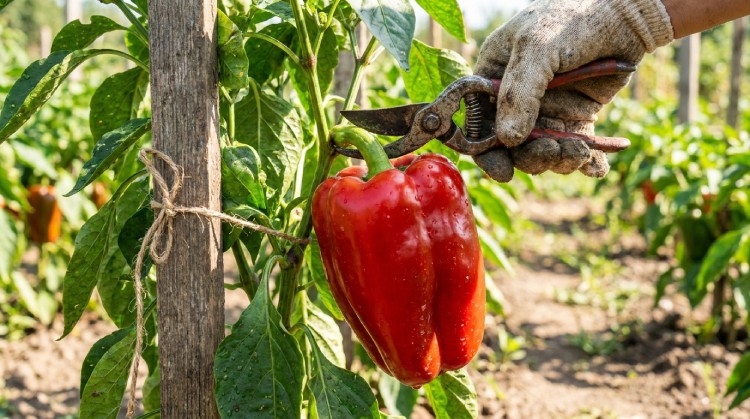
Pro Tip: Always harvest the fruits using sharp pruning shears or scissors. Attempting to rip the pepper off by hand very often results in snapping the entire branch, destroying other young settings in the process!
A key qualification
Bell peppers respond to root-zone temperature as well as warm air. Cold, wet soil after transplanting can stall plants even on sunny days, so waiting for genuinely warm conditions is often more useful than planting by the calendar.
A practical checklist before you use the advice
- confirm that the crop fits your frost-free season and available sunlight;
- check soil structure and drainage; a fine, uncompacted surface matters especially for small seeds;
- adjust sowing and transplanting dates to soil temperature, frost forecasts, and the cultivar’s days to maturity;
- water to avoid repeated swings from very dry to saturated soil;
- if the same problem returns each year, consider crop rotation rather than relying only on feeding or sprays.
Additional verified references: RHS — Grow Your Own; University of Minnesota Extension — Planting the Vegetable Garden.