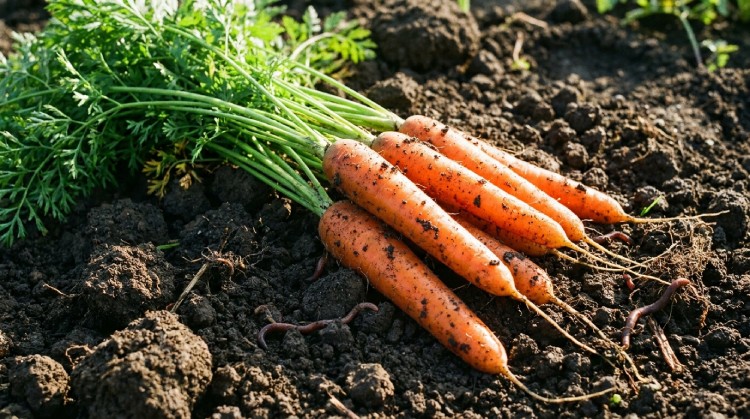
Carrots seem to be one of the simplest basic crops in the garden, but many gardeners are disappointed when they dig up twisted, "horned," or cracked roots in the fall. To grow well straight, long, and sweet carrots, you need to know their main tip: they hate obstacles in the soil and excess nitrogen.
Quick Facts about Carrots (Daucus carota)
- Family: Umbellifers (Apiaceae), just like dill, parsley, and celery.
- Soil: very loose, deeply dug, sandy or light loam. Stones and hard clods deform the root.
- Frost resistance: High. Seeds can overwinter in the ground, and mature carrots can withstand the first autumn frosts.
- Lighting: Full sun. In the shade, the tops will be tall, and the root will be as thin as a pencil.
A common mistake: using fresh manure
The biggest mistake beginners make is generously fertilizing the bed with fresh manure or unrotted compost right before sowing carrots. Doing this is strictly forbidden!
Due to excess organic matter and nitrogen, the main taproot of the carrot begins to branch out in search of nutrients, resulting in a multi-legged "horned" carrot covered with fine hairs. It loses its flavor and stores very poorly. A carrot bed should be prepared in the fall, or planted in a spot where manure was applied for the previous crop (for example, after cucumbers or cabbage).
Sowing: directly outdoors
Carrots are never grown through seedlings. The slightest damage to the taproot during transplanting will permanently stop the growth of a straight root. Seeds are sown directly into the open ground:
- Before winter (November): For an ultra-early harvest in June. The seeds will undergo natural stratification and sprout with the first warmth.
- In spring (April-May): The main sowing for winter storage. Carrot seeds take a very long time to germinate (up to 3 weeks), so it is important to keep the bed moist and not let the soil form a hard crust.
Thinning and the Carrot Fly
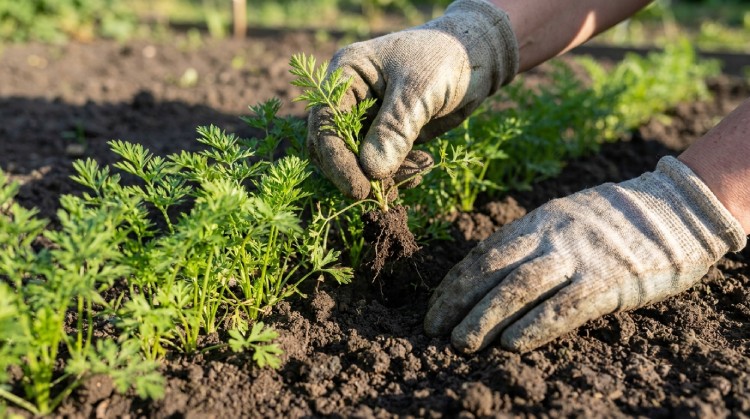
Because the seeds are tiny, we often sow them too densely. When the seedlings reach a height of 5 cm (2 inches), they must be thinned, leaving a distance of 4-5 cm (about 2 inches) between the plants. If this is not done, the carrots will be tiny.
Warning: Thinning releases a strong aroma of carrot tops, which acts as a magnet for the carrot fly (its larvae chew black tunnels in the roots). To trick the pest, thin the carrots late in the evening, immediately remove the pulled plants from the bed, and plant onions in the neighboring rows — their pungent smell repels the fly.
Watering: how to avoid cracking
Carrots need even watering. If, after a long drought, you suddenly flood the bed with water, the cells of the root will not withstand the pressure, and the carrot will crack right in the ground. Water regularly but little by little, or make sure to mulch the rows.
Harvesting
Carrots for winter storage are harvested in September-October, before the onset of severe, prolonged frosts. If the autumn is warm, take your time — in the cool soil, the roots accumulate maximum sugars. It's better to dig up carrots with a pitchfork so as not to cut the roots with a shovel. Immediately after digging, trim the tops (leaving 1-2 mm), otherwise, the leaves will quickly draw moisture from the root, making it flabby. Carrots store best in a cellar or a cool basement, layered with slightly damp sand.
A key qualification
Carrot shape is strongly influenced by soil structure. Stones, compaction, and fresh manure can contribute to forked roots, so a loose seedbed and mature compost are more useful than aggressive feeding.
A practical checklist before you use the advice
- confirm that the crop fits your frost-free season and available sunlight;
- check soil structure and drainage; a fine, uncompacted surface matters especially for small seeds;
- adjust sowing and transplanting dates to soil temperature, frost forecasts, and the cultivar’s days to maturity;
- water to avoid repeated swings from very dry to saturated soil;
- if the same problem returns each year, consider crop rotation rather than relying only on feeding or sprays.
Additional verified references: RHS — Grow Your Own; University of Minnesota Extension — Planting the Vegetable Garden.