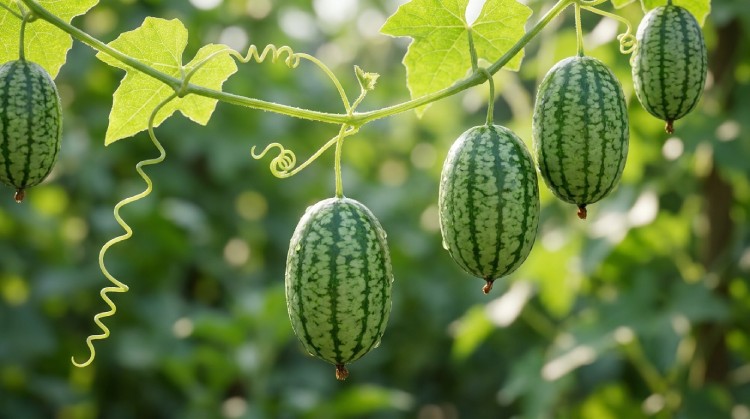
The cucamelon (also widely known as the Mexican sour gherkin or mouse melon) is one of the most fascinating and downright adorable exotic vegetables you can grow in your garden. Its fruits look exactly like tiny, toy-sized watermelons but pack the refreshing taste of a crisp cucumber with a bright, citrusy zing. Cucamelons are good for tossing into summer salads, pickling, or simply enjoying as a healthy, crunchy snack straight off the vine.
Quick Facts on Growing Cucamelons (Melothria scabra)
- Family: Cucurbitaceae (Gourd family). This is a tropical cousin of our common garden cucumbers.
- Soil: Well-drained, loose, and generously enriched with compost or aged manure.
- Cold Tolerance: Zero. This is a heat-loving tropical vine that will perish at the very first hint of frost.
- Light: Exclusively full sun for vigorous vine growth and mass flowering.
Starting Cucamelon Seeds: When to Sow and Transplant
Because the cucamelon originates from Central America, it demands a long, consistently warm growing season. In most temperate climates with shorter summers, sowing seeds directly into the garden is quite risky—you might simply run out of warm weather before the harvest begins.
Cucamelon Care: Why Trellising and Fertilizing Are Mandatory
Visually, cucamelon vines look very similar to cucumber vines, but they are much thinner, more delicate, and feature much smaller leaves. However, don't let this fragile appearance fool you: this vine is a vigorous grower and can easily reach up to 10 feet (3 meters) in length under the right conditions!
A trellis is mandatory. Never allow a cucamelon vine to sprawl uncontrollably across the ground. Install a sturdy vertical trellis, a decorative garden arch, or stretch some netting. This saves massive amounts of garden space, vastly improves airflow around the leaves, and makes harvesting the tiny fruits infinitely easier.
Pest Control and How to Fertilize for a Bountiful Harvest
A huge advantage of the cucamelon is that insect pests practically ignore it! You won't have to endlessly battle aphids or spider mites as frequently as you do with regular cucumbers. The only issue that might pop up late in the season (during cool, damp late-summer nights) is powdery mildew on the older foliage.
When it comes to feeding, as soon as the vine begins to actively bloom with its tiny yellow flowers, feed it every two weeks with a liquid organic fertilizer high in potassium. This well stimulates the massive fruit set of those "mini-watermelons."
When to Harvest Cucamelons: Finding That good "Citrusy Zing"
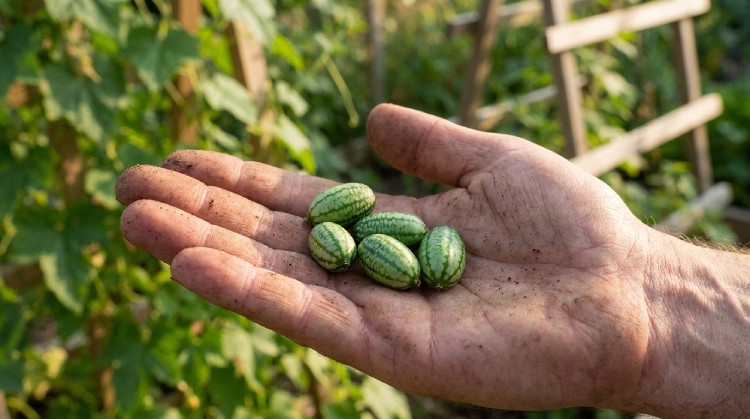
You need to harvest cucamelons regularly (preferably every other day), refusing to let them overgrow on the vine. The ideal fruit for culinary use and fresh snacking is about the size of a large grape (about 1 inch / 2-3 cm long) and remains very firm and resilient to the touch.
It is exactly at this stage that the young vegetable delivers its famous "citrusy zing"—an very crunchy texture and refreshing flavor. If the fruit is left to overripen on the vine, its skin will become tough, and the seeds inside will turn hard and unpleasant to chew. These older fruits are no longer suitable for fresh summer salads, though they can still be pickled in jars for a zesty winter snack. Once harvested, toss your cucamelons straight into the refrigerator so they retain their good crunch for as long as possible.
A key qualification
Cucamelon is a vigorous vine, so a trellis is useful for more than saving space. Keeping growth off the soil improves airflow and makes the small fruits easier to spot and harvest before they become overripe.
A practical checklist before you use the advice
- confirm that the crop fits your frost-free season and available sunlight;
- check soil structure and drainage; a fine, uncompacted surface matters especially for small seeds;
- adjust sowing and transplanting dates to soil temperature, frost forecasts, and the cultivar’s days to maturity;
- water to avoid repeated swings from very dry to saturated soil;
- if the same problem returns each year, consider crop rotation rather than relying only on feeding or sprays.
Additional verified references: RHS — Grow Your Own; University of Minnesota Extension — Planting the Vegetable Garden.