To lose weight, the body needs to take in fewer calories than it uses over time. That does not mean every plate must look half empty or that hunger should become a constant test of willpower.
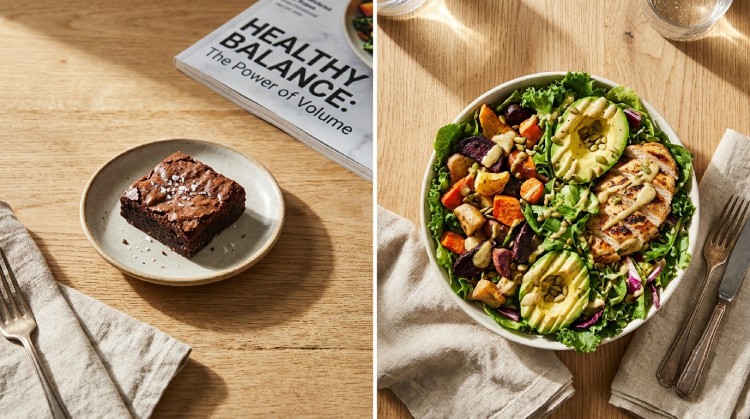
The same number of calories can fit into a small pastry or a much larger meal built with vegetables, grains, and a source of protein. The difference lies in the ingredients and in how many calories each gram of food contains.
Changing the makeup of the plate is not a magic method or permission to eat without limits. It is one practical way to make a moderate calorie deficit more satisfying and realistic.
Two ways to reduce the calories on your plate
The advice to “eat less” often blurs two different things: the amount of food on the plate and the number of calories it contains. Weight loss requires a sustained reduction in overall calorie intake, but there are two common ways to get there.
You keep the same foods but serve less. This is the most direct approach: a smaller portion will usually contain fewer calories. If it leaves you satisfied and does not lead to frequent hunger-driven snacking, it may be all you need.
You replace part of the more calorie-dense ingredients with vegetables, fruit, legumes, or other water-rich foods. The serving can stay familiar or become larger while containing fewer calories.
These approaches are not rivals. In everyday meals, they often work together: use a little less oil or cheese, slightly reduce the pasta, then fill the open space with vegetables. This article focuses on the second approach because it is often misunderstood as an instruction simply to eat more.
What energy density actually means
Energy density describes how many kilocalories, usually written as calories on food labels, are contained in one gram of a food or meal.
The simple formula
Energy density = calories ÷ serving weight in grams.
If 100 grams of a food contains 250 calories, its energy density is 2.5 calories per gram.
Interactive calculator
How many calories are in each gram?
Choose a food or enter its label information to calculate energy density and the approximate calories in your serving.
Water increases the weight and amount of food without adding calories. That is why vegetables, fruit, stews, cooked grains, and soups often have a lower energy density than dry snacks, pastries, or foods with a large amount of fat.
Fat contains about 9 calories per gram, more than protein or carbohydrate. Oils, nuts, seeds, cheese, and rich sauces can therefore have a high energy density even when they also provide valuable nutrients.
Energy density is not a health score. It describes only the relationship between calories and food weight.
What controlled studies have found
In a systematic review and meta-analysis of 38 randomized studies, participants were served foods or meals with different energy densities. On average, lower-density options reduced calorie intake by about 223 calories compared with higher-density options, while the total weight of food eaten did not change substantially.
This does not mean everyone will automatically eat exactly 223 fewer calories each day. The studies differed in their meals, duration, and participants, and their results were heterogeneous. The broader pattern was more useful: people often eat a fairly similar weight of food even when its calorie content changes.
A separate one-year trial included 97 women with obesity. One group was advised to reduce fat, while the other also added more water-rich fruits and vegetables. Among those who completed the trial, the second group ate a greater weight of food, reported less hunger, and lost an average of 7.9 kilograms compared with 6.4 kilograms in the first group.
The result supports a lower-energy-density strategy, but it does not establish the same outcome for everyone. The trial included only women, and 71 participants completed the year.
Where ultra-processed foods fit in
In a well-known controlled study by the US National Institutes of Health, 20 adults ate ultra-processed and minimally processed diets for two weeks each. They were allowed to eat as much as they wanted.
During the ultra-processed diet, participants consumed about 508 more calories per day. Over two weeks, they gained about 0.9 kilograms, while they lost roughly the same amount during the minimally processed diet.
This was a strong controlled experiment, but it was small and short. It does not prove that every food classified as ultra-processed affects appetite or body weight in the same way.
The researchers also did not identify one single cause. Eating speed, texture, palatability, nutrient ratios, and other features of the diets may all have mattered.
The practical conclusion is modest: soft, dry, or very convenient foods can sometimes make it easy to consume many calories before a person feels comfortably satisfied.
The amount of food matters, but it is not the whole story
The stomach responds to stretching, but fullness is not determined only by how full it feels. It is also shaped by:
- calories and nutrients;
- protein;
- the type and structure of fiber;
- fat and carbohydrate;
- taste and texture;
- eating speed;
- earlier meals;
- sleep, stress, and physical activity;
- hormonal and medical factors;
- some medications.
A huge bowl of leafy greens without protein, carbohydrate, or fat may fill the stomach but still fail to provide lasting satisfaction or a complete meal.
There is also no universal rule that the brain needs exactly 15 or 20 minutes to “switch on” fullness. Signals develop before, during, and after eating, and their timing varies by meal and person.
A slower pace may make fullness easier to notice, but there is no need to put a stopwatch on the table.
Protein may support satiety, but it does not guarantee it
Levels of several appetite-related hormones change after a protein-containing meal. In short controlled studies, a higher proportion of protein has often increased reported fullness.
Longer-term findings are less certain. A systematic review among people with overweight or obesity found improved satiety in some studies, but the authors rated the overall quality of evidence as low because protocols differed and the risk of bias was substantial.
Protein is best treated as a normal anchor for a meal, not as a way to “switch off ghrelin.”
Useful sources include:
- eggs;
- fish, poultry, or lean meat;
- beans, lentils, chickpeas, and peas;
- cottage cheese, plain yogurt, or kefir;
- tofu and other soy foods.
There is no need to turn every plate into a high-protein diet or rely on protein powder.
Not all fiber behaves the same way
Vegetables, fruit, legumes, and whole grains can make a serving larger and may support fullness. But the claim that every type of fiber acts like a sponge and keeps the stomach full for hours is too simple.
In a systematic review of 107 short-term trials, only 39% of fiber treatments significantly improved subjective satiety, while 22% reduced later food intake. The result depended on the fiber, the food structure, the meal, and the person.
This does not diminish the value of fiber. It remains important for digestive health and overall diet quality. It simply should not be presented as a guaranteed appetite-control tool.
A sudden increase in beans, bran, or raw vegetables can cause bloating or discomfort. Increase them gradually and drink enough fluid.
How to build a satisfying, lower-energy-density meal
A useful plate does not need to be made entirely of “light” foods. It is easier to think in four parts.
- A visible portion of vegetables or fruit
They add water, fiber, color, and more food to the plate. Vegetables can be raw, roasted, sautéed, stewed, or served in soup. - A source of protein
Protein helps make the meal more complete. Options include fish, eggs, poultry, beans, lentils, tofu, or a cultured dairy food. - Grains, potatoes, bread, or another carbohydrate source
Weight loss does not require removing oats, rice, potatoes, or bread. The amount depends on your needs and the rest of the meal. Whole grains and legumes can be satisfying because of their structure and fiber, but ordinary potatoes or pasta can also fit into a balanced plate. - A moderate amount of fat
Oil, nuts, seeds, avocado, and cheese add flavor and help absorb fat-soluble vitamins. They do not need to be eliminated. Because fat can raise calories quickly, it helps to pour oils and sauces deliberately rather than automatically.
How the second approach works: replace, do not simply add
If you add a large salad dressed with several tablespoons of oil to your usual lunch, the meal may simply become higher in calories.
A lower-energy-density strategy works when water-rich foods replace part of a more calorie-dense component:
- some vegetables in place of some pasta;
- tomato sauce in place of part of a cream sauce;
- fruit in place of part of the granola;
- beans and vegetables in place of part of a fatty meat portion;
- a baked potato in place of the same weight of French fries.
The swap does not need to be mathematically exact. Look at what takes up the most room on the plate and which ingredients contribute most of its calories.
Six ways to lower calories without making the serving tiny
Keep the familiar base of the meal, but use slightly less grain and add sautéed vegetables, mushrooms, beans, or a salad. The serving will not look smaller, even though it may contain fewer calories.
Mix pasta with tomatoes, zucchini, eggplant, spinach, mushrooms, or beans. The share of pasta and rich sauce becomes smaller while the plate still looks full.
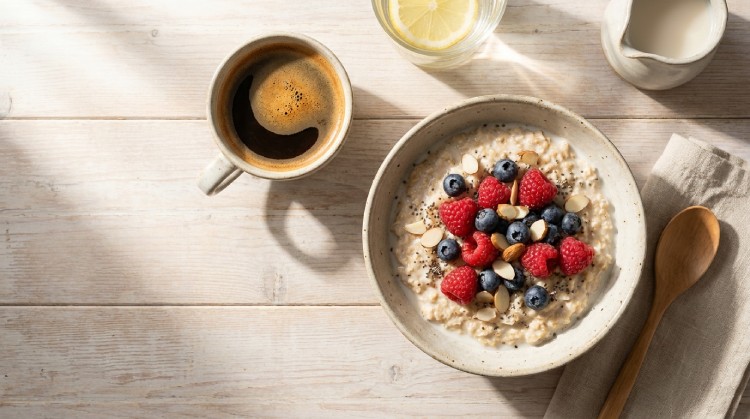
Cook it with enough water or milk and add apple, berries, or pumpkin. For a breakfast that holds you better, include yogurt, cottage cheese, nuts, or seeds in a moderate amount.
A vegetable soup may be moderate in calories, but not every soup is a complete meal. Add lentils, beans, meat, fish, or another source of protein, plus bread if needed. Cream, generous oil, fried aromatics, or cheese can substantially change the calorie count.
Instead of a few crackers, make a regular sandwich with bread, egg, poultry, fish, cheese, or hummus. Add tomato, cucumber, or greens; this snack may feel more satisfying at a similar calorie level.
Serve a portion of chocolate or cookies with fruit or plain yogurt. The point is not to “cancel out” dessert, but to make the snack more satisfying so another serving of sweets is less tempting.
Why calorie-dense foods are not “bad”
Nuts, seeds, oil, cheese, and avocado have a high energy density, but they also provide important nutrients and flavor.
They do not have to disappear. A smaller amount is often enough:
- sprinkle nuts over a meal instead of eating from a large bag;
- measure oil with a spoon;
- use a little cheese for flavor;
- pair a calorie-dense ingredient with vegetables, fruit, or a complete meal base.
The weight of a single food does not determine its quality. Frequency, portion, and the overall structure of the diet matter.
A separate situation: less food without fewer calories
This is not another weight-loss method; it is the opposite task. If someone struggles to eat large servings but needs to maintain weight and obtain enough nutrients, meals may need to be smaller and more calorie-dense.
Large amounts of raw vegetables, beans, or bran can worsen symptoms of some digestive conditions. People with a low appetite, unintentional weight loss, or higher calorie needs may instead benefit from more compact, calorie-dense meals.
- are pregnant or breastfeeding;
- have or suspect an eating disorder;
- take medication whose dose is affected by food intake or body weight;
- live with diabetes, kidney disease, or another condition requiring a specialized diet;
- are losing weight rapidly or unintentionally;
- are considering a very-low-calorie diet.
In these situations, discuss the plan with a physician or qualified dietitian.
What to remember
Weight loss still requires calorie intake to remain below calorie expenditure over time. A larger amount of food on the plate does not replace that principle; it may simply make a moderate calorie reduction more comfortable.
- Do not try to shrink every food on the plate.
- Replace part of calorie-dense components with vegetables, fruit, legumes, and water-rich dishes.
- Keep a source of protein, carbohydrate, and a moderate amount of fat.
- Do not expect every type of fiber or protein to switch off hunger automatically.
- Do not simply add more food on top of the usual meal if the goal is to reduce calories: some lower-calorie foods need to replace something else.
- Choose changes you can maintain for much longer than two weeks.
The best strategy is neither the smallest plate nor the largest bowl of salad. It is a way of eating that helps you move gradually toward your goal, supplies the nutrients you need, and does not turn every meal into a test of willpower.
Sources
- Hall et al., 2019 — randomized trial of ultra-processed and minimally processed diets
- Systematic review and meta-analysis of energy density and calorie intake
- Ello-Martin et al., 2007 — one-year trial of energy density and weight loss
- Clark and Slavin, 2013 — systematic review of fiber, satiety, and food intake
- de Carvalho et al., 2020 — systematic review of protein and satiety
- NIDDK PRIDE — energy-density formula and the approximate categories used by the calculator
- US National Institute of Diabetes and Digestive and Kidney Diseases — weight management guidance