A flower bed that stays colourful all summer rarely depends on one “magic” plant. The real secret is combining long-flowering annuals with perennials that peak at different times. One group then hands the display to the next, while attractive foliage carries the bed through short gaps.
Start with a flowering calendar
Write your chosen plants under three headings. Exact dates vary with cultivar, weather and region, but this simple exercise quickly reveals when the bed may be short of colour.
You do not need every plant on the list. In a small bed, five to seven species repeated in groups usually look calmer and are easier to maintain.
Flowers that keep the colour going
Petunias
They flower for a long season with enough sun, consistent water and appropriate feeding. Trailing and large-flowered types especially benefit from removing spent blooms and cutting back straggly stems.
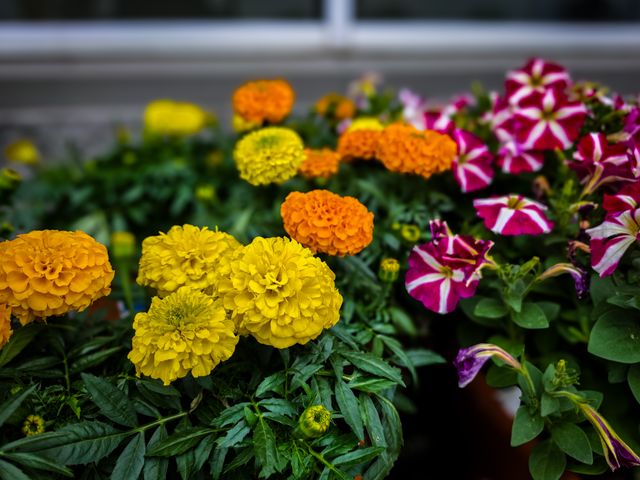
Marigolds
They are resilient, tolerate heat once established and continue until frost. Their effect on pests depends on the particular insect and crop, so they should not be treated as a universal shield for the vegetable garden.
Zinnias
These sun-loving flowers thrive in warm weather, produce more buds after cutting and make excellent cut flowers. Water near the base to keep the foliage dry for longer.
Cosmos
Cosmos creates an airy cloud of flowers in the middle or back of a border. Soil that is too rich may produce abundant foliage at the expense of blooms.
Black-eyed Susans and coneflowers
They take over in midsummer and carry the display toward fall. Some dry seed heads can remain through winter for birds and structural interest.
Daylilies
Each flower is short-lived, but an established clump produces many buds. Combining early and late cultivars can noticeably extend the season.
Where to place tall and short flowers
Tall dahlias, ornamental sunflowers, phlox and asters commonly go toward the back of a border, medium-height coneflowers and zinnias near the middle, and alyssum, lobelia, portulaca and dwarf marigolds along the edge. In an island bed, the tallest plants usually sit nearer the centre.
Do not build perfectly even tiers. A few tall, transparent plants—such as tall verbena or ornamental grasses—can rise through the middle layer and make the planting feel more natural. Mature width matters more than a rigid height rule, because crowded perennials may overwhelm their neighbours after two or three years.
Three simple flower-bed ideas
Sun, soil and water matter more than a long plant list
Most heavy-flowering annuals and sun-loving perennials need roughly six or more hours of direct light. In a shaded spot, choose plants adapted to partial shade instead of trying to make sun lovers bloom where they cannot gather enough energy.
The soil should release excess water without drying out within hours. Before planting, add mature compost according to the condition of the soil. Too much fertilizer—especially nitrogen—can create lush leaves and surprisingly few flowers.
How to keep the flowers blooming longer
Annuals can be set out as young plants after frost danger has passed or sown directly where the species and local season allow. For more help choosing plants, read our guide to the difference between annual and perennial flowers.
So what should you plant?
For a manageable bed, choose two or three dependable perennials with different flowering times, add a few groups of annuals and include one plant with distinctive foliage. Repeat these groups through the design. The result will feel cohesive, require fewer separate care routines and remain attractive even between waves of bloom.