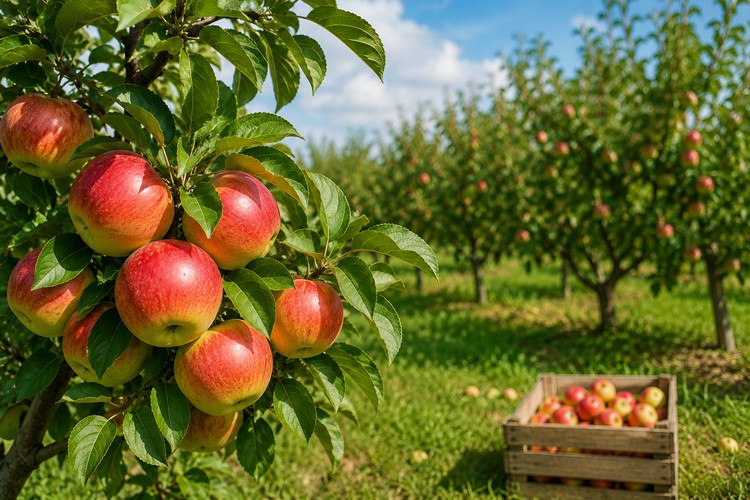
An apple crop does not begin when the fruit starts turning red. Some flower buds form during the previous summer, spring blossom needs compatible pollen, the tree must then carry its developing fruit, and every cultivar ripens on its own schedule. Understanding this cycle leads to better decisions than a universal calendar of fertilizer and sprays.
The apple’s journey: from bud to store
The cultivar is only half the choice
Apple trees are normally sold grafted. The upper section produces a named apple, while the rootstock controls vigour, eventual size, how early cropping begins and whether support is required. The same cultivar on dwarfing and vigorous rootstocks needs very different space and care.
Dwarfing rootstocks suit small gardens and trained forms, but often have less anchoring root systems and require permanent support and attentive watering. A vigorous apple occupies more space and crops later, but may anchor more securely.
Before buying, establish the rootstock, predicted mature size, cold hardiness, resistance to locally important diseases, ripening season and fruit storage potential.
Why even a self-fertile apple benefits from company
Most apples crop better with cross-pollination from another compatible cultivar flowering at the same time. A self-fertile cultivar may set fruit alone, but a nearby partner often improves the result.
Overlapping bloom matters as much as distance. Some triploid cultivars are poor pollinators for other apples; reliable mutual pollination may then require two additional compatible diploid cultivars. Check flowering groups in a specialist nursery catalogue.
A sunny position without a cold-air trap
Choose a sunny site with air movement but protection from persistent strong wind. A low frost pocket is dangerous at blossom time: the tree may be winter hardy while its open flowers are still damaged by a spring frost.
Soil should be reasonably fertile and well-drained. Apples tolerate a range of soil types provided their roots do not remain in standing water. On a difficult site, investigate drainage and the water table before purchasing a tree.
Planting: two levels that must not be confused
The root flare is where the main roots spread from the trunk. After soil settles, it should sit near ground level rather than an arbitrary 3–5 cm above it.
The graft union is a visible swelling above the roots. Keep it above the soil so the cultivar does not root independently and bypass the size control of the rootstock.
Plant bare-root trees during dormancy when the ground is neither frozen nor waterlogged. Container trees have a longer planting season, but avoid extreme heat or drought unless regular watering is assured.
- Dig a hole wide enough to spread the roots without bending, but not substantially deeper than the root system.
- Do not place concentrated fertilizer, fresh manure or ash beneath the roots. If needed, mix a modest amount of compost with the excavated soil.
- Set the tree at the correct height, backfill and gently firm the soil to remove large air pockets.
- Water according to tree size and existing soil moisture. A universal number of buckets cannot suit every tree.
- Install the support appropriate to the rootstock and mulch the root zone, leaving a clear gap around the trunk.
Why fruit thinning matters
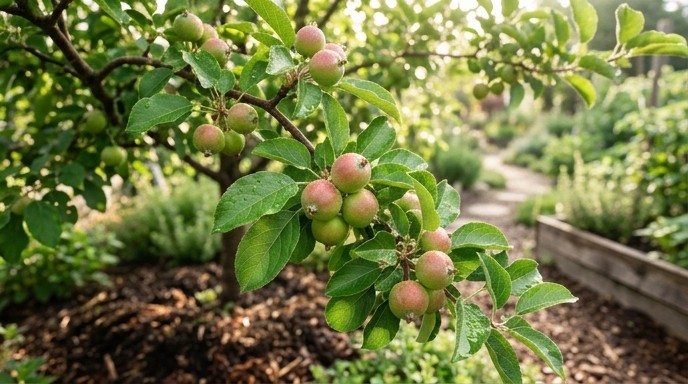
An apple tree often sets more fruit than it can mature well. Some falls naturally, but crowded clusters may remain even after this June drop.
Hand thinning reduces the risk of broken branches, improves fruit size and may lessen biennial bearing, when a heavy year is followed by a nearly empty one. Thin early while fruitlets are small, retaining the best apple in each cluster and enough space before the next fruiting cluster.
For the first few years, a young tree may benefit from having most or all early fruit removed so it can invest in roots and a strong framework. The choice depends on age, rootstock and tree condition.
Water without a rigid weekly calendar
Check a newly planted apple regularly because its roots occupy only a small volume of soil. Watering frequency depends on temperature, rainfall and soil type. Water deeply as the root zone begins to dry, but do not keep it permanently saturated.
Mature trees particularly need water during prolonged drought and fruit enlargement. Drought can reduce apple size and cause fruit drop, while a sudden excess after dryness may damage fruit. Mulch reduces evaporation but must not touch the bark.
Pruning depends on tree form
Free-standing bush and standard apple trees are generally pruned during winter dormancy. Trained forms — cordons, espaliers and other space-restricted trees — are mainly pruned in late summer to restrain vigour and maintain fruiting wood.
Remove dead, damaged, diseased and rubbing branches. Not every vertical shoot is useless: some can rebuild part of the framework or be trained into a suitable position. Excessive pruning stimulates further vigorous growth and delays cropping.
Fertilizer does not replace diagnosis
Base feeding on soil analysis, annual shoot growth, leaf colour and cropping. Automatically applying urea in spring, ash in summer and superphosphate in autumn can create nutrient excesses or change pH unnecessarily.
Too much nitrogen produces excessive vegetative growth, shades the crown and may reduce fruit quality. If a tree grows normally, a thin layer of compost and mulch may be enough. Dwarf trees in containers have different needs and require their own feeding programme.
Scab and codling moth: protection begins with selection
Where apple scab is common, choosing a resistant cultivar can reduce treatment needs far more effectively than repeatedly treating a susceptible tree. An airy crown, removal of affected fallen leaves and disposal of mummified fruit also reduce sources of infection.
Codling moth management requires observing flight timing and fruit damage. Pheromone traps can help monitor the arrival of moths, although one trap does not necessarily control the entire population.
A famous cultivar does not necessarily suit your garden
Papirovka, Golden Delicious, Fuji, Jonagold and Idared differ in their heat needs, season length, pollination and disease response. Saying that one will reliably keep “until spring” or “almost until next summer” without storage details is misleading.
A local or modern disease-resistant cultivar may be a better home-garden choice even if its name is less familiar. Consider flavour, ripening season, winter hardiness, flowering group, scab resistance and realistic storage life.
How to recognise ripeness and store apples
A ripe apple often detaches with its stalk when cupped, lifted and gently twisted. Colour and ease of picking vary by cultivar, so taste a few fruit and know the usual harvest period as well.
Summer apples generally keep only briefly. Store only undamaged late-season apples, handle them gently and retain their natural waxy bloom. Arrange them in a single layer, or with as little contact as possible, in a cool, dark, ventilated and frost-free place. Inspect them regularly.
An apple tree can crop for decades, but low maintenance is possible only after sound initial choices. A suitable rootstock, compatible pollination, resistant cultivar and sensible crop load matter more than the greatest possible quantity of fertilizer.