Apricots produce one of summer’s most fragrant crops, but success depends on more than the winter hardiness of the tree. The most vulnerable stage arrives in spring: apricots flower early, and a brief frost can destroy the blossom even when the trunk and branches have survived winter unharmed. That makes the garden’s microclimate, well-drained soil and a locally suitable cultivar especially important.
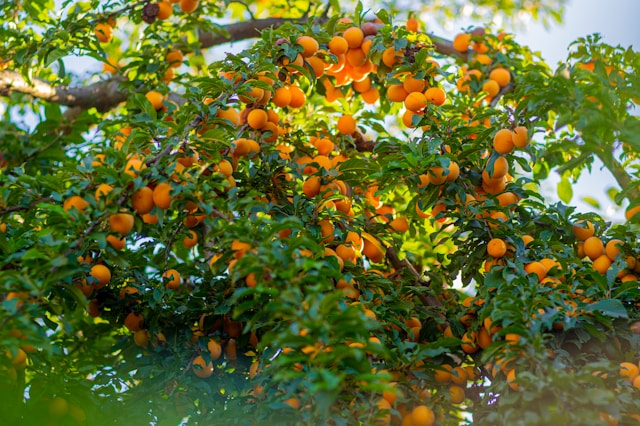
Pink-white flowers open before the leaves, followed in summer by golden fruit. In a warm, sheltered position, an apricot can become a long-lived and productive tree. In cooler regions, however, the entire crop may depend on the weather during just a few days of bloom.
The main risk may arrive in spring, not winter
An apricot can tolerate winter cold yet lose its crop to a short spring frost. Flower buds and open blossom are much more delicate than the dormant tree. A label describing a cultivar as “cold hardy” therefore does not guarantee fruit every year.
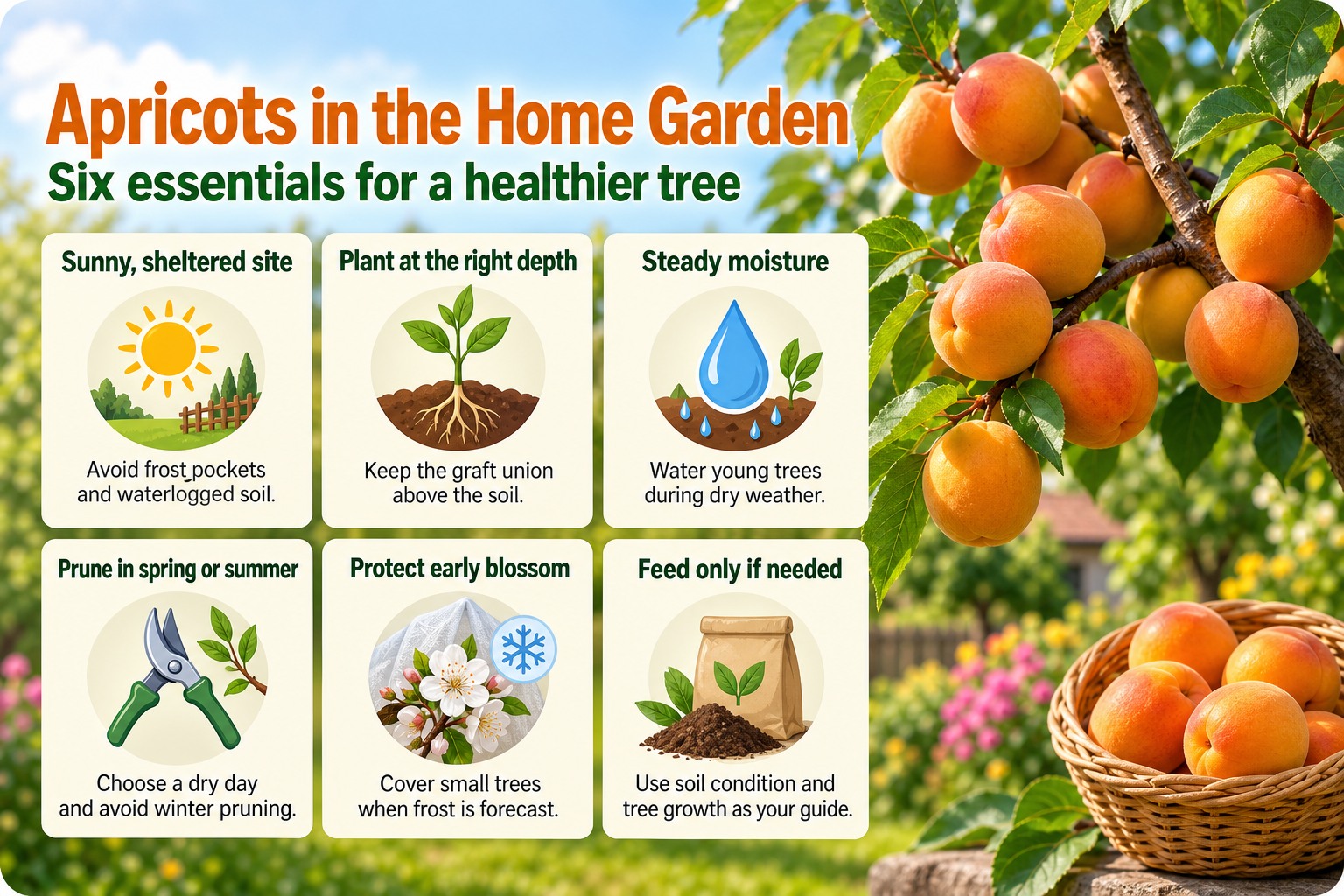
A sunny, sheltered site helps the fruit ripen, but the warmest south-facing wall is not automatically best everywhere. It may encourage earlier bud break and leave blossom more exposed to a later frost. In regions with unstable spring weather, use local experience and the shape of the site rather than aspect alone.
What to establish before buying a tree
- Cultivar and origin: can it ripen in your growing season, and how does it perform through local winters and spring frosts?
- Rootstock: this influences vigour, mature size, soil compatibility and whether permanent support is needed.
- Pollination: many common apricot cultivars are self-fertile, but cold, rain or too few insects during early bloom can still reduce fruit set. Some cultivars benefit from cross-pollination.
- Disease response: choose according to the problems that are common in your region.
The soil should drain excess water without drying immediately
Apricots need fertile, reasonably deep and well-drained soil. It does not have to be extremely light: loam can work well provided water does not remain around the roots. A persistently wet site is usually more dangerous than a short dry period.
- Plant a bare-root tree while dormant, when the soil is neither frozen nor waterlogged.
- Dig a broad hole so the roots can be spread without bending.
- Do not place concentrated fertiliser directly beneath the roots. If appropriate, blend mature compost with the excavated soil.
- Keep the graft union above ground level, water thoroughly and add a stake if needed.
- Mulch the root zone but leave a clear gap around the trunk.
Whether spring or autumn is the better planting season depends on climate and the type of nursery tree. Spring is often safer for a young tree where winters are severe; autumn can work well in a milder climate with reliably moist soil.
Watering without a universal number of buckets
Check a young apricot regularly and water it deeply during dry weather. An established tree is more resilient but may still need supplemental water during prolonged drought, especially while the fruit is enlarging. A fixed rule of three or four irrigations per season ignores rainfall, temperature, soil structure and tree size.
The aim is moderate, reasonably stable moisture. A sudden change from prolonged drought to excessive watering may contribute to fruit splitting, while constantly saturated soil deprives the roots of oxygen.
When to thin the crop
After a favourable spring, an apricot may set more fruit than its branches can support. Once the fruitlets are about cherry-sized, remove damaged, misshapen and crowded ones. Thinning allows the remaining apricots to grow larger and reduces the risk of overloaded branches.
Do not give an apricot the winter pruning used for apples
Stone fruits are vulnerable to infections entering through pruning wounds, including bacterial canker and silver leaf. Prune apricots in spring or summer, on a dry day followed by a forecast of continued dry weather. Train a newly planted tree after growth begins in spring; established trees are generally pruned after fruiting.
Feed only where there is evidence of need
A healthy tree in ordinary garden soil does not necessarily require annual nitrogen in spring and phosphorus plus potassium in autumn. Excess nitrogen encourages long, soft shoots, may delay wood maturity and can reduce fruiting. Judge shoot growth, leaf colour and cropping, and use a soil test where possible.
Mature compost may be spread thinly over the root zone. Wood ash is not a universal fertiliser: it raises soil pH and contains soluble salts, so use it only where soil conditions justify it.
Protect blossom without spraying on autopilot
A small or fan-trained tree can be covered overnight with horticultural fleece when frost is forecast during flowering. Support the material so it does not rest on the blossom, then remove it during the day to admit sunlight and pollinating insects. In cool weather or under cover, pollination can sometimes be improved with a soft artist’s brush.
Brown rot and blossom wilt, shot-hole symptoms, bacterial canker, aphids and gummosis do not share one treatment. Remove mummified fruit, dispose of affected material at an appropriate dry time, clear rotting fruit from beneath the tree and maintain airflow through the canopy. Do not apply a copper product automatically. Identify the problem first, then use only a treatment approved for apricots in your country and follow its label precisely.
What familiar cultivar names really tell you
Names such as ‘Krasnoshchekiy’, ‘Shalakh’, ‘Kharkivskyi Rannii’ and ‘Kyivskyi Krasen’ may appear in Eastern European nurseries, but a name alone does not guarantee identical performance in every region or from every supplier. Confirm the tree’s origin, rootstock, flowering and ripening season, hardiness and local trial record.
Harvesting
Apricots do not all ripen at once, so pick them in several rounds. Fruit for immediate eating should have its characteristic colour and aroma, detach easily and yield slightly to gentle pressure. Fruit intended for a short journey may be picked a little firmer, but it should already be well developed and coloured.
Ripe apricots bruise easily and keep for only a short time. Avoid piling them deeply; use damaged fruit first, and dry, pit and freeze, or preserve the surplus.
Apricots are not effortless trees, but a suitable site and cultivar greatly improve the odds of a crop. The most useful approach is not to feed and spray by routine, but to observe the tree, protect its early blossom where practical and respond to a correctly identified problem.