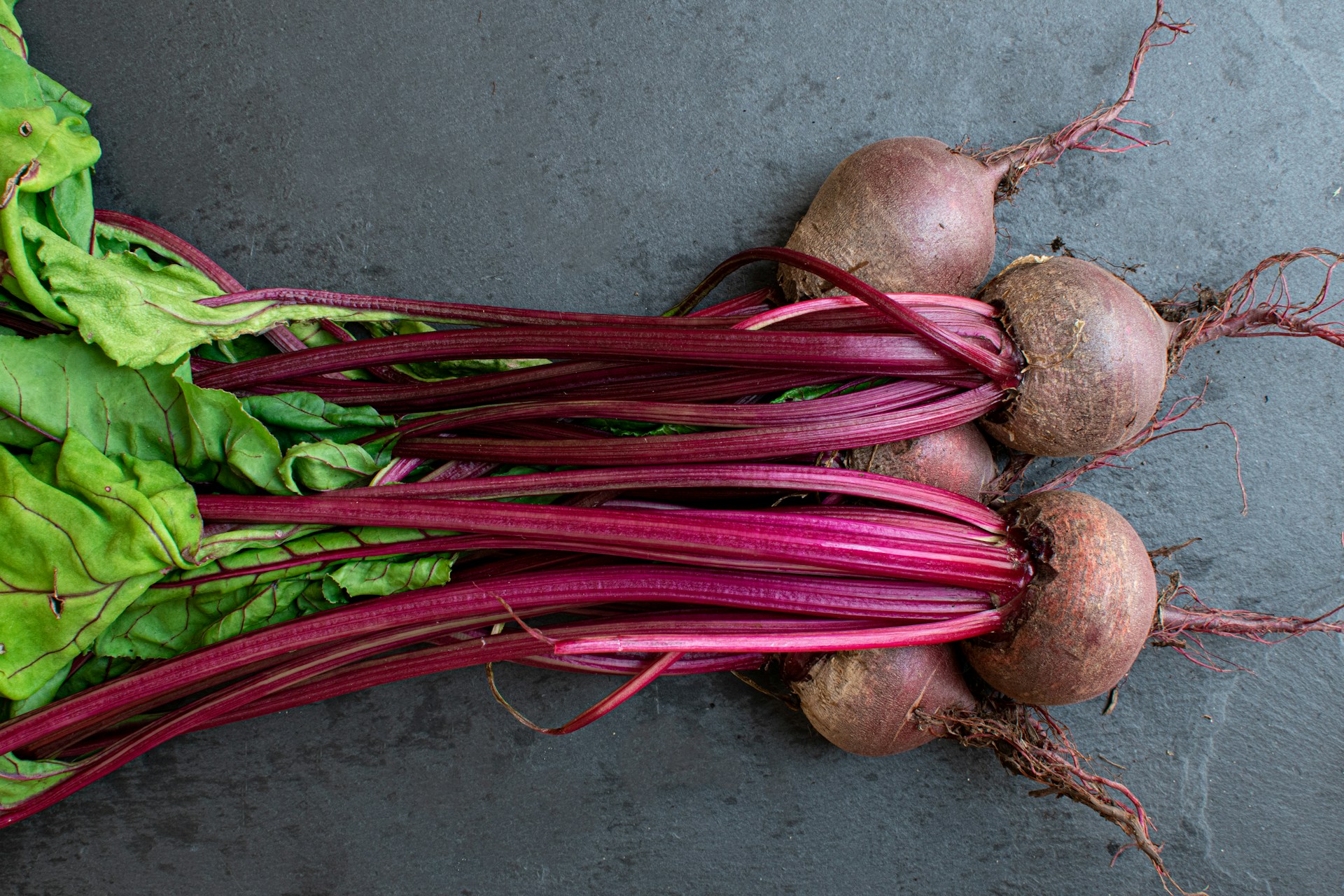
Beetroot is a classic ingredient in Ukrainian borscht and one of the most convenient root crops for a home garden. It can be harvested young in summer or left until autumn for storage. To produce smooth, juicy roots that do not turn coarse, sow correctly, thin the seedlings in time and avoid letting the soil remain dry for long periods.
Quick facts about beetroot
- Botanical name Beta vulgaris, in the amaranth family.
- Soil Fertile, loose and well-drained. Heavy or stony soil may produce distorted roots.
- Light Full sun is best. Light shade is possible, although roots may develop more slowly.
- Time to maturity This depends on the cultivar and desired size. Baby beets can be harvested earlier, while many standard cultivars need approximately 50–70 days.
- Cold tolerance Beetroot prefers cool conditions, but prolonged cold after an early sowing may trigger premature flowering.
Why beetroot often emerges in clusters
What is commonly called a beet seed is often a dry seed cluster containing several embryos. More than one seedling may therefore emerge from a single cluster. Monogerm cultivars also exist, so the number of seedlings depends on the seed type and is not always the same.
This feature explains why conventional beetroot often needs thinning even when it has been sown carefully. Check the cultivar description to learn whether the seed is monogerm or multigerm.
When and how to sow beetroot
Seeds are normally sown directly outdoors in spring as the soil begins to warm. The RHS suggests a soil temperature of at least about 7 °C as a useful guide. The precise timing depends on your climate, weather and the cultivar’s resistance to bolting.
For a prolonged harvest, sow several small batches a few weeks apart. Later sowings can provide an autumn crop for winter storage where the growing season and cultivar allow enough time to mature.
Beetroot can also be started in module trays. Transplant young plants with the root ball intact and avoid bending or tearing the roots. Keep the soil evenly moist after planting until the seedlings are established.
How to thin beetroot correctly
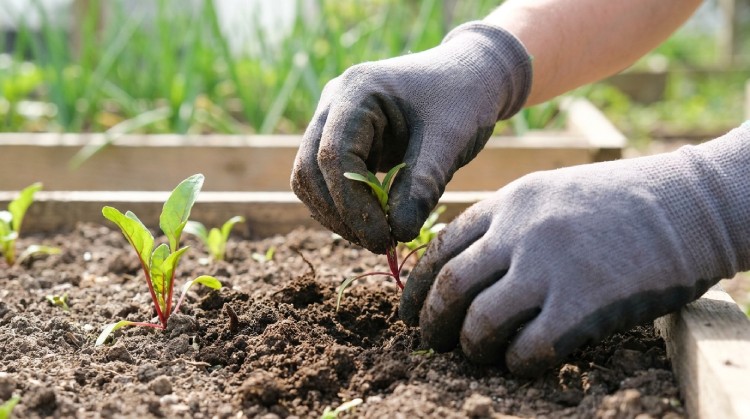
Spacing determines the eventual size of the roots. Plants can remain closer together for baby beets. For larger roots, the RHS recommends thinning them to approximately 10 cm apart.
- First thinning Once the seedlings are large enough to handle, leave the strongest plants in crowded groups. To avoid disturbing nearby roots, unwanted seedlings can be snipped off at soil level.
- Further thinning As the plants grow, harvest some young roots for food and gradually create more room for those left behind. Young leaves are edible too, provided they are clean and have not been treated with a product that prohibits consumption.
Why beetroot bolts
Bolting occurs when a plant begins flowering prematurely instead of enlarging its root. Early sowing into cold soil, an extended period of low temperatures and other stressful conditions can contribute to it.
For early sowing, choose a bolt-resistant cultivar, avoid rushing seed into cold ground and use temporary protection where necessary.
Watering and feeding
Beetroot performs well in fertile soil amended in advance with compost or well-rotted organic matter. Fresh manure immediately before sowing is undesirable because it may supply excessive nitrogen, complicate nutrient management and leave an uneven seedbed.
Not every bed needs additional fertilizer. Base any feeding on plant condition and, where possible, a soil test. Too much nitrogen encourages leaves at the expense of roots, while indiscriminate use of wood ash may raise the soil pH excessively. Ash is not a guaranteed way to make beetroot sweeter.
Keep the soil moderately moist, especially during germination and active root growth. In dry weather, water less often but deeply enough to moisten the root zone. Prolonged dryness can make roots coarse and woody, while abrupt changes from dry soil to excessive water stress the plants.
Why beetroot may have pale rings
Pale or white rings do not always indicate a growing mistake. In some cultivars, including Chioggia types, pronounced red-and-white rings are a normal genetic feature.
In cultivars expected to have uniformly dark flesh, ring visibility may be influenced by genetics, root age and growing conditions. Heat, inconsistent moisture or excessive nutrition can reduce texture and quality, but colour alone cannot identify one universal cause.
When to harvest beetroot
Beetroot can be lifted once the roots reach the size you want. Young roots are more tender, while very large ones may become coarse. Crops intended for winter storage are usually harvested in autumn before the soil freezes or the roots are seriously damaged by frost.
Lift the roots carefully with a fork or spade to avoid cutting the skin. Do not wash them before home storage unless heavily soiled. Instead, let the surface dry and gently remove loose soil.
Cut or twist off the leaves, leaving approximately 2–3 cm of stalk. Do not trim the long thin root or cut into the storage root unnecessarily. Use damaged beets first.
How to store beetroot through winter
Beetroot stores best at a temperature close to 0 °C, with high humidity but no freezing. In a home cellar, roots can be packed in boxes with clean, slightly damp sand, sawdust or another material that reduces moisture loss.
Placing beets on top of potatoes is sometimes used as a home storage trick, but it is neither essential nor a universal method. It is more reliable to control temperature, humidity and ventilation and to inspect the crop regularly. Healthy roots without tops can keep for several months under suitable conditions.
What to adapt to your garden
Sowing dates, plant spacing, watering and feeding depend on the cultivar, climate and soil. Check the seed description for days to maturity, bolt resistance, expected size and suitability for storage.
The main principles are simple: do not sow too early into cold soil, do not leave seedlings overcrowded, maintain consistent moisture and do not try to correct every problem with large quantities of fertilizer.