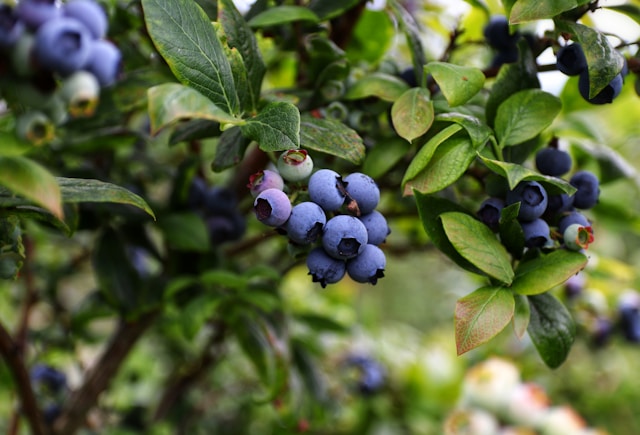
Highbush blueberries are among the most valuable, delicious, and expensive berries on the market. Many gardeners dream of growing them in their backyards but often fail. The reason is simple: blueberries have unique, strict soil requirements, and ignoring them inevitably leads to the plant's demise.
Quick Facts on Growing Blueberries (Vaccinium corymbosum)
- Soil Acidity: Strictly highly acidic pH in the range of 3.5–4.5 (this is the most critical factor!).
- Substrate: Acidic sphagnum peat moss, pine bark, coniferous sawdust, and river sand.
- Light Requirements: Full sun (berries grown in the shade will be small and sour).
- Hardiness: Excellent (can withstand down to -22°F / -30°C), but young bushes should be mulched heavily during their first winter.
- Spacing: 4–5 feet (1.2–1.5 meters) between bushes, with rows 7–8 feet (2–2.5 meters) apart.
How to Plant Blueberries: Soil Preparation and the good Planting Hole
If you simply dig a hole in your regular garden soil and plant a blueberry bush, it will stop growing, the leaves will turn yellow, and within a year, the plant will dry up. Blueberries lack root hairs to absorb water and nutrients—this role is performed by a special fungus (mycorrhiza) that lives on their roots. And this mycorrhiza can only survive in a highly acidic and very loose environment.
To plant, you need to dig a hole 16-20 inches (40-50 cm) deep and about 28-32 inches (70-80 cm) wide. It is highly recommended to line the walls of the hole with thick plastic or landscape fabric so that the regular garden soil does not neutralize the acidity over time. Fill the hole completely with a special mix:
- River sand (1 part)
- Acidic sphagnum peat moss (brown, coarse) — 2 parts
- Rotted coniferous sawdust or pine needle litter (2 parts)
Growing Blueberries at Home: Pros and Cons
Let's objectively evaluate whether it is worth putting effort into this demanding but amazing crop:
- Incredible health benefits: the berries are packed with antioxidants and vitamins.
- Longevity: with proper care, a single bush can live and bear fruit for up to 30 years.
- High yield: a mature bush can produce 9 to 18 lbs (4 to 8 kg) of berries per season.
- Expensive start: you will need to buy a large amount of acidic peat moss and soil sulfur.
- Watering demands: blueberries love moisture but are highly susceptible to root rot in standing water (a strict balance is required).
- No traditional organics: you are strictly forbidden to feed the bushes with manure, regular compost, or wood ash—this is instant death for the plant.
Blueberry Care: Watering, Mulching, and the Best Fertilizers
Blueberry roots are very shallow, so the root zone must always be protected. Be sure to mulch the bush with a 3–4 inch (8–10 cm) layer of pine bark or sawdust. Mulch retains moisture, suppresses weeds, and gradually acidifies the soil as it breaks down.
Watering Blueberries: The soil under the bush should never dry out. In summer, especially during fruiting and bud formation for the next year (July-August), bushes should be watered deeply twice a week. Once a month, it is beneficial to add a soil acidifier or citric acid (1-2 teaspoons per 2.5 gallons/10L of water) to your watering can.
Blueberry Fertilizers: Use only mineral fertilizers designed for azaleas, rhododendrons, or specific blueberry blends (labeled "for acid-loving plants"). Apply ammonium sulfate in the spring for growth, and potassium sulfate in early summer for sweet berries and shoot hardiness. If the edges of the leaves start to turn brown, it is a direct sign of severe potassium deficiency.
How and When to Prune Blueberry Bushes
For the first 3-4 years after planting, blueberries do not need pruning at all, except to remove broken or obviously diseased twigs. Full pruning begins when the bush reaches 5 years of age.
The procedure is carried out exclusively in early spring (March), before the buds swell. The main goal is to remove old, thick branches (older than 5-6 years) that reduce yield, as well as thin, twiggy growth near the ground that crowds the bush and hinders air circulation. A healthy bush should have 6–10 strong main canes of varying ages.
Harvesting and Protecting Your Blueberry Crop from Birds
In most gardens around the world, the main enemies of ripening blueberries are not insects, but birds (starlings, jays, thrushes). They can completely decimate your entire harvest in a single morning. The most effective and humane way to fight back is to drape the bushes with a special protective bird netting during the harvest period.
Pick the berries only when they have developed a uniform deep blue (or purple) color and detach easily from the stem. Don't rush to pick the first blue berries you see—let them stay on the bush for another 3-5 days so they can accumulate sugar and become truly sweet!
A key qualification
For blueberries, acidic soil is a core nutritional requirement rather than a cosmetic preference. Test pH and prepare a suitable root zone before planting instead of trying to fix unsuitable soil later with random household acidifiers.
A practical checklist before you use the advice
- confirm the rootstock, vigor, and mature size before planting;
- check the exact cultivar’s pollination needs and whether a potential partner overlaps in bloom;
- choose a site with good drainage and enough sun; prolonged waterlogging is harmful to many fruit crops;
- keep the graft union above soil unless guidance for the specific plant says otherwise;
- base pruning on tree age, fruiting habit, and canopy condition rather than calendar month alone.
Additional verified references: University of Minnesota Extension — Growing Fruit in Home Gardens; RHS — Grow Your Own Fruit, Vegetables & Herbs.