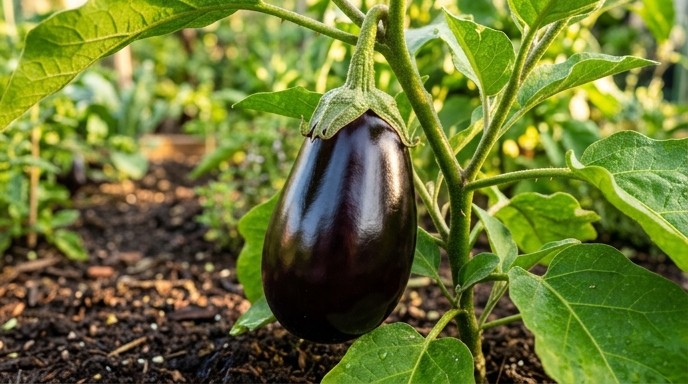
Eggplant is a heat-loving relative of tomatoes, peppers and potatoes. During a cool summer it may barely grow, drop its flowers or produce only a few fruits. The cultivar or a lack of fertilizer is not always to blame. Temperature, sunlight, root health and consistent watering usually have the greatest influence on the harvest.
Why eggplant is more demanding than a tomato
Cultivated eggplant originated in warm parts of Asia, which makes cold soil and cool nights particularly undesirable. The plant cannot tolerate frost, and prolonged cool conditions slow its growth and fruit development. Saying that any temperature near 10 °C instantly “stops” the plant is too absolute, however: the duration of the cold, plant age and cultivar all matter.
Outdoors, choose the warmest sunny location available, sheltered from strong wind. In cooler regions, early, compact or small-fruited cultivars may be more reliable, as may a greenhouse or a large container placed against a south-facing wall.
Seedlings: start early, but do not rush them outdoors
Sow indoors approximately 6–10 weeks before the intended planting date. Germination requires warmth: the RHS recommends at least about 21 °C. Once seedlings appear, give them bright light to prevent weak, stretched stems.
Seeds can be started in modules or small pots and carefully potted on after the true leaves appear. Eggplant dislikes rough root damage, but this does not mean it can never be transplanted. Handle it gently, retain the root ball and do not leave seedlings root-bound in small containers for too long.
Direct sowing outdoors is biologically possible, but in most of Ukraine and similar climates the season is too short for it to be dependable. Transplants are therefore the safer option, especially for mid- and late-season cultivars.
When to transplant eggplant
Do not rely only on a calendar date such as late May or early June. Plant after frost danger has passed, once the soil is warm and night temperatures are no longer repeatedly falling to levels that stress the crop. Harden the seedlings off gradually beforehand.
Soil should be fertile and well-drained. Heavy clay will not necessarily “kill” the plant, but its structure should be improved with organic matter and water must not be allowed to stagnate. Set eggplants at the same depth at which they grew in their pots.
Spacing depends on the cultivar’s vigour. About 45–60 cm between plants is common. Spreading cultivars need more room, while compact container varieties may need less. Crowding reduces light and air movement.
Watering: more is not always better
Eggplant needs consistent moisture, particularly during flowering, fruit set and fruit enlargement. Water deeply enough to moisten the root zone, then allow the surface to dry slightly. Permanently saturated soil deprives roots of oxygen and increases the risk of root disease.
Organic mulch reduces evaporation, but do not rush to cover cold soil in spring: a thick layer can delay warming. Let the ground warm first, then apply compost, straw or another clean material without piling it against the stem.
Feeding: leaves are not the same as a harvest
Enrich the bed with compost or well-rotted organic matter before planting. Further feeding depends on soil fertility and the growing method. Container plants require more regular nutrients because their compost supply is limited; frequent feeding may be unnecessary in fertile garden soil.
Excess nitrogen produces a large green plant but can delay flowering and fruit maturity. Once flowering begins, container-grown plants may benefit from a balanced high-potassium feed used according to its label. Wood-ash solution is not an accurately measured substitute: ash changes soil pH and is unsuitable for some soils.
The plant is growing but has no fruit: what to check
Support, pruning and pollination
Large-fruited cultivars can become top-heavy, so install a stake at planting time before roots spread. Tie the stem with a soft material and leave room for it to thicken. Compact plants with small fruits may not need support.
Pinching the growing tip to encourage branching is not always necessary; it depends on cultivar, season length and growing method. In a greenhouse, provide ventilation and access for insects during flowering. If fruit set is weak, gently shake the flowers or transfer pollen with a soft brush.
Colorado potato beetles and other pests
Colorado potato beetles can seriously damage eggplants, especially where potatoes are grown nearby. Inspect the undersides of leaves and remove eggs, larvae and adult beetles before populations build. Use only products approved for eggplant in your country, and observe the required interval between treatment and harvest.
Aphids, whiteflies and spider mites may also become troublesome in greenhouses. Ventilation, cleanliness, prompt inspection and avoiding severe water stress help identify problems early.
How to recognise the best moment to harvest
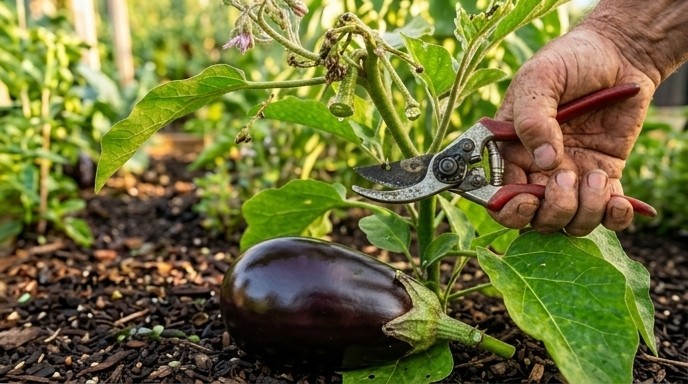
The mature size and colour depend on the cultivar: eggplants may be purple, white, green, striped, round or elongated. More reliable signs of eating maturity are the expected cultivar size, smooth glossy skin and firm fruit.
Once the skin turns dull and the seeds become hard and dark, the fruit is generally overmature. Pick regularly to help the plant direct resources towards the remaining fruit.
Do not tear fruit off by force. Cut the stalk with a clean knife or pruning shears, leaving a few centimetres attached. Wear gloves if the calyx or stems are spiny.
After the harvest
Eggplant stores far less readily than cabbage or beetroot. It is sensitive both to drying out and to very low temperatures: prolonged storage in a very cold refrigerator may cause chilling injury. Avoid washing fruit in advance, protect it from bruising and use it within a few days.
A good eggplant crop begins not with a feeding calendar, but with a warm start. Add a sunny position, warm well-drained soil, consistent watering and timely harvesting, and the plant has a far better chance of fulfilling the chosen cultivar’s potential.