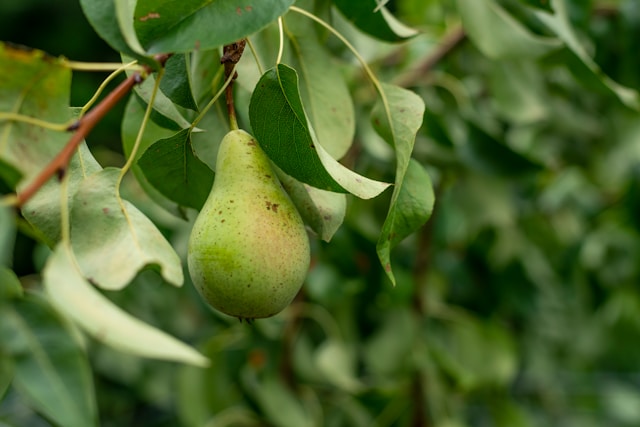
A ripe pear does not always become soft on the tree. Most European pears are harvested when mature but still firm, then allowed to develop their sweetness and juicy texture off the tree. Choosing the right harvest moment — together with a suitable site, a compatible pollination partner and sensible pruning — makes a major difference to the crop.
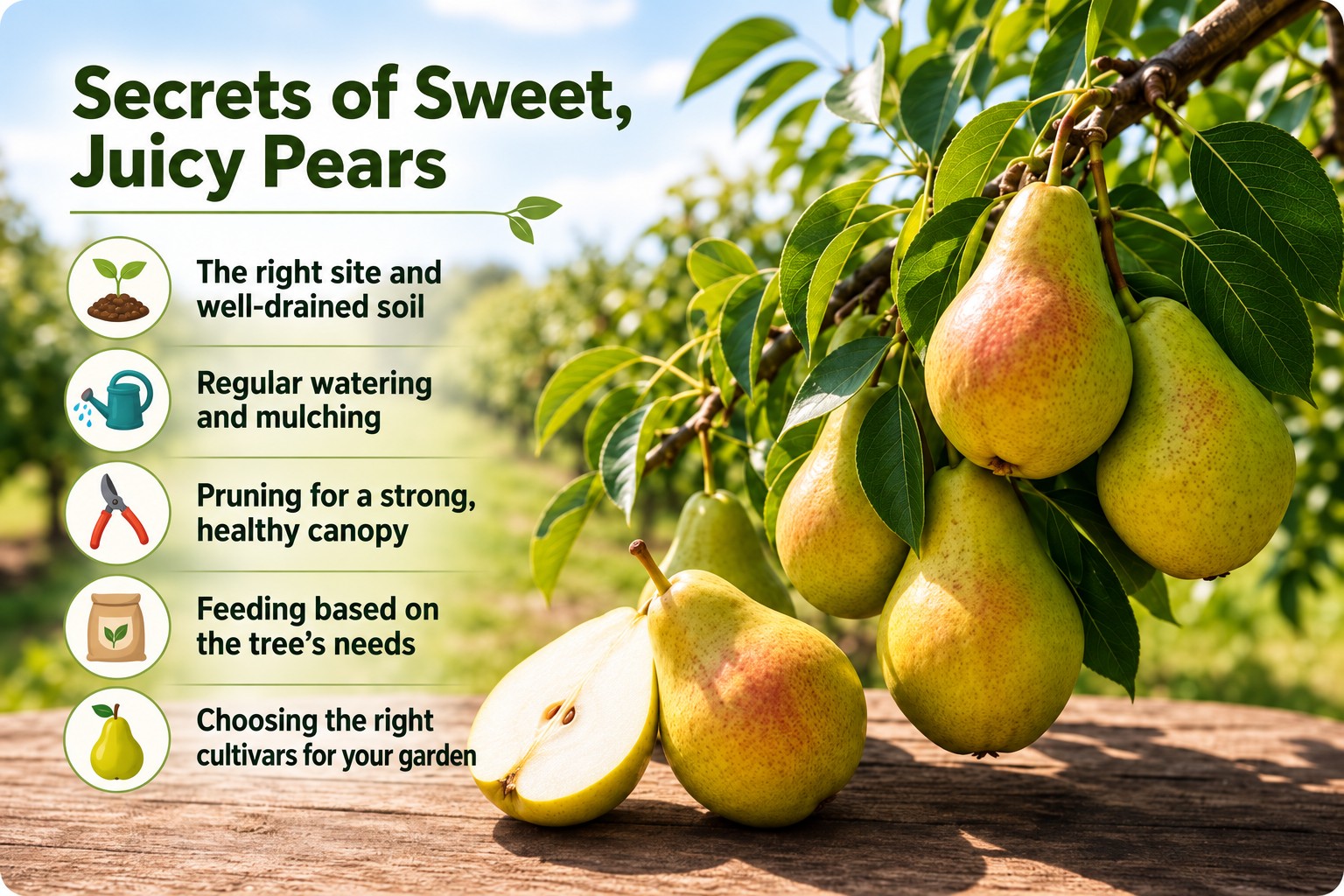
A gardener’s guide to the factors that matter most for tree health and fruit quality.
A pear that softens on the tree may already be overripe
European pears usually develop their best texture after harvest. If they are left on the branch until completely soft, the centre may become mealy or turn brown before the outer flesh reaches its best eating quality.
One important exception: Asian pears are generally left on the tree until they develop their characteristic colour, sweetness and juiciness. Before harvesting, identify not only the cultivar but also the type of pear you are growing.
Choose the tree before choosing the fruit
The same cultivar can remain compact on one rootstock and become a large tree on another. Rootstock affects mature size, how soon the tree begins cropping, anchorage and soil compatibility. Ask about the expected height and spread before buying, then make sure the canopy will have enough room.
Most pear cultivars crop more reliably with another compatible pear flowering at the same time. Even a cultivar described as partly self-fertile may set a better crop with a suitable pollination partner. A nursery pollination chart is more dependable than relying on the word “self-fertile” alone.
A site where the tree can thrive
Pears crop best in a sunny, warm position sheltered from strong winds. Frost pockets are especially risky because cold air collects there just as the spring blossom opens. The soil does not have to be light; what matters is reasonable fertility and moisture retention without prolonged waterlogging.
- Plant bare-root trees while dormant, when the ground is neither frozen nor waterlogged.
- Spread the roots out, but do not place concentrated fertiliser beneath them, as it can damage new roots.
- After the soil settles, the root flare should be at ground level and the graft union should remain above it.
- Water thoroughly, add a stake if needed and mulch the root zone, leaving a clear gap around the trunk.
Water, fruit set and crop load
A young tree has a limited root system, so it needs deep watering during dry weather in its first seasons. Mature pears are more resilient, but prolonged drought while the fruit is swelling can cause fruit drop and a small crop. Use soil moisture, rainfall and the rootstock as your guide rather than following a fixed watering calendar.
If a young tree sets a very heavy crop, thin some of the fruitlets. This reduces the risk of broken branches, allows the remaining pears to grow larger and prevents the tree from being exhausted.
Pruning depends on the form of the tree
Do not automatically remove every upright shoot. Some can be tied down or kept as replacement branches. Renovate an old, neglected pear gradually over several years; severe pruning in a single season usually triggers a mass of vigorous new shoots.
Feeding: observe the tree instead of the calendar
A universal programme of nitrogen in spring and phosphorus and potassium in autumn does not suit every garden. Fertile soil may need little more than an organic mulch, while excess nitrogen encourages vigorous shoots at the expense of flowers and fruit. Base fertiliser use on a soil test or a properly diagnosed deficiency. Wood ash is not a harmless all-purpose supplement either: it raises soil pH and adds soluble salts, so use it only when conditions justify it.
What to check when a pear is unhealthy or unproductive
- Flowers but no fruit: possible causes include late frost, wet weather during bloom, a missing compatible pollination partner or a tree that is still too young.
- Dark marks on leaves and fruit: pear scab may be responsible; sanitation, an open canopy and a more resistant cultivar can help.
- Young shoots suddenly blacken and bend: suspect fire blight. Obtain a prompt, accurate diagnosis and follow local rules for pruning infected wood and sanitising tools.
- Plenty of leaves but few flowers: check for excess nitrogen, over-pruning, insufficient light and the influence of the rootstock.
Use plant-protection products only after identifying the problem and follow the label approved for fruit trees in your country.
How to choose a cultivar without relying on promises
‘Conference’, ‘Williams’ (usually called Bartlett in North America), ‘Forest Beauty’ and ‘Noyabrskaya’ are popular choices, but their winter hardiness, disease resistance, fruit size and storage life vary with climate, rootstock and care. In cool regions, choose a cultivar that can ripen within the local season; in a small garden, pay particular attention to the mature size produced by the rootstock.
- Which rootstock is used, and how large will the mature tree become?
- Is the cultivar hardy enough for local winters and spring frosts?
- Which pollination partner is compatible, and do their flowering periods overlap?
- Which local diseases is the cultivar most susceptible to?
- When should the fruit be picked, and does it need chilling before ripening?
Harvesting and storage
Begin checking European pears slightly before their expected harvest date. Cup a fruit in your hand, lift it towards a horizontal position and twist gently. A mature pear should detach cleanly with its stalk, without being pulled. Early cultivars may ripen indoors fairly quickly, while some late pears need weeks of cool storage. Keep sound fruit in a single layer, or at least prevent the pears from pressing against one another, and inspect them regularly.
A well-chosen pear tree does not need constant intervention. Give it sunlight, well-drained soil, a compatible pollination partner and enough space. Above all, learn to recognise the moment when a firm fruit is ready to leave the branch — for many pears, that is when the journey towards their best flavour truly begins.