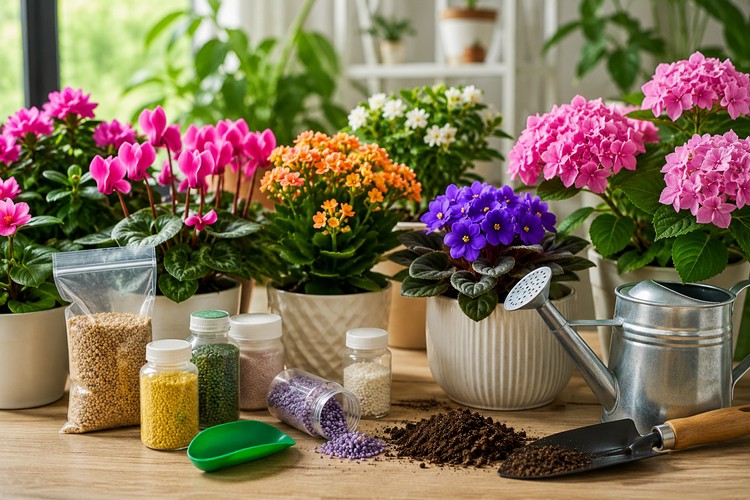
A pot contains only a limited supply of nutrients, so a houseplant may eventually need fertilizer. However, fertilizer cannot replace adequate light, correct watering or healthy roots. If a plant is sitting in a dark corner or suffering from overwatering, adding more nutrients is unlikely to help.
Check the growing conditions first
Pale leaves, slow growth or a lack of flowers do not always indicate a fertilizer deficiency. Similar symptoms can result from insufficient light, overwatering, drought, pests, compacted potting mix or damaged roots.
If the plant stretches toward a window and produces little new growth, improve the lighting before adding fertilizer.
A sour smell, constantly wet potting mix and soft dark roots may indicate root rot.
New leaves and shoots show that the plant is currently able to use additional nutrients.
Understanding the N-P-K numbers
The three numbers on a fertilizer label show its nitrogen, phosphorus and potassium content. A 10-10-10 formula contains these three components in equal proportions. Larger numbers do not automatically mean a better product; they indicate a higher concentration.
Supports leaf and shoot production. Excessive nitrogen may cause weak, stretched growth and softer plant tissue.
Contributes to root development and energy transfer. A high-phosphorus fertilizer cannot guarantee flowers when the plant lacks light.
Helps regulate water use and supports the plant's general ability to tolerate stressful conditions.
For many common houseplants, a complete fertilizer with a balanced or nearly balanced ratio is a practical starting point. Orchids, cacti, succulents, citrus and certain flowering plants may have different requirements and often benefit from a product intended for their group.
Liquid fertilizer, granules or spikes?
Liquid or soluble
Easy to dilute and adjust. It suits people who inspect their plants regularly and closely control watering.
Slow-release granules
They release nutrients gradually. Do not add another fertilizer without accounting for the dose already present in the pot.
Fertilizer spikes
Convenient, but nutrients may be distributed unevenly, particularly when roots do not occupy the entire potting mix.
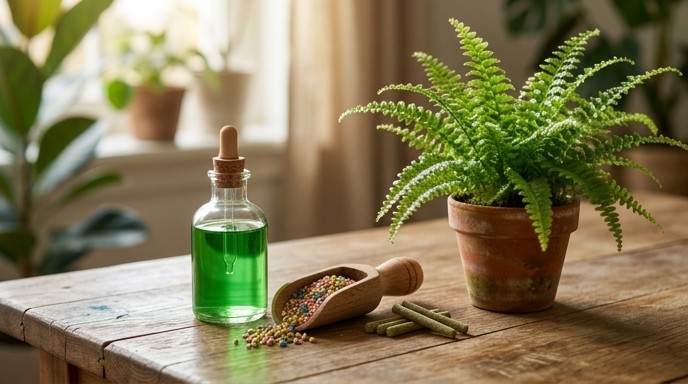
Organic or mineral fertilizer?
Plants absorb nutrients in available mineral forms regardless of where those nutrients originated. The main differences are the speed of release, concentration and effect on the potting mix.
Mineral fertilizers work predictably and allow more precise dosing. However, applying too much can quickly increase the concentration of soluble salts in a pot.
Organic products based on worm castings or plant extracts often release nutrients more gradually, but “organic” does not mean that overfertilizing is impossible. Coffee grounds, fruit peels and other kitchen waste should not be buried in houseplant pots. Their nutrient content is unpredictable, and they may encourage mold or fungus gnats.
When to fertilize houseplants
When the plant is actively growing
For many plants, this period falls in spring and summer. Begin when noticeable new growth appears and use a conservative concentration.
Plants beside a bright window or under grow lights may continue growing in winter and can sometimes be fed lightly.
When growth has nearly stopped
During short days and in weak light, most plants use less water and fewer nutrients. Fertilizing should be reduced or temporarily paused.
Follow the plant's actual growth and indoor conditions rather than the calendar alone.
Frequency depends on the product. Some liquid fertilizers are used every few weeks, while slow-release granules may remain active for several months. Read the label and do not combine products without considering their total nutrient content.
When fertilizer should wait
- the plant is severely dry or wilted;
- the mix remains constantly wet and the roots show signs of rot;
- the plant is badly affected by pests or disease;
- it was recently repotted into a fresh mix that already contains fertilizer;
- growth has nearly stopped because of cold or weak light;
- the pot has no drainage hole and excess salts cannot be flushed out.
How to recognize excess fertilizer
Unlike outdoor soil, a pot does not receive regular rain that washes excess salts away. Applying too much fertilizer or using it too often can cause salts to accumulate in the potting mix.
Possible signs of salt buildup
- a white or yellowish crust on the soil or pot rim;
- dry brown leaf tips and edges;
- wilting even though the mix is moist;
- slower growth despite regular feeding;
- damaged or dying roots.
If the pot has drainage holes and the species tolerates thorough watering, the mix can occasionally be flushed with plain water. Allow the water to drain freely and empty the saucer afterward. Use this method cautiously with cacti, succulents and plants that are sensitive to prolonged moisture.
Six rules for safer fertilizing
Relevance matters more than quantity
Fertilizer benefits a plant only when it has enough light, healthy roots and suitable watering. During active growth, moderate feeding can support new leaves and flowers, while an excessive dose may cause more harm than a mild deficiency.
If you are uncertain, it is safer to use a weaker concentration and observe the plant. With houseplants, the rule “more is better” rarely works.