Every time we pick up a bottle of bug spray at the garden center to battle aphids, Colorado potato beetles, or spider mites, we expect quick and decisive results. But how exactly do these chemical compounds destroy garden pests? And more importantly—are they safe for us, our children, and our pets?
Most commercial chemical insect killers (insecticides) don't just "poison" the bug's stomach. They systematically and ruthlessly short-circuit the insect's nervous system. Understanding the science behind how garden chemicals work will help you use them much more effectively, consciously, and safely.
How Insecticides Work: The Poison's Effect on the Nervous System
For the muscles of any living creature to work, the nervous system continuously sends them electrical signals. The exact transmission of these signals is handled by a specific chemical neurotransmitter called acetylcholine. Once a muscle has contracted, the body immediately releases a special enzyme (cholinesterase) that neutralizes the signal, allowing the muscle to relax.
The vast majority of powerful garden insecticides function as inhibitors of this vital enzyme. When the chemical enters the insect's body, it simply prevents the muscles from relaxing. The nerve signals begin firing continuously, leading to catastrophic hyper-stimulation, severe convulsions, total paralysis, and ultimately, the rapid death of the pest.
Main Classes of Chemical Insecticides: From Organophosphates to Neonicotinoids
Today, there are two primary classes of aggressive chemical agents commonly found on store shelves that operate on this principle of nerve paralysis:

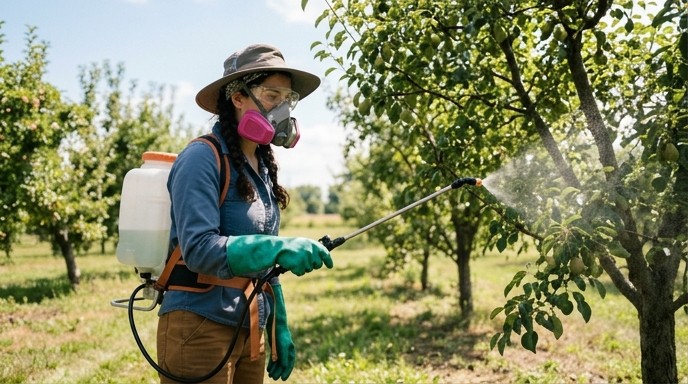
Never neglect reliable personal protective equipment when handling and spraying toxic garden chemicals.
⚠️ Garden Spraying Safety Rules: This is Vital!
Careless or improper use of organophosphates and systemic insecticides can cause severe acute poisoning—not just for the target pest, but for you. Always strictly adhere to these safety protocols:
- Protect Your Skin and Lungs: Always wear thick, chemical-resistant rubber gloves and a certified respirator (not a basic cloth mask or bandana) when mixing and spraying poisons.
- Strict Isolation: After treating a garden or lawn, keep children and pets out of the area for a minimum of 24 to 48 hours (read the re-entry intervals on the product label very carefully).
- Personal Hygiene: Immediately after spraying, remove all work clothes and wash them completely separate from your everyday laundry. Always take a shower with soap immediately after application.
Alternatives to Harsh Chemicals: Safe Biopesticides and Organic Control
Traditional chemical pesticides are essentially weapons of mass destruction in your yard. They don't just kill the aphids; they wipe out "beneficial helpers" (ladybugs, bees, lacewings) and disrupt the natural microbiome of the soil. If you are looking for more eco-friendly ways to control localized pest outbreaks, try these safe alternatives:
- Biopesticides (Bacterial Insecticides): Products containing the naturally occurring soil bacterium Bacillus thuringiensis (Bt) or Spinosad. These contain microorganisms that specifically target the gut of caterpillars or specific beetles upon ingestion, making them completely safe for warm-blooded animals and humans.
- Mechanical Traps: Use sticky pheromone traps (yellow for whiteflies and fungus gnats, blue for thrips) in greenhouses. For wasps and aggressive hornets, DIY plastic bottle funnels filled with sweet, fermenting fruit juice work wonders.
- Essential Oils and Repellents: Organic sprays based on pure Neem oil, garlic extract, or citronella oil gently but effectively repel flies, mosquitoes, and small aphids without leaving any toxic footprint on the environment.
Chemical insecticides work with lightning speed and ruthlessness, but reaching for them should always be your absolute last resort. Choose your weapons against insects wisely so that your garden remains not only beautiful and fruitful but also an ecologically safe haven for life!