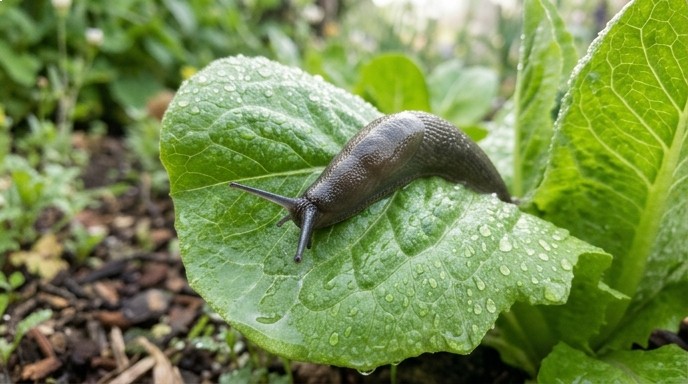
Slugs can seriously damage young seedlings, lettuce, cabbage, strawberries and other tender plants in a single damp night. They are also part of the garden ecosystem: they help break down dead material and provide food for frogs, birds, beetles and other wildlife. A realistic goal is therefore not to eliminate every slug, but to protect vulnerable plants and reduce unacceptable damage.
The most reliable approach combines several methods. One barrier or trap rarely controls the problem for an entire season, especially during prolonged wet weather.
1Water in the morning and remove excess shelter
Slugs depend on cool, moist conditions. Evening watering leaves the soil surface wet just as they emerge to feed. When suitable for the plants, move irrigation to the morning or use a drip system.
Remove unnecessary boards, dense piles of plant debris, overturned pots and weeds where slugs can hide during the day and lay eggs. Mulch does not always need to be removed, but it should not remain constantly wet around highly vulnerable seedlings.
2Hand-pick slugs when they are active
Hand-picking remains one of the most targeted ways to reduce numbers without treating the entire garden. Search with a flashlight about two hours after sunset or early in the morning, particularly after rain.
Check beneath leaves, around bed edges, under containers and near compost areas. Collected slugs can be placed in a closed container or a bucket of soapy water where this method is permitted by local guidance.
3Use boards as controlled hiding places
Place small boards, flat stones, upturned trays or similar objects between rows where moisture remains underneath. Slugs will use them as daytime shelters.
Lift the traps every morning and remove the slugs. If they are not checked regularly, the artificial shelter simply provides a comfortable place to rest and lay eggs.
4Set beer traps correctly
Slugs are attracted by the yeasty smell rather than the alcohol itself. Beer or a fermented mixture of water, yeast, a little flour and sugar can be used.
A covered container with side openings slightly above soil level is preferable to an open shallow dish. It reduces the chance of beetles and other small animals falling in. Protect the trap from rain and pets, check it daily and replace the liquid regularly.
A beer trap works only over a limited area and may attract slugs from nearby ground. Use it as part of a wider strategy rather than as the only form of control.
5Do not overestimate physical barriers
A wide, clean copper strip may discourage slugs around pots and raised beds, but it is not guaranteed. It must form a continuous ring, be wide enough and remain free of bridges made by leaves or soil. Make sure no slugs are already enclosed inside it.
Crushed eggshells, sharp sand, gravel, bark and wool pellets have not provided consistent protection in garden trials. Diatomaceous earth works only while dry, loses effectiveness after rain and should not be inhaled.
It may help protect an individual container, but it does not replace inspections and habitat management.
Slugs can cross them, and any possible effect is further reduced when the material becomes wet or dirty.
6Use slug bait only when necessary
If hand-picking and habitat changes are not enough, consider a registered granular bait. Iron phosphate is generally regarded as a lower-toxicity option than metaldehyde, but this does not make the pellets completely harmless.
- choose only a product registered for the crop and location;
- scatter pellets thinly and evenly rather than forming piles;
- do not exceed the stated rate, as more is not more effective;
- keep both the package and applied bait away from children, dogs, cats and wildlife;
- check the pre-harvest interval and every other label restriction.
A simple one-week plan
- move watering to the morning and remove unnecessary damp shelters;
- place several trap boards near the most heavily damaged plants;
- hand-pick slugs with a flashlight for three or four evenings in a row;
- protect individual containers or raised beds with a correctly installed copper strip;
- after one week, assess new plant damage rather than only counting captured slugs;
- if damage remains severe, apply a permitted bait exactly as directed on its label.
Completely eliminating slugs from a living garden is unlikely and unnecessary. Consistent maintenance, morning irrigation, regular inspections and protection of young plants usually work better than relying on one supposedly miraculous home remedy.