Whether you are carefully nursing exotic indoor lemon trees and orchids on your windowsill or cultivating a massive crop of cucumbers in a summer greenhouse, spider mites are a deeply frustrating pest you will inevitably encounter. These bugs are so minuscule that to the naked eye they simply look like walking specks of dust, but the scale of the damage they inflict is colossal.
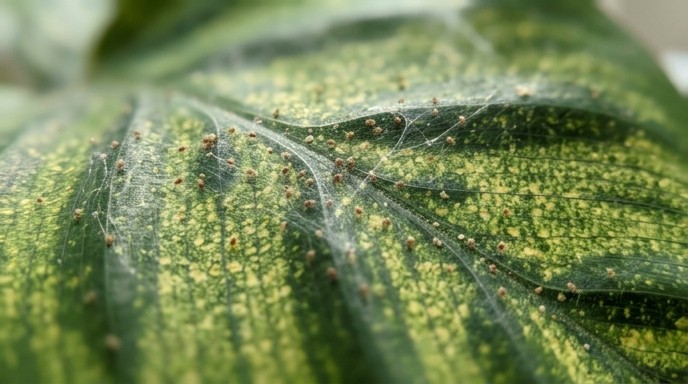
These tiny, aggressive arachnids use their piercing mouthparts to puncture plant cells and ruthlessly suck out the vital fluids inside. If you suddenly notice tiny white or yellow dots appearing on your leaves (a classic symptom known as "stippling"), the foliage is rapidly dulling and drying out at the edges, and you spot faint, delicate webbing stretching between young shoots—it is time to act immediately. Here are the five best, eco-friendly ways to eradicate this pest for good.
1. The Mechanical Water "Shower": The Simplest First Step
Spider mites genetically despise high humidity and the physical force of water. The absolute fastest and safest way to drastically knock down an active population is to physically wash them off the plant under pressure.
- For Outdoor Plants (or in Greenhouses): Set your garden hose sprayer nozzle to a firm, flat "jet" setting and thoroughly blast the foliage. Pay very close attention to the undersides of the leaves, as this is where the largest mite colonies always hide and breed.
- For Indoor Houseplants: Carry the infected pot into the bathroom and treat your plant to a literal warm shower. Beforehand, be sure to wrap the soil tightly with plastic wrap or a garbage bag so you don't wash all the dirt down the drain or accidentally overwater the roots.
Please Note: While this method brilliantly washes away adult mites, it is generally not powerful enough to dislodge the microscopic eggs glued to the leaves. Therefore, you must combine this "shower" with the following steps.
2. Insecticidal Soap Treatment
Soap effectively dissolves and destroys the protective waxy coating on the bodies of the mites, causing them to rapidly dehydrate and die. This method is very effective and 100% safe to use inside homes with people and pets.

For plants with large, smooth, leathery leaves (like Monsteras, Ficus, or Orchids), thoroughly wiping the leaves by hand with a soapy sponge works wonders.
The Classic Recipe: Mix 1-2 tablespoons of mild liquid soap (pure castile soap or a commercial insecticidal soap works best; avoid harsh degreasing dish liquids) into 1 quart (1 liter) of warm water. Pour the mixture into a spray bottle and generously drench the plant from all angles. Repeat this treatment every 5-7 days for a full month to ensure you kill the new generations of mites as they hatch from the remaining eggs.
3. Neem Oil: A Powerful Natural Insecticide
Neem oil is an absolute lifesaver and the "gold standard" for organic gardeners worldwide. It contains a unique, naturally occurring active compound called azadirachtin. This compound acts as a massive hormonal disruptor for pests: once ingested, it forces the mites to stop feeding, growing, and laying eggs entirely.
How to Apply: Add 1 teaspoon of pure, cold-pressed Neem oil to the soapy water mixture you prepared in the previous step. The soap acts as a necessary emulsifier, allowing the heavy oil to actually mix with the water. Crucial rule: Only spray infected plants late in the evening or on a heavily overcast day. Oil on foliage acts like a magnifying glass and will cause severe sunburns if exposed to direct sunlight. Repeat the application once a week.
4. Essential Oil Repellent Sprays
If you don't have access to Neem oil, you can partially substitute it with strong-smelling essential oils. The intense aromatic compounds in these oils are unbearable to the sensitive receptors of spider mites. The most effective oils for pest control are rosemary, peppermint, clove, and eucalyptus.
Add 10-15 drops of your chosen essential oil to a 1-quart (1-liter) spray bottle filled with water (add one drop of liquid soap to help it mix). Shake vigorously and mist the plant. This spray not only repels the pests and disrupts their lifecycle but also leaves your living room or greenhouse smelling wonderfully fresh.

Diatomaceous Earth is a 100% natural substance that is well safe for humans and mammals, but utterly lethal to any crawling insect.
5. Diatomaceous Earth (DE)
Food-grade Diatomaceous Earth (DE) is a lightweight, organic white powder composed entirely of the fossilized remains of ancient aquatic organisms called diatoms. On a microscopic level, these tiny particles are as sharp as shards of broken glass. When a mite or any other crawling insect crawls across this powder, it inflicts thousands of tiny cuts on their chitinous exoskeleton, causing the pest to rapidly lose moisture and die of dehydration.
How to Use Correctly: Generously sprinkle the dry powder over the topsoil around the base of the plant. You can also use a specialized bulb duster (or a large, soft makeup brush) to lightly dust the totally dry foliage. Pay close attention: Diatomaceous Earth only works mechanically when it is bone dry. After every watering or foliar misting, you will need to reapply the powder.
The Ultimate Prevention: Moisture is Your Friend
Spider mites only breed massively and uncontrollably in very dry, hot environments (such as inside apartments during the winter heating season, or in poorly ventilated summer greenhouses). To keep them away forever, regularly and generously mist your plants' foliage with plain water from a fine spray bottle, or simply place a small room humidifier next to your pots. Mites will never settle where the humidity is high!
A practical checklist before you use the advice
- identify the pest, weed, or disease as accurately as possible before treating;
- judge severity: a few damaged leaves do not always justify treating the entire garden;
- start with sanitation, physical removal, irrigation changes, airflow, and other non-chemical measures where practical;
- if a pesticide is needed, use only a product whose label covers the crop/site and the target problem;
- do not mix products or concentrated homemade remedies without confirmed compatibility and label directions.
Additional verified references: University of Minnesota Extension — Managing Plant Diseases in the Home Garden; University of Minnesota Extension — Yard and Garden Insects.