Weeds cannot be removed from a vegetable garden once and forever. Seeds remain viable in the soil for years, while new seeds continually arrive. A combination of timely cultivation, mulch, thoughtful planting and reduced soil disturbance can nevertheless make weed control much easier without herbicides.
The most important rule is not to wait until a weed has developed deep roots or mature seed. Several short passes early in the season are usually more effective than one exhausting weeding session in midsummer.
First identify the type of weed
Annual weeds
They reproduce mainly through seed. Remove or cut them before flowering to avoid replenishing the soil seed bank.
Perennial weeds
Quackgrass, field bindweed, Canada thistle and similar weeds regrow from rhizomes or root shoots. Their underground parts must be removed or repeatedly depleted.
Remove weeds while they are still small
Weed seedlings are easiest to control at the thread stage or when their first leaves appear. On a dry, sunny day, pass between the rows with a hoe or hand cultivator and disturb only the top few centimeters of soil.
Larger annual weeds should be pulled before they form seed. Plants already carrying mature seed or showing signs of disease should not be placed in an ordinary cold compost pile.
Avoid turning the soil without a reason
Deep digging brings buried weed seed back into the light. In established beds, shallow cultivation or preparing only the planting row is often enough.
This does not mean that all digging is harmful. It may be needed when creating a new bed, relieving compaction or removing perennial rhizomes. The goal is to avoid disturbing the entire soil profile every year without a specific purpose.
Use a stale seedbed
Prepare the bed one or two weeks before sowing, moisten it and allow the first flush of weeds to emerge. Then cut the seedlings very shallowly without bringing more buried seed to the surface.
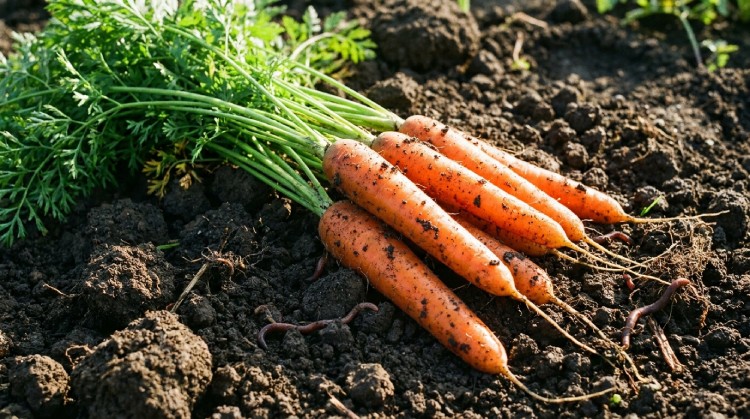
Sow the crop afterward with as little additional disturbance as possible. This approach is particularly useful for slow-germinating crops that compete poorly with weeds at first, including carrots and onions.
Cover the soil with useful plants
Once vegetable foliage closes over the soil, less light reaches the surface and new weeds grow more slowly. Excessively dense planting, however, increases competition for water and nutrients, restricts airflow and may encourage disease.
Follow the recommended spacing for the crop and cultivar, and make rows accessible for cultivation before leaves meet. After an early crop is harvested, avoid leaving bare ground: sow another vegetable, establish a cover crop or apply mulch.
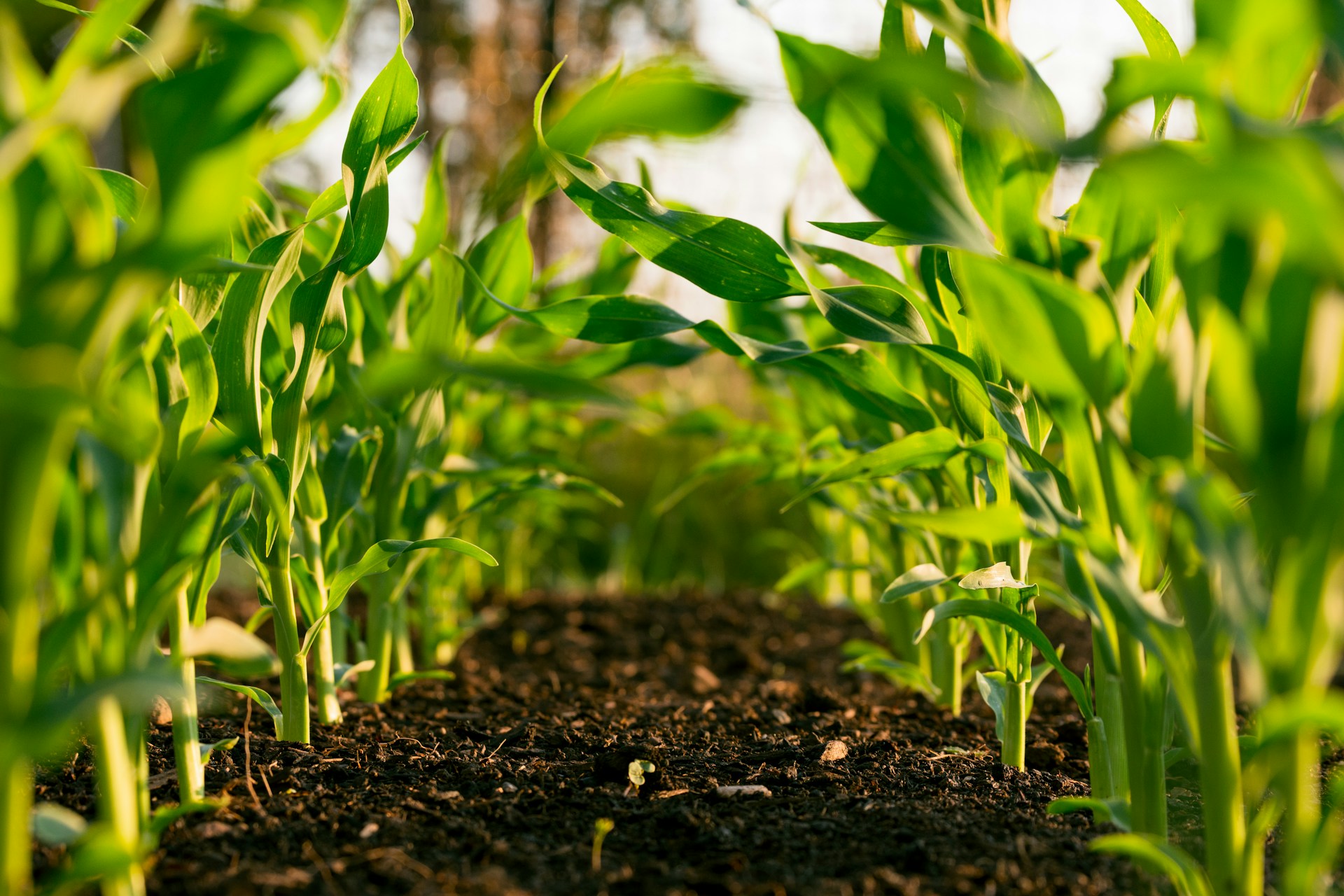
The well-known Three Sisters system combines corn, climbing beans and squash. Corn provides support, while squash foliage shades the soil. It does not mean crowding all three crops into one small hole: suitable cultivars, planting order and adequate space matter. Much of the nitrogen fixed by beans becomes available to other crops after bean residues die and decompose.
Choose an appropriate organic mulch
Mulch blocks light, slows weed germination and conserves soil moisture. Remove large weeds and water the bed before applying it.
Depth depends on the material. Roughly 2–3 inches may be enough for denser mulches, while loose straw can be applied more deeply. Keep mulch away from plant stems and check whether damp layers are becoming shelter for slugs.
Do not use clippings from a lawn recently treated with herbicide. Hay and low-quality straw may introduce additional weed seed.
Use cardboard where it is appropriate
Sheet mulching works well on paths, when creating a new bed or around established perennial plants. Use ordinary uncoated brown cardboard without plastic film, tape or metal staples.
- Mow or cut existing vegetation as low as possible.
- Remove quackgrass, bindweed, thistle and other persistent rhizomatous weeds first.
- Wet the cardboard and place it in one continuous layer with overlapping edges.
- Leave open space around the stems of existing plants.
- Cover the cardboard with compost, leaves, straw or wood chips to prevent drying and movement.
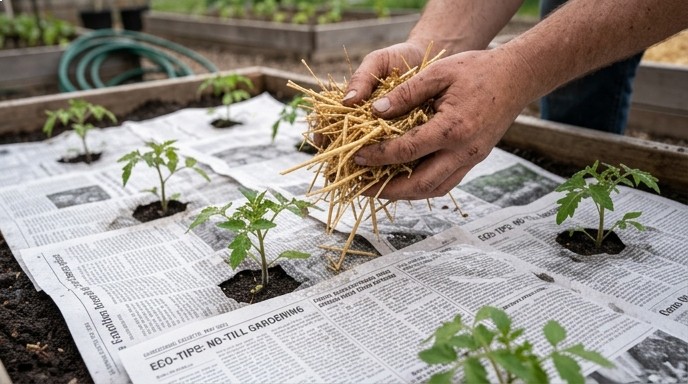
An excessively thick cardboard layer can restrict water and air movement to roots. Breakdown may take several months, a year or longer depending on climate, soil and material thickness.
Managing especially persistent weeds
For quackgrass, bindweed, thistle and similar species
- remove as much of the root system as possible without chopping it into numerous fragments;
- cut every new shoot repeatedly so the plant must use energy stored in its roots;
- never allow the weed to produce seed;
- do not place living rhizomes in a cold compost pile;
- check bed edges where roots may creep back beneath the mulch.
A completely weed-free vegetable garden is neither realistic nor always necessary. It is more practical to prevent unwanted plants from competing with crops and producing new seed. Frequent short tasks, covered soil and suitable mulch gradually make the garden much easier to maintain.