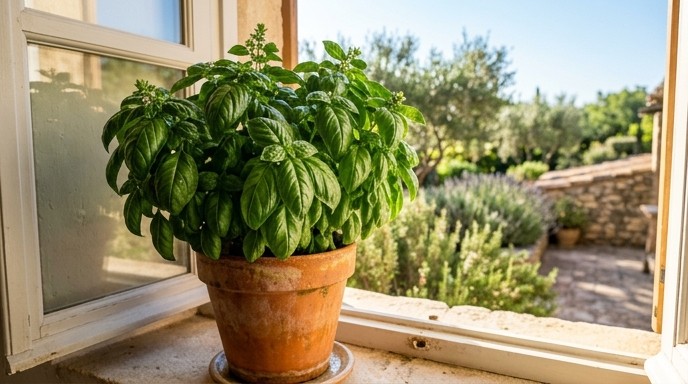
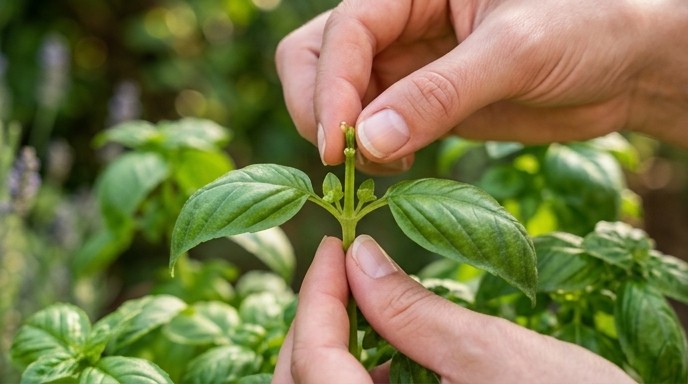
Basil is grown for its aroma, but a bushy plant does not appear by itself. The secret is not excessive fertilizer, but warmth, light and cutting the shoots correctly. Harvest just above a pair of leaves and the plant branches, replacing one long stem with many new growing tips.
The essential basil rule: do not pick only the lower leaves
Buds capable of producing side shoots sit in the leaf axils. When the tip is cut just above a well-developed pair of leaves, those buds become active. One shoot becomes two and the potential harvest increases.
Pinch only a plant that is established and actively growing. Leave weak seedlings and newly transplanted basil alone at first. Do not cut below the last healthy pair of leaves either, as a plant with too little foliage will recover slowly.
Sowing: warmth for the seed, light for the seedlings
Basil is tender and cannot tolerate frost. For an early harvest, sow indoors approximately six to eight weeks before planting out. Seeds germinate well at around 20 °C. Move the container into very bright light as soon as seedlings emerge, otherwise the stems will stretch.
Keep the seed compost moderately moist but not waterlogged: excessive moisture and stagnant air increase the risk of damping off. Once plants have several true leaves, separate them with enough room to develop.
Sow or plant basil outdoors only after frost risk has passed and nights have become reliably warm. For direct sowing, the RHS advises waiting until night temperatures remain consistently above about 10 °C. In cooler climates, transplants provide a longer and more dependable harvest.
Garden bed, pot or windowsill
Basil grows best in a warm, sunny place protected from cold wind. The soil should be fertile but well-drained. Plants in a bed are commonly spaced about 15–30 cm apart depending on cultivar: dwarf types need less room and large types need more.
A container must have drainage holes, and it should not remain standing in water. Supermarket basil often consists of dozens of seedlings crowded into one small pot. To keep it growing longer, gently divide the plants into several groups and move them into larger containers.
Basil can be grown on a windowsill during winter, but it only thrives year-round with sufficient warmth and strong light. A grow light may be necessary on short, overcast days, while plants beside cold glass often suffer from temperature fluctuations.
Watering: consistency matters more than a rigid schedule
Water when the upper layer of soil begins to dry. Moisten the root zone thoroughly and let excess water drain away. Check pots more often in hot weather, but do not turn the compost into a swamp.
Morning watering is convenient because accidentally wet foliage has time to dry. The exact hour matters less than avoiding persistently wet leaves and stagnant water around the roots. Watering at soil level or using drip irrigation reduces the risk of fungal problems.
Does basil really “love nitrogen”?
Nitrogen is needed for leafy growth, but excess does not automatically improve basil. Overfed plants may produce soft growth, weaker tissue and a less balanced aroma. The University of Minnesota Extension recommends fertilizing garden-grown basil sparingly rather than applying large doses throughout summer.
Plants in good garden soil may need only compost and one or two modest feeds. Nutrients wash out of containers faster, so a diluted balanced fertilizer may be needed more regularly. Follow the specific product label and judge the condition of the plant.
How to harvest basil repeatedly
Instead of continually removing individual lower leaves, cut the top 5–10 cm of a shoot above a pair of leaves. This harvest also shapes the plant. Do not remove most of the foliage from a weak specimen in one go; harvest small amounts regularly.
Freshly picked basil has the best aroma. Cut shoots can be kept briefly in water at room temperature. A cold refrigerator often damages the leaves, so freeze basil, blend it with oil or make pesto for longer storage. Homemade pesto must be refrigerated and should not be left at room temperature for extended periods.
How to recognise what the plant needs
- Long stems and pale leaves Insufficient light or overcrowding are the most likely causes.
- Leaves wilt while the soil is wet Check drainage and root health: overwatering, rather than drought, may be the problem.
- Spots appear on the leaves Remove affected material, improve air movement and avoid keeping foliage wet.
- The plant flowers very quickly Age, heat, drought, a cramped pot or the cultivar itself may be responsible.
Beyond green Genovese basil
Large-leaved sweet basil of the Genovese type is traditionally used for pesto. Purple cultivars add colour to salads and vinegars, Thai basil has a distinct spicy anise aroma, and lemon or cinnamon basil contributes citrus or warm spice notes. Cultivar choice influences not only appearance but also flavour, plant size and flowering time.
Basil regrows generously when given warmth, light and the right kind of harvest. A single clean cut above a pair of leaves is often enough to start turning a thin stem into a branching plant.