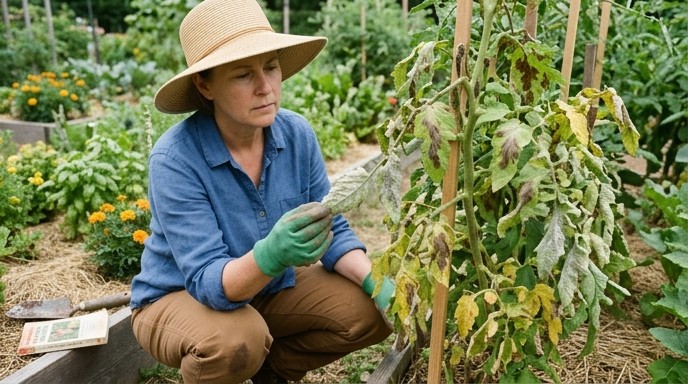
In English-language gardening literature, the word blight describes diseases that cause rapid browning, blackening and death of leaves, shoots or flowers. It is not the name of one pathogen. Bacteria, fungi, oomycetes, cold injury and even root problems can create a similar appearance.
Treating a plant simply because “the leaves turned black” is therefore risky. First identify the host plant, where the first spots appeared, how quickly they are spreading and what weather preceded the symptoms.
What to check before treating a plant
Bacterial canker of stone fruit
Bacterial canker commonly affects cherries, plums, apricots and other plants in the genus Prunus. Important pathogens include bacteria in the Pseudomonas syringae group. They may enter through injuries, pruning cuts, leaf scars and tissue damaged by frost.
Dark sunken areas or cankers develop on the bark, buds may fail to open and individual branches can wilt suddenly. Damaged areas often release sticky gum.
Gumming alone does not confirm bacterial canker. A tree may produce gum in response to mechanical injury, frost cracks, insect damage or other infections.
What you can do
- remove an infected branch below the visible damage, cutting into healthy wood;
- prune during dry weather and at the time recommended for the particular crop and local climate;
- clean and disinfect tools according to the instructions for the chosen disinfectant;
- avoid bark injury, waterlogged soil and excessive nitrogen fertilization;
- for new plantings, choose healthy stock, a suitable site and more resistant cultivars or rootstocks.
Mulch can reduce soil splash and conserve moisture, but it cannot completely prevent bacterial canker. Keep it away from direct contact with the trunk.
Three tomato diseases that look similar
Early blight, Septoria leaf spot and late blight are often confused on tomatoes. The occasional term “early late blight” is misleading: early blight is a separate disease caused by a different pathogen.
Early blight
Pathogen: the fungus Alternaria solani.
It commonly begins on older lower leaves. Brown lesions often contain target-like concentric rings and may be surrounded by yellow tissue.
Leaves, stems and fruit can be affected, with fruit lesions often developing near the stem end.
Septoria leaf spot
Pathogen: the fungus Septoria lycopersici.
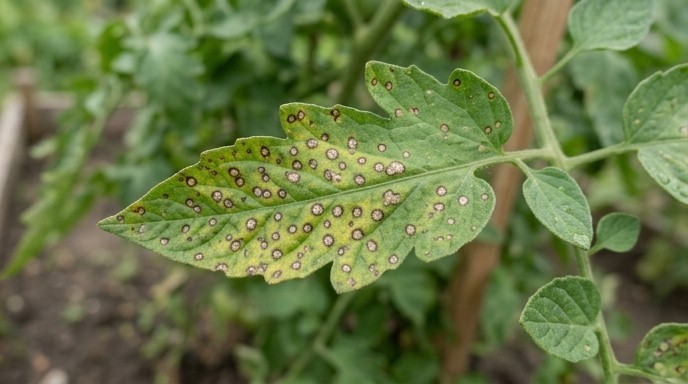
It produces numerous small round spots with dark borders and paler centers. Tiny black dots may become visible inside the lesions.
It mainly affects leaves, petioles and stems. Direct infection of tomato fruit is uncommon.
Late blight
Pathogen: the oomycete Phytophthora infestans, not a true fungus.
Cool, wet conditions favor irregular water-soaked lesions that quickly turn brown. Whitish growth may appear beneath leaves in humid weather.
The disease spreads to stems and fruit and can destroy a planting within days.
Reducing the risk of tomato diseases
- start with healthy transplants and provide enough spacing;
- stake or support plants so foliage does not lie on the soil;
- water at the base instead of wetting the leaves;
- mulch the soil to reduce splash onto lower foliage;
- remove affected leaves early, but avoid taking more than roughly one-third of the foliage at once;
- remove infected debris, volunteer tomatoes, discarded potatoes and tubers left in the ground;
- rotate crops, while remembering that rotation alone cannot stop windborne late-blight spores.
Fire blight of apples and pears
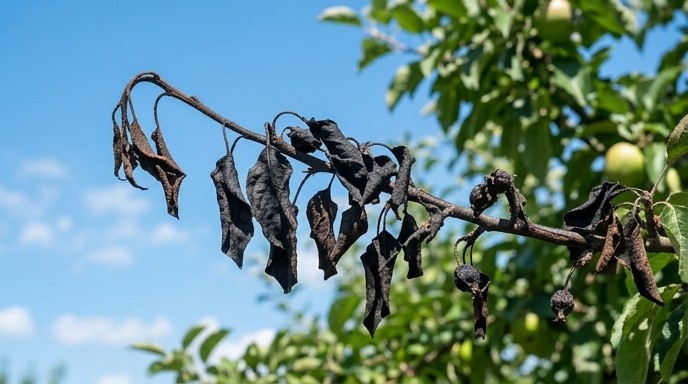
Fire blight is caused by the bacterium Erwinia amylovora. Its most common hosts include apples, pears, quince, crabapples, hawthorn, cotoneaster, pyracantha and several other members of the rose family. Peaches and strawberries are not typical hosts.
Blossoms and young shoots suddenly turn brown or black but often remain attached. Shoot tips may bend into a distinctive “shepherd's crook.” During warm, humid weather, sticky droplets of bacterial ooze may appear on infected tissue.
What to do when fire blight is suspected
- remove affected shoots well below the visible boundary of diseased tissue, cutting into healthy wood;
- do not leave infected branches under the tree or shred them for mulch;
- disinfect tools using a method recommended by your local plant-health authority;
- avoid stimulating excessive succulent growth with too much nitrogen or severe pruning;
- in some cases, a severely infected young tree is best removed completely.
Copper products may be used preventively at particular growth stages, but the wrong concentration or timing can injure leaves and fruit. Antibiotic use in orchards is regulated and is not a universal home-garden treatment. Follow official local guidance and the label of a registered product.
When professional diagnosis is worthwhile
Contact a diagnostic laboratory, horticultural adviser or local plant-health authority when a disease is spreading quickly through several plants, affects a young orchard, resembles a regulated pest or cannot be identified with reasonable confidence.
Good diagnosis often saves more plants than the “strongest” chemical. Host species, lesion position, recent weather and the speed of disease development together reveal far more than blackened foliage alone.