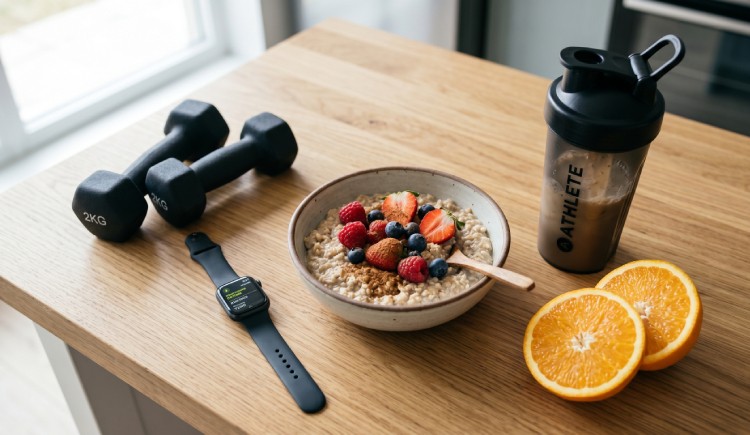
Good pre-workout nutrition rarely begins with an expensive powder or a specialized bar. More often, it is ordinary food eaten at a time and in an amount that leaves you ready to move without training on an uncomfortably full stomach.
There is no single correct meal for everyone. Someone planning a 30-minute walk has very different needs from a runner heading out for a long route or an athlete completing a high-volume resistance session. The time since the last meal and personal digestive tolerance matter as well.
Does everyone need to eat immediately before exercise?
No. If you ate normally a few hours ago and have a short or moderate session ahead, a special snack may make little difference.
Before activities such as:
- walking;
- gentle yoga;
- an easy bike ride;
- a short, moderately demanding workout
your usual daily diet and water as needed are often sufficient.
A snack becomes more useful when it has been a long time since the last meal, you are hungry, or the session will be long or intense. Its purpose is not to “boost metabolism” but to help you train without premature fatigue or digestive discomfort.
Quick decision
How much time is left before training?
Choose the closest option. This guide is for an ordinary workout, not a specialized competition plan.
- Base
- A carbohydrate food, a moderate serving of protein, your usual amount of vegetables, and some fat.
- Examples
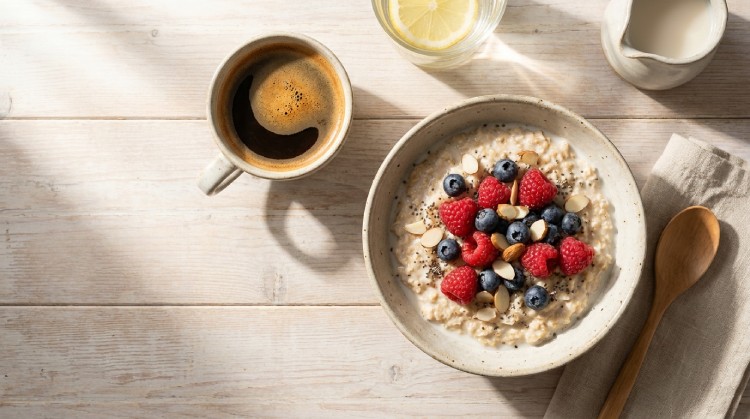
- Buckwheat with egg and vegetables; rice with fish; oatmeal with yogurt and fruit.
- Consider
- An unusually large, very fatty, or spicy meal may be uncomfortable during vigorous movement.
- Base
- Familiar carbohydrate foods and a small amount of protein in a form you tolerate comfortably.
- Examples
- Banana with yogurt; a small bowl of oatmeal; toast with egg; a simple sandwich.
- Consider
- The best option is one you have already tolerated before a similar workout.
- Base
- A small, simple carbohydrate food if the session will be long or you feel hungry.
- Examples
- A banana; toast with jam; a few pieces of dried fruit; a small serving of fruit puree.
- Consider
- A large amount of fat or fiber—or an unfamiliar food—may cause discomfort.
- When
- You have eaten normally during the day, are not hungry, and the workout will be short or moderate.
- What to do
- Keep water available and have your next meal at the usual time after training.
- Reconsider
- If the session is long or intense, or many hours have passed since your last meal.
What changes with the type of workout?
A short, moderately demanding session
For a workout lasting around an hour or less, there is usually no need to increase carbohydrate intake specifically if you have eaten normally throughout the day.
A small snack may help when you train early in the morning, after a long gap without food, or when experience tells you that you quickly lose steam while fasted.
Resistance training
Carbohydrate can support performance during a long or high-volume resistance session, particularly after a lengthy fast. Research does not show, however, that an extra carbohydrate serving necessarily improves every short strength workout.
A normal meal containing protein and carbohydrate is often sufficient. Protein before training can be convenient when your last protein-containing meal was many hours ago, but consistent training and total daily protein and calorie intake matter more for muscle growth.
Long runs, cycling sessions, and other endurance exercise
As exercise becomes longer and more intense, carbohydrate availability becomes more important. It can help maintain pace when previous meals have not supplied enough for the entire session.
Sports guidance for prolonged exercise includes a broad range of roughly 1–4 grams of carbohydrate per kilogram of body weight during the 1–4 hours before starting. This is not a universal serving for an ordinary gym session. The appropriate amount depends on duration, intensity, body size, the rest of the diet, and whether carbohydrate will also be consumed during exercise.
The closer you are to the start, the smaller and simpler the serving will usually need to be.
Do you need a protein shake?
Protein powder is a convenient protein source, not a compulsory part of workout preparation.
A shake may be useful when:
- it has been a long time since a protein-containing meal;
- you cannot have a normal meal;
- liquid food feels more comfortable than solid food;
- it helps you reach an appropriate total protein intake for the day.
If you ate lunch a few hours before training and will have dinner soon afterward, another shake may be unnecessary.
A larger serving of protein immediately before exercise does not guarantee faster muscle growth. The body responds to training and nutrition over a much longer period than one supposedly perfect hour.
Eating for muscle growth
A pre-workout meal may help you complete a productive resistance session, but it does not build muscle by itself.
Muscle growth depends on:
- consistent training with progressive overload;
- adequate calories;
- sufficient protein across the day;
- sleep and recovery.
If the workout is several hours away, a normal meal with protein and carbohydrate is enough. If you train soon after work and have not eaten for a long time, a small snack may feel better than a large dinner before the session.
There is no need to fit your entire daily protein target into the pre-workout meal. Distributing protein foods across several meals is usually more practical.
What if you prefer training fasted?
For a short, easy session, that may be perfectly reasonable when you feel well. You do not have to force yourself to eat simply for the sake of it.
Before prolonged or intense exercise, eating is more likely to support performance. A meta-analysis found an advantage for pre-exercise feeding during longer aerobic exercise, while the difference was less apparent for shorter sessions.
If breakfast feels heavy, begin with a small serving or a liquid option and test it during an ordinary workout rather than before an important event. For a fuller discussion, see The LINES guide to working out on an empty stomach.
Water and electrolytes without a universal formula
You do not need to force down a fixed volume of water before every session regardless of thirst, weather, or workout duration. Excessive fluid intake can also be dangerous.
For an ordinary workout in comfortable conditions, drinking normally throughout the day and keeping water available during exercise are often sufficient.
A more deliberate hydration plan becomes relevant when exercise:
- is prolonged;
- takes place in hot conditions;
- causes heavy sweating;
- requires heavy equipment;
- is one of several sessions completed in the same day.
An electrolyte drink may be useful in those conditions, but it is not automatically necessary before every gym visit. Electrolytes do not guarantee protection from cramps, which cannot be explained by sodium or water loss alone.
One practical way to estimate fluid loss during prolonged sessions is to compare body weight before and after similar workouts while accounting for the fluid consumed. This reveals your own sweating pattern rather than asking you to copy someone else’s rule.
The main guide
A good pre-workout meal is not the one with the longest list of “sports” ingredients. It suits the workout, the time available, and your digestive system.
A regular lunch several hours earlier may be enough for a short session. A prolonged workout requires more attention to carbohydrate. When little time remains, the serving generally needs to become smaller and simpler.
Start with familiar foods, change only one detail at a time, and judge the result by your performance and comfort rather than promises on a package.
Sources
- Thomas DT, Erdman KA, Burke LM. Nutrition and Athletic Performance
- Kerksick CM et al. International Society of Sports Nutrition Position Stand: Nutrient Timing
- King A et al. The Ergogenic Effects of Acute Carbohydrate Feeding on Resistance Exercise Performance
- Burdon CA et al. Effect of Glycemic Index of a Pre-exercise Meal on Endurance Exercise Performance
- McDermott BP et al. Fluid Replacement for the Physically Active