All flowering plants go through the same basic stages of their biological life cycle. However, the main difference between them is time: annuals complete this cycle in a single growing season, while perennials live for three years or significantly longer.
If you start carefully reading the labels on seedlings or seed packets at the garden center, you will discover many nuances. You'll encounter specific terms like "hardy annual" or "tender perennial." Furthermore, there is a third category — biennial plants, which cleverly combine characteristics of both types.
When comparing annuals and perennials, the most important thing to understand is that neither is "better" or "worse." Artfully integrating both types into your garden design gives you the best of both worlds — a strong architectural framework and vibrant, continuous bursts of color.
What is an Annual?

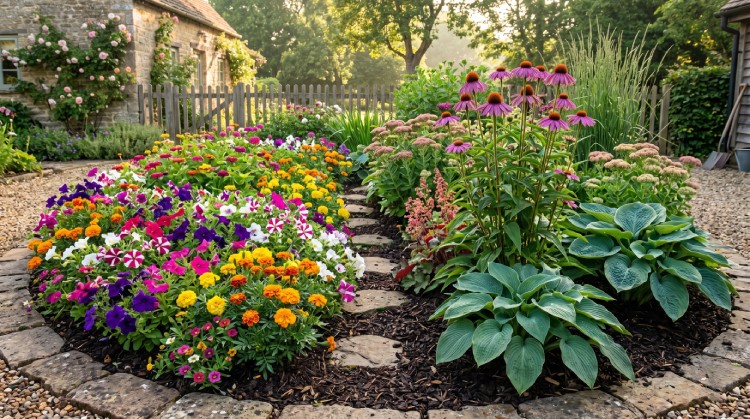
Annuals (like these zinnias) provide continuous and vivid blooms throughout the entire summer.
True annual plants are those that germinate from seed, grow foliage, flower, produce new seed, and completely die all within a single season. Their sole biological purpose is to reproduce. For gardeners, this is fantastic news because most annuals bloom like crazy, spending all their energy to fulfill this mission.
Gardener's secret: if you use the technique of regularly removing spent blooms (deadheading), you prevent the plant from setting seed. Realizing its goal hasn't been met, the flower redirects its energy into creating new buds and will bloom profusely right up until the first autumn frosts.
Types of Annual Plants
Not all annuals are created equal. They are traditionally divided into three groups based on their temperature hardiness:
- Hardy annuals (e.g., forget-me-nots, cornflowers, sweet peas). They thrive in the cooler temperatures of early spring and autumn and can tolerate light frosts without cover.
- Tender annuals (e.g., marigolds, petunias, zinnias). Native to tropical climates. They require warmth to grow, so they are only planted outdoors after all danger of late spring frost has passed.
- Half-hardy annuals. The golden mean: they tolerate a wide range of temperatures, including cooler periods in early summer or early autumn.
💡 Why Choose Annuals?
They are the perfect way to experiment with new color palettes and shapes without a multi-year commitment. Annuals provide instant gratification — they mature quickly and perfectly fill gaps in a flower bed. If you need a lot of color "here and now," this is your best choice.
What is a Perennial?
Unlike their short-lived counterparts, perennial plants are hardy crops whose roots successfully survive the winter deep in the soil, sending up new shoots in the spring. They form the permanent structural foundation of a garden.
Usually, each perennial species blooms for a relatively short time (a few weeks in spring, summer, or autumn). However, there are reblooming varieties capable of flowering more than once. Their lifespans vary greatly: some magnificent bushes grow for decades in the same spot (like tree peonies), while others (known as "short-lived perennials," like lupines) live for only three to five years.

Perennials build the architecture of the garden, increasing in size and vigor every year.
💡 Why Choose Perennials?
Although perennial seedlings initially cost more, they are an excellent long-term investment. Year after year, the bushes expand, and in autumn, you can divide them and replant them around your yard absolutely for free. Additionally, mature perennials have extensive, deep root systems, meaning they require significantly less watering during summer droughts.
Note: Do not confuse perennials with biennial plants (e.g., hollyhocks, sweet william, foxgloves). These flowers take exactly two years to complete their cycle: the first year they only grow green foliage (a rosette), and in the second year, they bloom brilliantly, set seed, and die.
How Do They Compare?
To make it easier for you to plan your flower bed, we've compiled a visual table outlining the basic differences between the main types of plants.
| Characteristic | Hardy Annuals | Tender Annuals | Perennials |
|---|---|---|---|
| When to Plant | Spring or early autumn. In mild climates, seeds can be sown before winter. | Anytime from late spring to mid-summer, strictly after the danger of frost has passed. | Early spring or early autumn works best. Plants struggle to establish in summer heat. |
| Lifespan | One growing season (though many may self-seed abundantly for the next year). | One growing season. | Three or more years (depending on the specific species). |
| Cold Tolerance | Frost-tolerant; easily withstand light spring or autumn frosts. | Cannot tolerate freezing temperatures. Die instantly at the first frost. | Varies greatly, but most zoned varieties overwinter successfully outdoors. |
| Main Advantage | Thrive at the beginning and end of the season when temperatures are too low for other flowers. | A wonderful addition to containers. Provide the brightest colors all summer without breaks. | Provide garden stability. Their textured foliage decorates the landscape even without flowers. |
Plants That Break the Rules
Nature doesn't always fit into neat human categories. Not all flowers can be definitively assigned to one group. Here are a few exceptions that often confuse beginner gardeners:
- Tulips: While most bulbs are considered reliable perennials, modern complex hybrid tulips often behave like annuals. To bloom profusely, they need a freezing winter and a dry, very hot summer. In regions with mild, wet winters, they may not bloom again after their first year.
- Tender Perennials: You might be very surprised to learn that some of the most popular "annual" plants are actually full-fledged perennials in their native tropical countries! In our temperate latitudes with cold winters, they are simply grown as annuals (or brought indoors to overwinter). This category includes: pelargoniums (geraniums), begonias, coleus, and rosemary.
"If you understand the climate of your region, the store label loses its meaning. The only thing that matters is how the plant behaves specifically in your garden. To find out if a plant will survive the winter in your bed, simply compare its USDA Hardiness Zone with the zone where you live."
Based on materials and research by: Gardendesign.