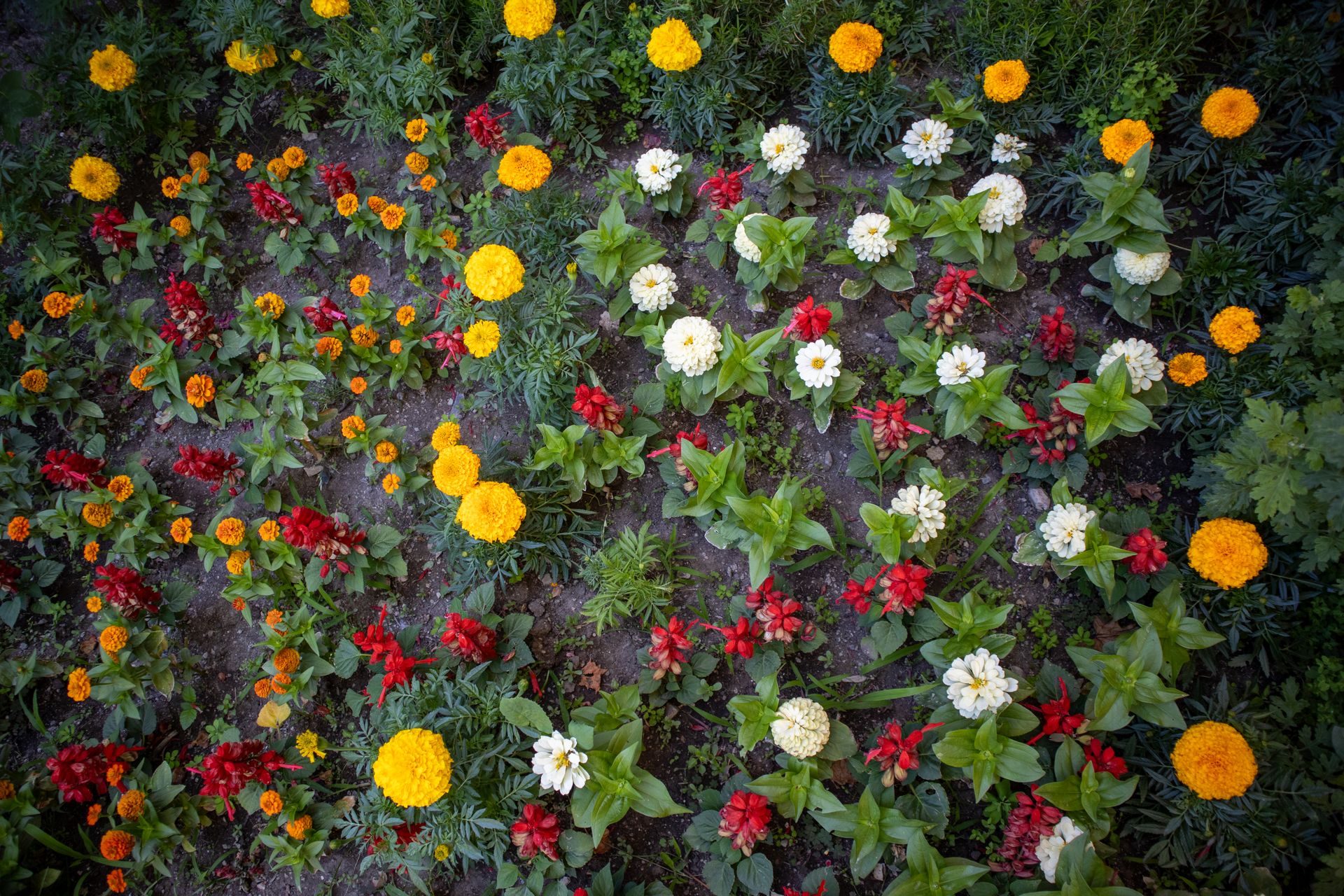
We all dream of a lush, beautiful flower bed bursting with vibrant colors throughout the entire season. However, reality often turns out differently: flowers burn out in the summer, tall plants overshadow short ones, and colors clash, creating a messy look.
To avoid this and prevent a neglected thicket by late summer, you need a strategic approach to creating a flower garden. Let's look step-by-step at how to properly plan, prepare, and plant your dream garden from scratch.
Flower Garden Planning Checklist:
Check off completed steps to stay on track.
Step 1: Site Analysis & Location Choice
Choose a spot for your flower bed where you can enjoy it every day. Before buying anything, carefully evaluate your site based on three criteria:
1. Sunlight
Record how many hours of direct sunlight your spot gets on a typical day. Plants generally fall into three categories:
- Full Sun: 6 hours or more.
- Part Shade: 3 to 6 hours of sun.
- Full Shade: Less than 3 hours.
If a plant lacks light, it becomes leggy and weak; if a shade-loving plant gets too much sun, its leaves will burn.
2. Soil Quality
You need healthy, loose soil with good drainage. A simple test: after a storm, water shouldn't pool for long where your bed will be. When digging, always incorporate organic matter (compost or aged manure) to improve soil structure.

Adding compost enriches the earth and builds an ideal base for flower root systems.
3. Logistics and Function
Check if your watering hose can reach the area. Access to water during hot days will be critical. Also, consider the flower bed's purpose: is it hiding a fence, zoning a patio area, or acting as a vibrant island in the middle of a lawn?
Step 2: No-Dig Soil Preparation
Before digging, ensure no underground utilities or cables run through the spot. Outline your bed's shape using a garden hose. Avoid sharp corners, as they complicate lawn mowing later.
One of the easiest and most eco-friendly ways to get rid of turf and weeds is the Lasagna gardening method (sheet mulching). Instead of breaking your back digging up sod:
- Cover the grass with a thick layer of cardboard or several layers of newspaper.
- Water the cardboard thoroughly.
- Top it off with a thick layer of organic mulch: compost, fallen leaves, grass clippings, or peat.
Over time, the grass under the cardboard will completely decompose, creating rich, nutrient-dense soil. You don't even have to wait months — just cut holes right through the cardboard and plant your seedlings!

Laying cardboard over lawn grass is an effective chemical-free weed suppression method.
Step 3: Choosing Plants for Continuous Bloom
A successful flower garden is a multi-layered ecosystem. By combining different types of plants, you'll secure beauty from early spring to late autumn.
Examples: phlox, daylilies, yarrow, coneflower, sedum, rudbeckia, hostas.
Examples: zinnias, marigolds, cosmos, nasturtiums, verbena, dahlias.
Don't forget spring-blooming bulbs (tulips, daffodils, crocuses) planted in autumn to kick off the season, as well as shrubs. Ornamental bushes or dwarf conifers will add structural volume and keep the bed looking alive even in winter.
Design Rules: How to Avoid Visual Chaos
- Plant in Masses: Never plant single specimens. Group flowers in clusters of 3, 5, or 7 of the same variety/color. This creates solid color blocks.
- Play with Height: The tallest plants traditionally go in the back (or center for round beds). However, don't be afraid to pull a few tall focal points closer to the front edge for added dynamism.
- Account for Mature Size: Leave enough space around young perennials. Fill gaps with annuals while they grow in.
Create a Pollinator Ecosystem
A modern garden isn't just about looks; it's about supporting nature. Use native plant species to attract bees and butterflies. Bees exhibit "flower constancy"—on a single foraging trip, they gather nectar from only one species. Grouping flowers in large patches makes their job much easier.
A practical checklist before you use the advice
- measure how many hours of direct summer sun the bed actually receives;
- assess soil and drainage before buying plants rather than after problems appear;
- plan for mature height and spread so perennials do not crowd each other after two or three years;
- combine different bloom windows and attractive foliage instead of relying on one supposedly nonstop-flowering plant;
- decide how much time you are willing to spend on staking, deadheading, pruning, and division.
Additional verified references: RHS — How to Plan a Border; RHS — Perennial Borders: Choosing Plants.