If you are a beginner gardener who only dreams of having your own blooming flower bed, it's very easy to feel overwhelmed. Which plants should you buy? How many do you need? When will they bloom, and how do you properly care for them?
Don't worry. Even the most experienced landscape designers once started with an empty patch of dirt. Gardening is a lifelong, exciting adventure that is part art, part science, and part magic. The main secret to success is incredibly simple — you just have to start. In this guide, we will break down all the steps: from choosing a sunny spot to doing your autumn pruning.
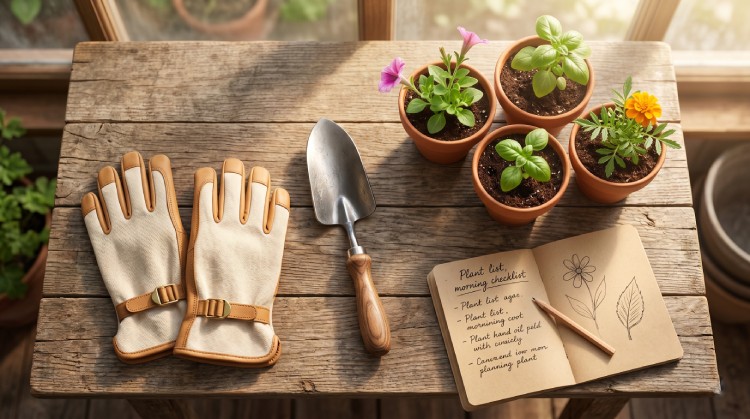
Beginner's Action Plan:
Check off completed stages to track your progress and ensure you don't miss anything.
1. Choosing and Preparing the Site
Size Matters
Do not yield to the temptation of making your first flower bed massive. Your garden will look significantly better (and bring you more joy) if you can weed, water, and prune it regularly without excessive effort. A plot sized 60-90 cm (2-3 feet) deep and 120-180 cm (4-6 feet) long is perfectly sufficient for your first successful experiments.

Start small. Expanding the bed next year will be much easier than battling weeds in a huge area.
Light and Drainage
More sun equals more flowers. The vast majority of blooming plants require at least 6 hours of direct sunlight per day. Soil drainage is also critically important. Waterlogged earth pushes out oxygen and literally drowns the root systems. If water stagnates long after a rainstorm, consider building a raised bed by adding 15-20 cm (6-8 inches) of fresh, light topsoil.
Gardener's Golden Rule: Never till or dig the soil when it is overly wet. Once it dries, it will turn into rock-hard concrete clods. Wait until the earth is just slightly moist and crumbles easily in your hands.
2. Choosing the Right Plants
You don't have to invent complex color schemes or multi-level compositions right away. Your primary goal is to gather a collection of healthy, resilient plants. Limit yourself to a few species of varying heights and blooming times.
🌼 Easiest, Low-Maintenance Flowers for Beginners:
- Perennials (return every year): Black-eyed Susans (Rudbeckia), Coneflowers (Echinacea), Daylilies, Sedum, Peonies, Astilbe, Hostas (for shade), Lamb's Ear.
- Annuals (bloom non-stop all summer): Zinnias, Petunias, Alyssum, Cosmos, Marigolds, Nasturtiums.
- Bulbs (planted in fall or spring): Daffodils, Tulips, Ornamental Onion (Allium), Dahlias, Gladiolus.
Understanding Climate Zones
Before purchasing, always check the plant label to ensure it matches your region's USDA Hardiness Zone. While a plant might be rated to survive cold winters, always account for the microclimate of your specific yard (such as cold wind drafts or warm shade cast by buildings).
3. Proper Planting
Transplanting from a cozy nursery pot into the open ground is always highly stressful for a plant. For the best results, plant your flowers on a cloudy or even rainy day, or at least late in the evening when the sun is no longer scorching. Plants need 3-4 weeks to grow new feeder roots and establish themselves.

The planting hole should be roughly twice as wide as the root ball of your seedling.
- Dig a hole twice as wide as the nursery pot.
- Gently remove the plant. If the roots are tightly bound in a root ball, lightly tease them apart with your fingers or make small vertical cuts to stimulate outward growth.
- Place the plant in the hole so that the top of its soil (the root collar) sits level with the surrounding garden bed. Do not bury it too deeply!
- Fill in with soil, press down gently with your hands to eliminate air pockets, and water very generously.
4. What to Expect from Your Garden (Proper Care)
The first year in a flower bed's life is a period of introduction and active root building. Newly planted perennials need a full season to adapt (and luxurious peonies sometimes take 2-3 years to produce their first proper bloom). To prevent the bed from looking bare, generously sow annual seeds between them to fill the space with vibrant color.
Important: Avoid fresh pine sawdust—as it decomposes, it steals vital nitrogen from the soil.

Organic mulching is the easiest way to cut summer watering in half and almost entirely forget about exhausting weeding.
End of the Season: Winter Preparation
By September, most plants begin to naturally slow their growth, and their leaves turn yellow or brown. In late autumn, you can safely cut back the dry stems of perennials, leaving only 5-7 cm (2-3 inches) above the ground. The exception is ornamental grasses and flowers with stiff seed heads (like Echinacea or Rudbeckia)—leave them up for the winter! They provide an excellent food source for overwintering birds and add beautiful winter aesthetics to your snow-covered garden.
Based on expert advice and materials from: Longfield Gardens.