Tomatoes are one of the most popular crops in the garden, but for a bountiful harvest, it's essential not only to choose a good variety but also to determine the right time and method for planting. Even minor mistakes at the start can significantly impact your final results.
The good Time and Temperature

Never rush the planting process — wait until the soil has consistently warmed up.
Tomatoes are a heat-loving crop, so rushing to transplant them outdoors is never a good idea. The best moment arrives when the threat of frost has completely passed, and the earth has warmed up nicely.
In most regions of Ukraine (and similar temperate climates), this occurs around mid to late May, though in southern areas, planting can begin slightly earlier. If you plant seedlings in cold soil, they will suffer from shock, take a long time to establish, and remain weak. Before planting, it is crucial to ensure the soil temperature is optimal — plants thrive when the earth is warmed to at least 12–14°C (54–57°F).
Furthermore, tomatoes require massive amounts of sunlight. The planting site must be open and well-lit throughout the day. In shaded areas, the plants will stretch upwards, become fragile, and produce a significantly smaller yield.
Preparing Seedlings: Hardening Off
To help seedlings adapt faster to their new environment, they must be hardened off beforehand. About 5-7 days before transplanting, begin taking the plants outside, onto a balcony, or simply open the windows. Do this gradually: start with a few hours in the shade, increasing the time daily to acclimate them to lower temperatures and direct sunlight. This greatly reduces transplant shock and makes the leaves more resistant to wind and sunburn.
Planting Rules and First Days of Care
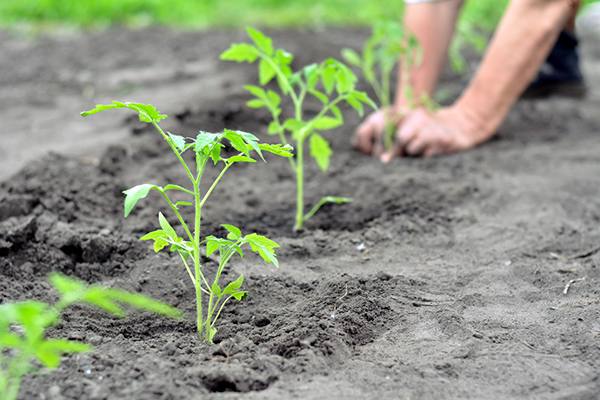
Tomatoes should be planted in prepared soil that is loose and nutrient-rich. Here are a few basic steps for a successful start:
- Fertilizing the hole: Before planting, it is highly beneficial to add a handful of humus, compost, or a little wood ash to the hole to provide the plants with starter nutrients.
- Planting depth: Make the holes deep enough so that you can bury a portion of the stem (up to the first true leaves). Tomatoes have a unique ability to grow adventitious roots directly from their buried stem, which significantly strengthens the plant.
- Spacing: It is vital to maintain the correct distance between bushes (you can use our interactive spacing guide). If planted too densely, airflow is restricted, which almost guarantees the onset of fungal diseases like late blight.
- Watering: Immediately after planting, water the plants generously and carefully at the base with warm water so that the soil settles snugly around the roots for faster adaptation.
Frost Protection
During the first few days after planting, it is especially important to monitor the weather forecast. If a sudden cold snap or night frost is expected, young plants must be covered with white agrofibre (row covers), plastic sheeting, or cut plastic bottles. This simple step will save your future harvest from perishing.
Ongoing Tomato Care

Proper planting and consistent watering at the roots will ensure a bountiful harvest well into autumn.
Caring for tomatoes throughout the summer involves regular watering (always water at the base, keeping the leaves dry), loosening the soil, and tying up indeterminate (tall) varieties to stakes or trellises as they grow. It is also critically important to prune the bushes timely (removing excess side shoots or "suckers") so the plant doesn't waste energy on green mass but channels it into fruit production.
Conclusion: To get a fantastic tomato harvest, you need to wait for stable warm weather, prepare well-hardened seedlings, and provide the plants with the right conditions after transplanting. These starting steps determine how strong the bushes will grow and how many delicious fruits they will yield throughout the season.
A key qualification
Tomatoes are best transplanted after frost risk has passed and the soil has warmed, not simply on the first warm day. Hardened, well-rooted transplants usually establish more reliably than overgrown plants flowering in undersized pots.
Additional verified references: RHS — Grow Your Own; University of Minnesota Extension — Planting the Vegetable Garden.