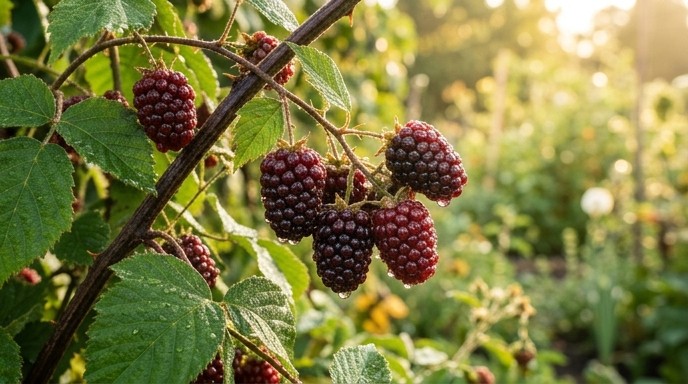
If you love raspberries for their delicate aroma and blackberries for their large, juicy fruits and high yields, then the boysenberry was created just for you. This amazing hybrid combines the best qualities of both crops, offering incredible dark maroon berries the size of a large plum.

Boysenberries differ from regular blackberries by their elongated shape, softer texture, and unique aroma.
The boysenberry is a complex genetic cross between the European raspberry, common blackberry, and loganberry. Because the plant inherited long, trailing vines, growing it comes with its own set of practical tips. In this guide, we'll break down how to properly plant this superfood and harvest a record-breaking crop.
Soil Requirements and Planting Site
The boysenberry is a long-lived perennial crop. In one spot, with proper care, a bush can actively grow and bear fruit for over 10–15 years, so choosing the right location must be taken very seriously.
- Sunlight: The plant adores sunny locations. However, if you live in a southern region with hot and dry summers, light dappled shade during the midday hours (e.g., from a nearby tree canopy) will protect the delicate berries from sunscald.
- Soil: The earth should be light, fertile, and well-drained. The bushes require a large amount of organic matter, so be sure to add a bucket of compost or well-rotted manure to the planting hole. The optimal soil acidity (pH) should be slightly acidic—around 5.8 to 6.5.
Care practical tips: Trellising and Proper Pruning
Since the boysenberry grows very vigorously and produces long, flexible canes (up to 4-5 meters or 13-16 feet), trying to grow it without support is a big mistake. The branches will simply lie on the ground, where the berries will quickly rot or become a feast for slugs. The best solution is to build a sturdy vertical trellis.

A trellis ensures proper airflow for the bush and reliably protects the berries from rotting on the ground.
By weaving the trailing vines along the support, you can form a neat, productive berry wall. This not only saves a ton of space in the garden but also makes weeding and harvesting significantly easier.
Just like classic blackberries or summer-bearing raspberries, boysenberries fruit on a two-year cycle (floricanes). The new green shoots that grew this summer (primocanes) will set buds, overwinter, produce a harvest the following year (becoming woody floricanes), and then die off permanently. Therefore, every autumn, all the old branches that have already fruited must be ruthlessly cut down to the ground, clearing space and light for the young replacement canes.
Protection Against Pests and Diseases
Despite having a strong immune system, during wet and very warm weather, boysenberries can be attacked by a fungal disease called Septoria leaf spot. It manifests as numerous small, light-colored spots with dark borders on the leaves. For prevention, avoid overcrowding the bush (to ensure good ventilation) and promptly remove weeds around the base.
Additionally, the sweet, aromatic berries are very attractive to birds. So you don't have to share your harvest with feathered guests, drape a lightweight bird netting over the trellis when the fruits begin to ripen en masse.
Special Danger: Fruit Flies (Drosophila)
If you notice damaged berries or fruits that have fallen to the ground on their own, take immediate safety measures due to the risk of rapid fruit fly multiplication:
- It is strictly forbidden to throw such fruits into a regular open compost pile—the pest will successfully complete its life cycle there and decimate your entire garden next year.
- Collect all suspicious and fallen berries, place them in a thick black plastic bag, seal it tightly, and leave it in the hot sun for at least 7 days. The intense heat inside the bag will completely destroy the pest's larvae and eggs.
Culinary Uses
Thanks to its unique, well balanced sweet-tart flavor, the boysenberry is a favorite for culinary experiments. The berries freeze beautifully without losing their shape upon thawing. Moreover, jams, preserves, and pie fillings made from this crop boast a fantastically deep ruby color and an very pronounced, rich aroma.
A practical checklist before you use the advice
- confirm the rootstock, vigor, and mature size before planting;
- check the exact cultivar’s pollination needs and whether a potential partner overlaps in bloom;
- choose a site with good drainage and enough sun; prolonged waterlogging is harmful to many fruit crops;
- keep the graft union above soil unless guidance for the specific plant says otherwise;
- base pruning on tree age, fruiting habit, and canopy condition rather than calendar month alone.
Additional verified references: University of Minnesota Extension — Growing Fruit in Home Gardens; RHS — Grow Your Own Fruit, Vegetables & Herbs.