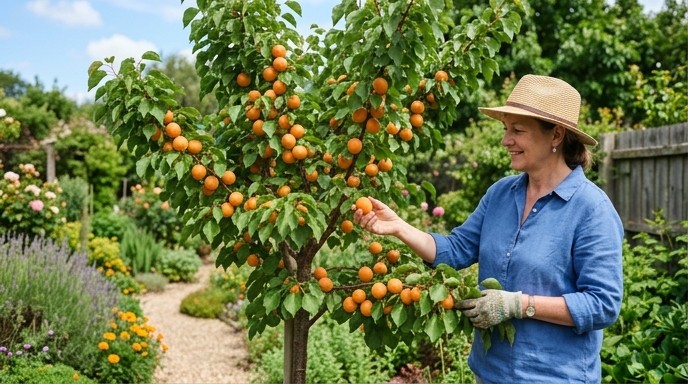
Do you dream of picking your own fresh, juicy apricots, but your yard is too small for a sprawling 20-foot tree? There is a wonderful solution — the dwarf apricot tree. Thanks to special dwarfing rootstocks, these trees grow to only 2-2.5 meters (6-8 feet) in height, yet they produce fruit of the exact same size and flavor as their full-sized relatives.

The miniature size of the tree allows it to be grown even in the smallest of spaces without sacrificing yield.
Dwarf varieties offer numerous advantages: they are significantly easier to prune, spray for pests, and harvest (you won't even need a ladder!). They can even be successfully grown in large containers on a patio or balcony. However, their compact size does not negate the basic needs of the species: apricots still require plenty of sun and proper care to thrive.
Planting Features: Saving Space the Right Way
The main advantage of a dwarf apricot is the ability to plant densely. Instead of the giant 6-7 meters (20+ feet) required for a standard tree, a dwarf tree only needs a planting layout of 3x3 meters (10x10 feet). This allows you to fit several different varieties into a small area, which drastically improves cross-pollination and increases the overall yield of your garden.
Because the trunk of a dwarf tree is thinner and more delicate, it is essential to use a tree wrap or plastic protective guard during the first few years after planting to protect the bark from rabbits, mice, and boring insects.

Some very compact (columnar) varieties thrive in large tubs, beautifully decorating terraces and balconies.
Diseases and Pests: Keeping the Garden Clean
Dwarf trees suffer from the same ailments as large classic varieties, but treating them is much easier, faster, and safer (a standard hand pump or backpack sprayer is all you need, no heavy machinery required).
- Gummosis: If sticky amber sap oozes from the trunk or branches, the tree is under stress (waterlogging, nutrient deficiency, frost damage, or bark injury). Clean the wound down to healthy wood, disinfect it with a 1% copper sulfate solution, and seal it with pruning sealer. Ensure regular but moderate watering.
- Brown Rot (Monilinia): A dangerous fungal disease that massively attacks blossoms and young shoots during wet, rainy weather. Conduct preventative spring spraying with organic fungicides (such as copper-based products) before and after blooming.
Fruit Fly Protection
Never leave overripe or rotting fruit under the tree. They are the good breeding ground for fruit flies and other garden pests. Collect all fallen fruit in a heavy plastic bag (preferably black), tie it tightly, and leave it in the bright sun for 7 days — the very high temperature will destroy all larvae. Do not throw infected fruit into an open compost pile!
Conclusion: A dwarf apricot is a true treasure for the modern gardener. It requires minimal precious space, permanently eliminates the need to balance on tall, dangerous ladders, yet generously rewards you with sweet, aromatic fruits every summer.
A key qualification
A dwarf apricot in a container is especially vulnerable to dry-out and overheated roots. A large pot, good drainage, and steady watering matter more than frequent high-dose feeding.
A practical checklist before you use the advice
- confirm the rootstock, vigor, and mature size before planting;
- check the exact cultivar’s pollination needs and whether a potential partner overlaps in bloom;
- choose a site with good drainage and enough sun; prolonged waterlogging is harmful to many fruit crops;
- keep the graft union above soil unless guidance for the specific plant says otherwise;
- base pruning on tree age, fruiting habit, and canopy condition rather than calendar month alone.
What to adapt to your own garden
Do not judge a cultivar by fruit photos alone. For a home garden, winter hardiness, local disease pressure, rootstock, pollination needs, and mature canopy size can matter just as much.
Additional verified references: University of Minnesota Extension — Growing Fruit in Home Gardens; RHS — Grow Your Own Fruit, Vegetables & Herbs.